
Last updated November 16, 2026
 Wrought iron
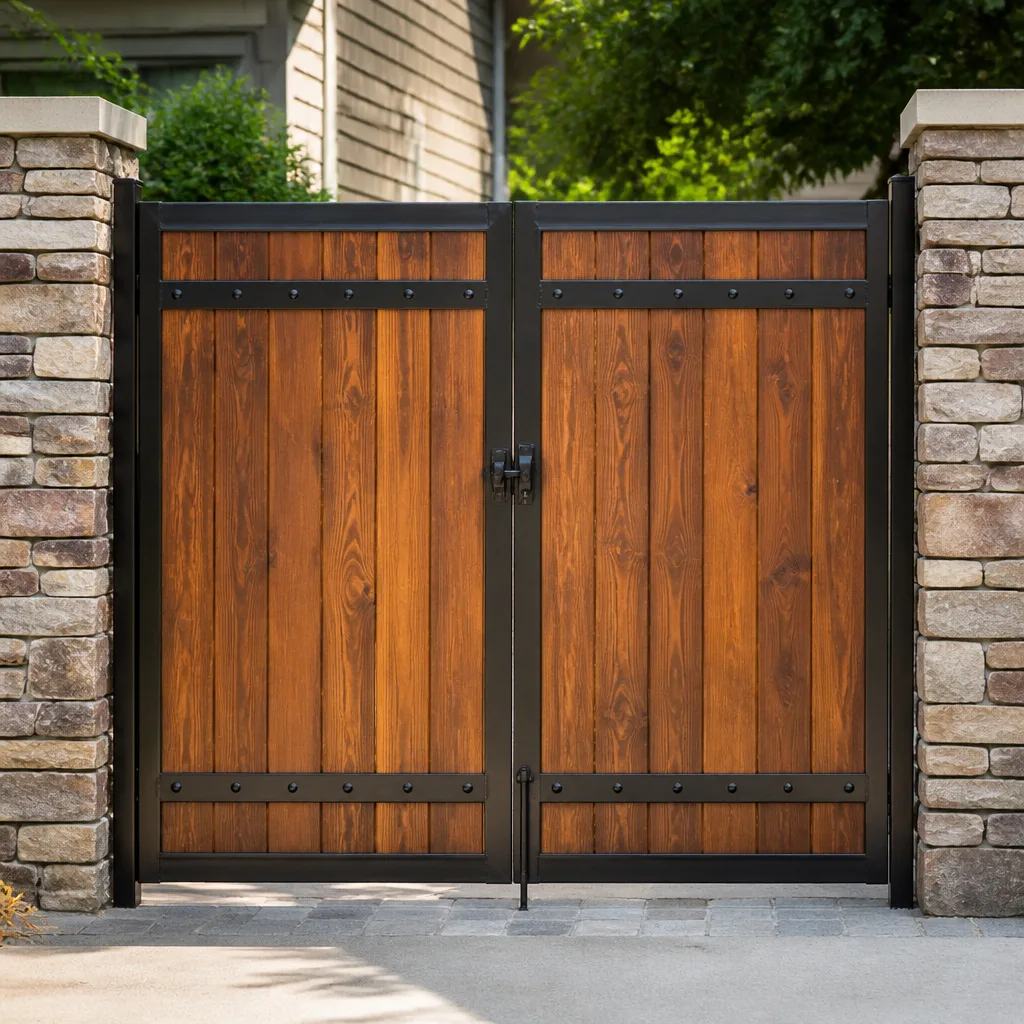 Wood & steel frame
 Farm & ranch
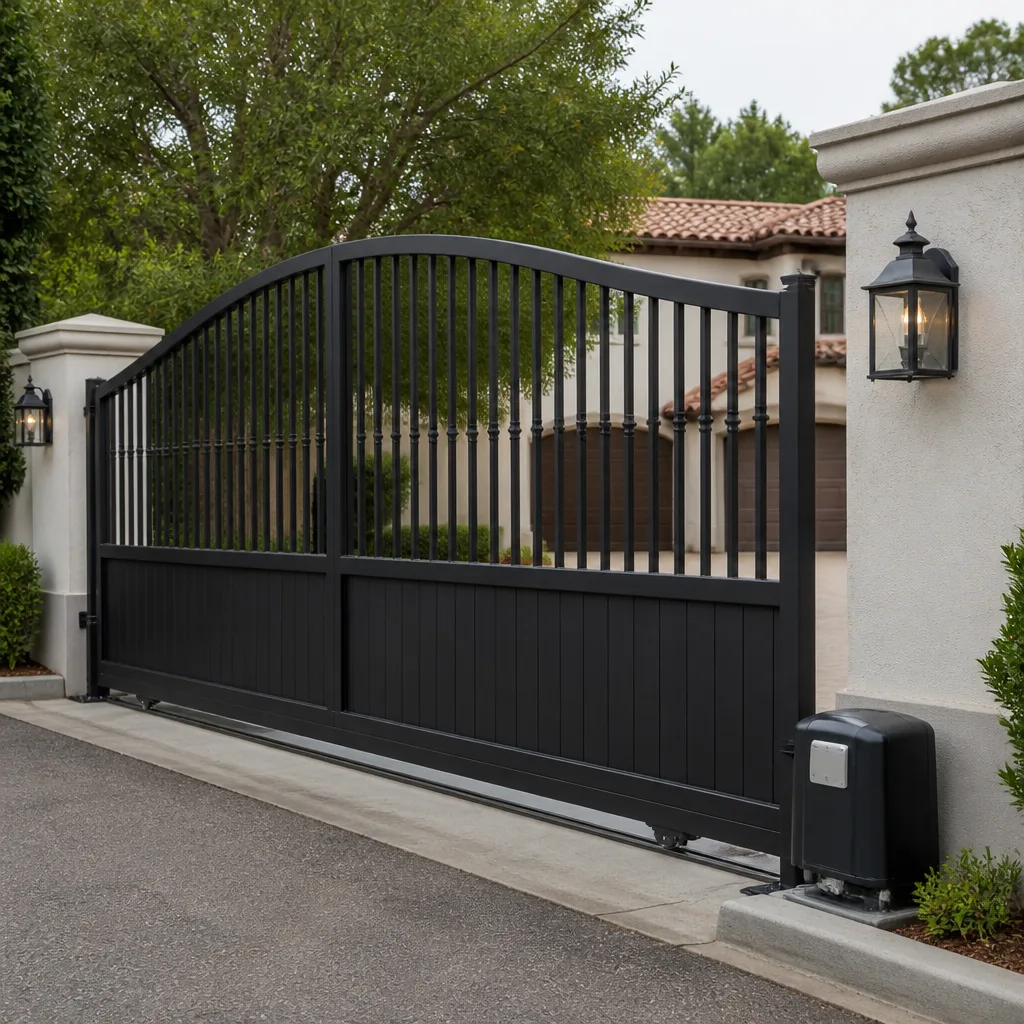 Sliding driveway gates
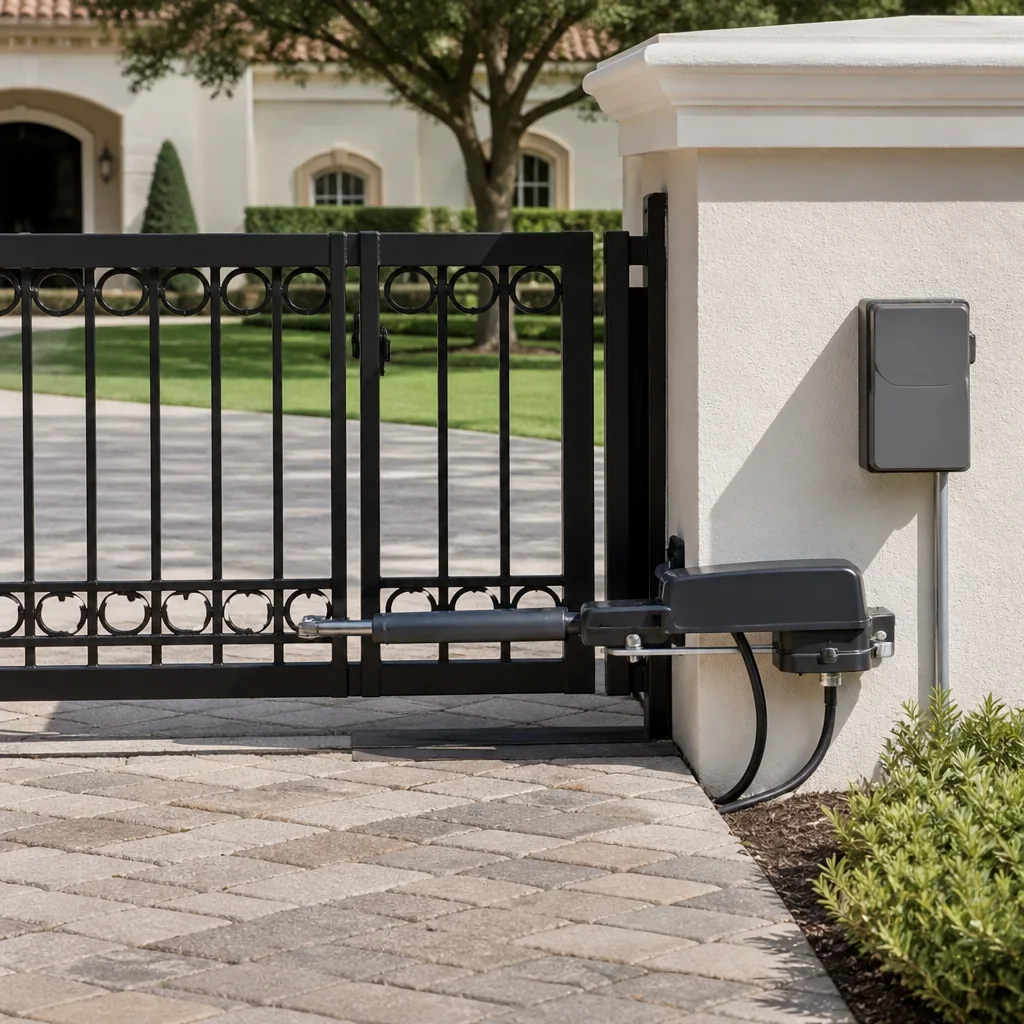 LiftMaster operators
Free on-site gate assessment - hinges, posts, and your LiftMaster or Nice gate operator checked before anything is quoted
The assessment is free and the quote is the invoice.
Get your free estimateGate Repair Warning Signs: A Glendale Homeowner’s Reference Guide
Most gate failures don’t arrive without warning. They arrive with weeks of warnings that get filed under “annoying but not a problem yet.” A gate that opens a little slower in July isn’t simply reacting to the heat. That slowdown is often a motor pulling more current than it should, sometimes because the chain has dried out or the obstruction detection is set too tight. Treat it as a quirk and a minor repair turns into a motor replacement. This guide translates the symptoms you can see and hear into the faults they usually point to, so you can describe your gate accurately, understand what’s likely wrong, and get it fixed on the first visit. We’ll cover Glendale conditions, sound identification, the two-week rule for intermittent faults, and the mistakes that turn small problems into expensive ones.
Quick Answer
Gate repair warning signs in Glendale usually show up as slow operation, grinding or clicking sounds, mid-travel reversal, incomplete closing, and visible post movement or rust. Most of these point to a specific mechanical or electrical fault long before the gate stops working completely, and catching them early keeps a small adjustment from becoming a motor or control board replacement. If your gate is doing any of these, a technician can diagnose the cause and get it back in operation.
Styles & brands we work with
- Wrought iron
- Wood & steel frame
- Farm & ranch
- Sliding driveway gates
- LiftMaster operators
Table of Contents
- The Symptom-to-Fault Decoder: 10 Behaviors and What They Usually Mean
- Why Intermittent Failures Are More Urgent Than Consistent Ones
- Sound Identification: What Your Gate Is Telling You
- Visual Warning Signs Specific to Glendale Conditions
- The Two-Week Rule: How to Log Gate Behavior
- Electric and Automated Gates: Symptoms That Point to the Control Board
- Matching the Warning Sign to Your Gate’s Brand
- Common Mistakes to Avoid
- When to Call a Professional
The Symptom-to-Fault Decoder: 10 Behaviors and What They Usually Mean
Every gate behavior is a signal. The trick is knowing which signal points to the mechanics and which points to the electronics. Below are the ten most common observable behaviors we diagnose, mapped to their most likely causes. This is the reference you want taped inside the gate operator cabinet, because a technician can work faster when you can tell them exactly what the gate did and when.
- Opens slower than usual. A dry chain, worn rollers, or a motor drawing excess amperage. On a slide gate, check the track for debris first.
- Reverses mid-cycle without contact. The obstruction detection threshold is set too tight, or a safety edge is misreading. Could also be a control board fault.
- Stops before fully closing. A misaligned limit switch, a physical obstruction in the travel path, or the closing force set too low.
- Beeps continuously. On most operators this is an alert that the gate is in a fault state, usually tied to a safety sensor or a limit out of adjustment.
- Won’t respond to the remote. Dead remote battery, a receiver issue at the operator, or a control board that’s lost its programming.
- Starts then stalls. Motor overheating, failing capacitor, or a mechanical bind in the arm or track.
- Drifts open after closing. A failing limit switch or a control board that isn’t holding its position, common on older operators.
- Grinding during travel. Worn gears, a dry chain, or debris in the track. This is the sound that most often precedes a motor failure.
- Lopsided gate leaves. A post that’s shifted, a hinge that’s worn, or a sagging frame. On a swing gate, check the hinge side first.
- Random failures with no pattern. A corroded connection, a loose wire at the control board, or a failing board. This is the intermittent category covered in the next section.
None of these alone confirms a diagnosis. A grinding noise and a slow open can both stem from the same dry chain, and a mid-travel reversal can come from a safety edge or a board. What the decoder does is narrow the field, so whoever you call arrives with a plan rather than a guess. If you’re already familiar with gate repair, this list gives you a shared language with your technician.
Why Intermittent Failures Are More Urgent Than Consistent Ones
A gate that fails the same way every time is easy to diagnose. A gate that fails randomly is harder, and that’s precisely why it deserves more attention. Intermittent failures usually point to a failing control board, a corroded connection, or a loose wire that only misbehaves under certain conditions. Those aren’t adjustment issues. They’re electrical faults that can progress to a complete failure, sometimes with the gate stuck open.
Here’s why they’re tricky. When a component is on its way out, it can work fine in cool morning temperatures, then fail in the afternoon heat. Or it works fine for ten cycles, then skips on the eleventh. To a homeowner, that looks like the gate “sometimes” acts up. To a technician, it means the fault is real but intermittent, and the cause has to be caught in the act or isolated at the board.
In our experience working on automated gates across Glendale, intermittent faults are the most likely to be dismissed as “nothing” and the most likely to become a full breakdown. If your gate is doing something inconsistent, don’t wait for it to fail consistently. That’s the point at which the fix is usually the most expensive.
If you’ve got an intermittent fault on a swing or slide operator, an electric gate repair call is the right move. These are electrical systems, and the diagnostic work needs to look at wiring, sensors, and the control board, not just the gate frame.
Sound Identification: What Your Gate Is Telling You
You don’t have to be a technician to hear the difference between a healthy gate and one in trouble. The sounds fall into four categories, and each points in a different direction. Listening carefully, and being able to describe what you heard, can save diagnostic time.
- Chain slap. A rhythmic slapping or rattling sound is the chain running loose or dry. It’s usually a lubrication and tension issue, and it’s the sound most often ignored until the motor starts working harder than it should.
- Gear wear. A steady grinding or growling that’s present throughout travel. Worn gears inside the operator or a failing gearbox. This one tends to precede a motor failure, so don’t wait on it.
- Limit switch clicking. A sharp click at the end of travel is normal. Repeated clicking or clicking mid-travel means the limit switch is out of adjustment or failing.
- Motor strain. A high-pitched whine or a labored hum that changes pitch during travel. The motor is working against resistance, whether from a bind, a dry track, or a failing capacitor.
Here’s the practical part: when you call, tell the technician which of these four sounds you’re hearing, and where on the gate’s travel it happens. “Grinding at the start, quiet in the middle” tells a very different story than “grinding the whole way.” Specifics shorten the diagnosis and cut the chance of a guess-based repair.
Visual Warning Signs Specific to Glendale Conditions
Glendale’s climate puts its own fingerprint on gate wear. Our summers run brutal, our air is dry, and our soil is caliche-heavy in many neighborhoods. That combination produces warning signs you won’t see the same way in cooler or wetter parts of the country. Knowing what to look for locally helps you spot problems before they become mechanical failures.
- Rust patterns in dry climates. Rust on a gate in Glendale tends to concentrate at the post bases, hinge points, and the bottom rail where irrigation spray hits metal. Surface rust on the frame is cosmetic; rust bubbling under paint at a weld or hinge says moisture is getting in and the metal is thinning.
- UV-bleached wiring. Low-voltage wiring exposed to sun fades and cracks over time. Faded or chalky insulation on the run between the operator and the control board is a sign the conductor underneath may be degrading.
- Caliche-heaved post bases. When the soil under a gate post is caliche-dense, it holds water and expands and contracts with seasonal moisture. A post base that has heaved upward even a fraction of an inch can throw the gate leaf out of alignment, bind the hinges, and misalign the latch. It looks cosmetic. It usually isn’t.
- Sun-baked sensor lenses. Safety sensor lenses cloud over with UV exposure. A clouded lens can cause the gate to reverse or refuse to close, even though the sensor is technically working.
- Pad-mounted operator cabinets exposed to afternoon sun. A cabinet that sits in full sun all afternoon can run hotter than its components are comfortable with, which can shorten control board life.
Walk the gate once a month and look at these five things. A little rust at a hinge and a slightly heaved post base don’t warrant a call on their own, but together they explain why a gate that used to close smoothly now catches on the latch.
The Two-Week Rule: How to Log Gate Behavior
Intermittent faults are the hardest to diagnose because they don’t always happen during the service visit. The two-week rule fixes that. Before you call a technician for a gate that acts up inconsistently, spend two weeks logging what the gate does, when it does it, and under what conditions. A short note is enough, and it turns a “sometimes it acts weird” call into a diagnostic goldmine.
- Write down the behavior. “Reversed mid-close.” “Stopped halfway.” “Beeped for ten seconds.” Use plain words, not interpretations.
- Note the time of day and temperature. Morning versus afternoon matters, especially in Glendale summers. A fault that only happens in the heat points at the board or the motor, not the mechanics.
- Note the weather or irrigation. Did it rain the night before? Was the sprinkler running? Moisture-triggered faults point at wiring or connections.
- Note what you did just before. Opened with the remote, the keypad, or the intercom? Any difference between them matters.
- Note the frequency. Every cycle, once a day, twice a week? The pattern is the clue.
Two weeks of notes can replace an hour of a technician waiting for a fault to reproduce. It’s the single most useful thing you can do as a homeowner before a service visit, and it’s free.
Electric and Automated Gates: Symptoms That Point to the Control Board
Automated gates are low-voltage electrical systems wrapped around a mechanical gate. When something goes wrong, the trick is telling whether the problem lives in the mechanics or the electronics. The symptoms below point strongly at the electrical side, and they’re the reason we treat electric and automated gate repair as its own discipline rather than an add-on.
- Gate ignores the remote but responds to the keypad. Likely a receiver or programming issue at the operator, not a dead motor.
- Gate cycles on its own. A phantom signal from a stuck button, a failing receiver, or a control board fault. This is a safety concern, not just an annoyance.
- Reverses at random. An obstruction sensor misreading, a clouded safety lens, or a board fault. Intermittent reversal fits the pattern covered earlier.
- Continuous beeping. Most operators beep to signal a fault state. Read the manual’s fault codes if you have it, then call.
- Multiple functions fail at once. When the gate won’t open, won’t close, and won’t respond to any input, suspect the board or the power supply before the motor.
A gate that shows any of these symptoms needs a technician who’s comfortable from the motor to the control board. Electrical work on a gate involves low-voltage wiring and a motor circuit, and it’s not a job for a homeowner with a screwdriver and a hunch. Leave the diagnostic work to a trained professional, especially if you’re looking at the wiring or the board itself.
Matching the Warning Sign to Your Gate’s Brand
Different operator brands present faults in different ways, and knowing your brand helps a technician arrive prepared. We work on nine of the most widely installed gate operator brands, including LiftMaster, FAAC, BFT, Linear, Viking, Ghost Controls, DoorKing, Elite, and Mighty Mule. That range matters because the same symptom can have brand-specific causes.
A Viking operator with a grinding sound may have a different gear wear pattern than a LiftMaster. A DoorKing access control gate that won’t respond to a card reader points at a different part of the system than a residential swing gate that won’t respond to a remote. Ghost Controls and Mighty Mule residential systems have their own diagnostic patterns, and control board behavior varies across brands. A general repair company that only knows one or two brands often recommends what it knows. A gate specialist diagnoses what the gate actually needs.
When you call, tell us the brand and model if you can read it off the operator. That single detail lets the technician bring the right knowledge to the visit. If you don’t know the brand, a photo of the operator cabinet is usually enough for us to identify it.
Common Mistakes to Avoid
- Blaming the heat. A slow gate in a Glendale summer is not automatically a heat issue. It’s often a dry chain or a motor working against resistance, and waiting for cooler weather lets the problem grow.
- Turning up the closing force to fix a reversing gate. If a gate is reversing, the safety system is doing its job. Raising the force to push through it defeats a safety feature and can damage the motor or the gate.
- Ignoring a heaved post base as cosmetic. In Glendale’s caliche soil, a post that’s lifted a fraction of an inch can bind the whole gate. Left alone, it wears hinges, misaligns the latch, and adds strain to the operator.
- Spraying lubricant on everything. Lubricant belongs on specific points. Spraying the whole mechanism, especially near the operator and wiring, attracts grit and can damage components.
- Replacing the remote when the gate is the problem. A new remote won’t fix a failing receiver or a board fault. Test the gate with the keypad before buying anything.
- Waiting for a consistent failure before calling. Intermittent faults are more urgent, not less. A gate that fails randomly can one day fail when you can’t get out or in.
- Letting a general handyman diagnose an electric gate. A gate is a low-voltage electrical system plus a heavy mechanical gate. Someone who works on gates every day knows the difference between a board fault and a mechanical bind.
When to Call a Professional
Some warning signs are worth a call immediately. If your gate reverses on its own, cycles without a command, beeps continuously, or has stopped working completely, that’s a call today. If a swing gate is leaning, if a post has visibly heaved, or if the gate catches on the latch, schedule a visit before the mechanical wear compounds. If the gate is opening slower than it used to, don’t wait for it to stop entirely. That’s the window where a small repair saves a large one.
Safety matters here. Automated gates involve low-voltage wiring, a motor circuit, and heavy moving panels that can crush, pinch, or knock someone down. On a slide gate, a gate that has come off its track is a genuine hazard. Don’t try to adjust the control board, rewire the sensors, or force a stuck gate. Call a trained technician.
Gate Repair Glendale offers free estimates in Glendale – call (855) 632-1674. We answer 24/7. Fast dispatch from 7am to 7pm, Sunday through Friday. Our technicians have up to 12 years of experience, and we work on your brand, from the motor to the control board.
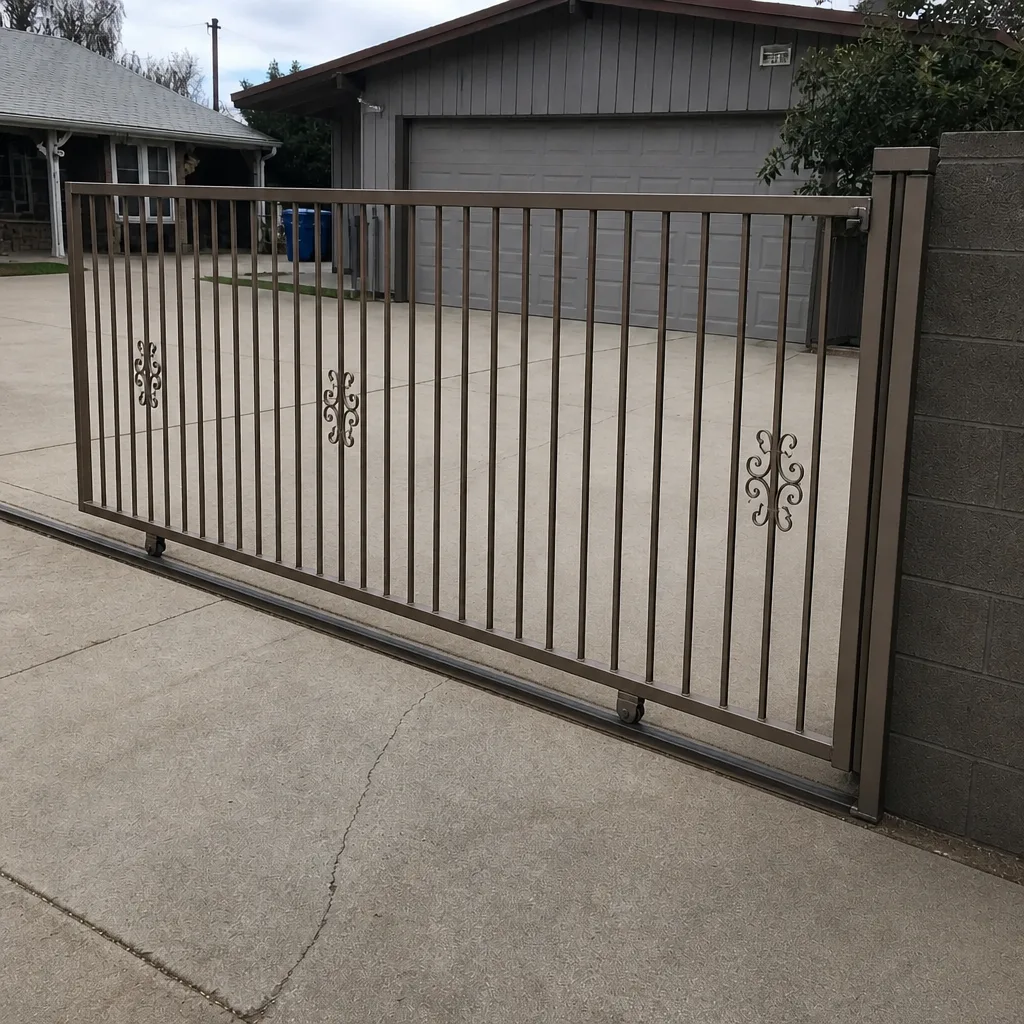
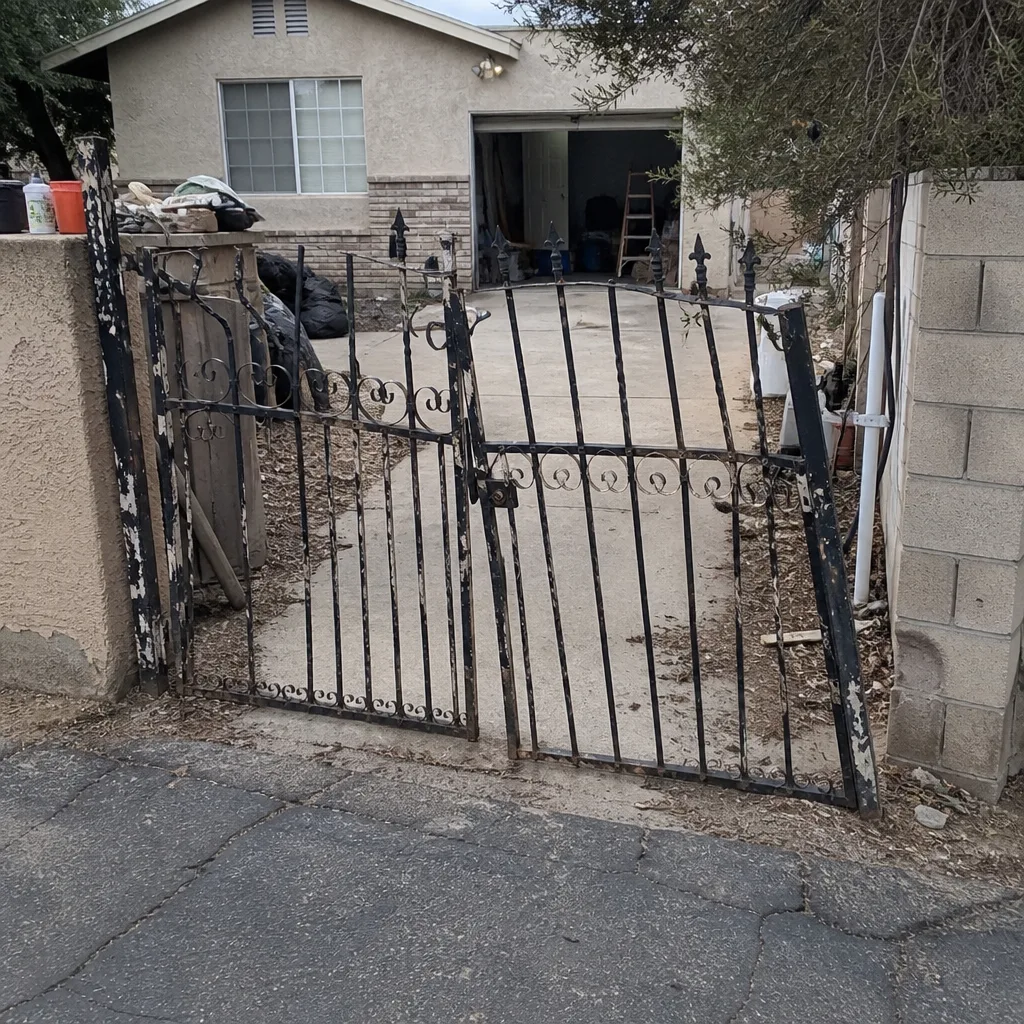
See the difference
 Before
 After
 Before
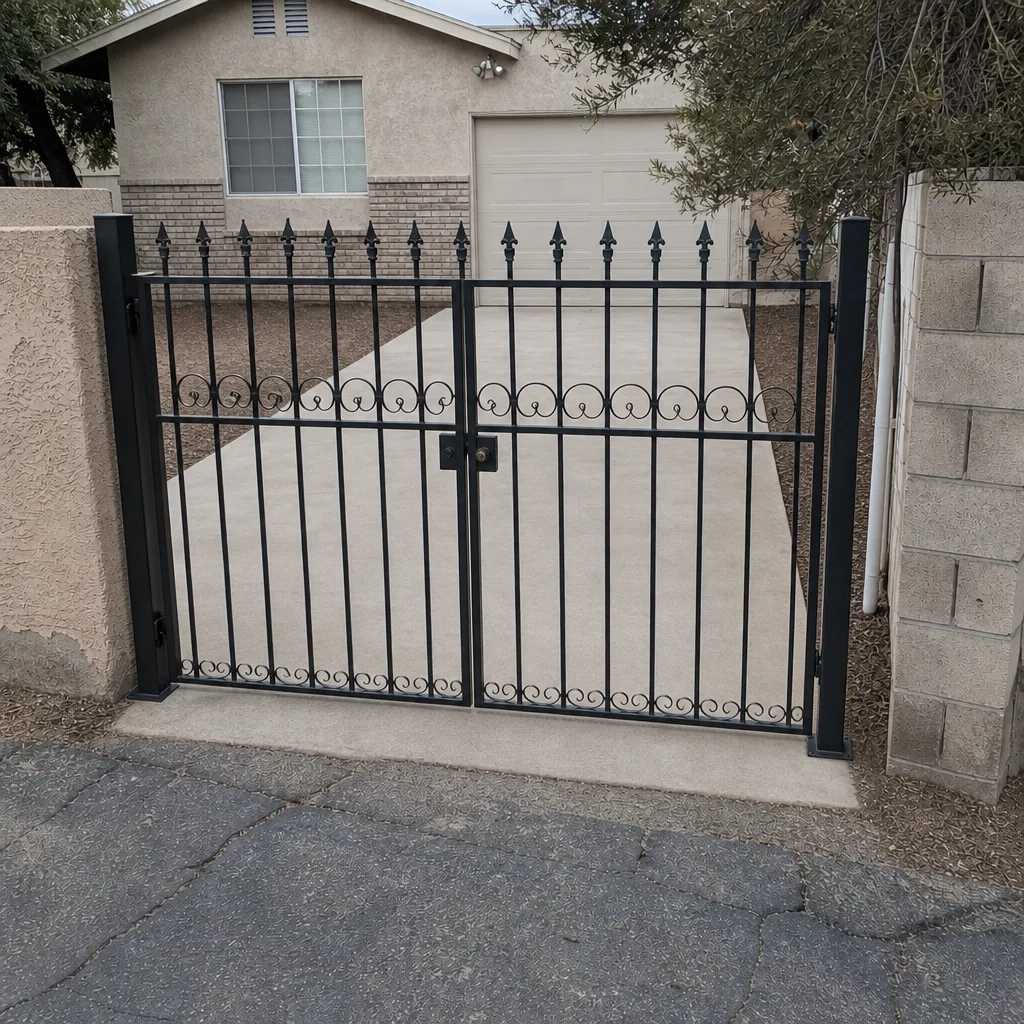 After
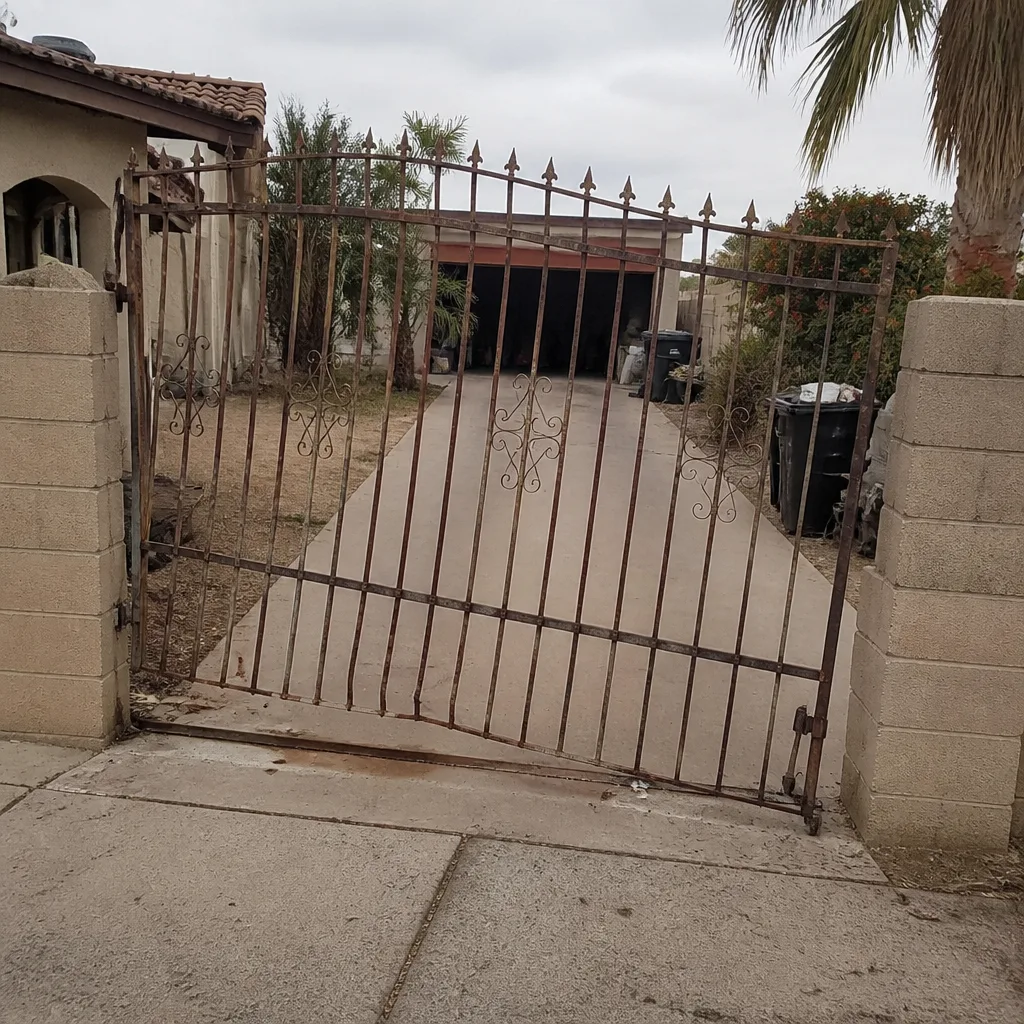 Before
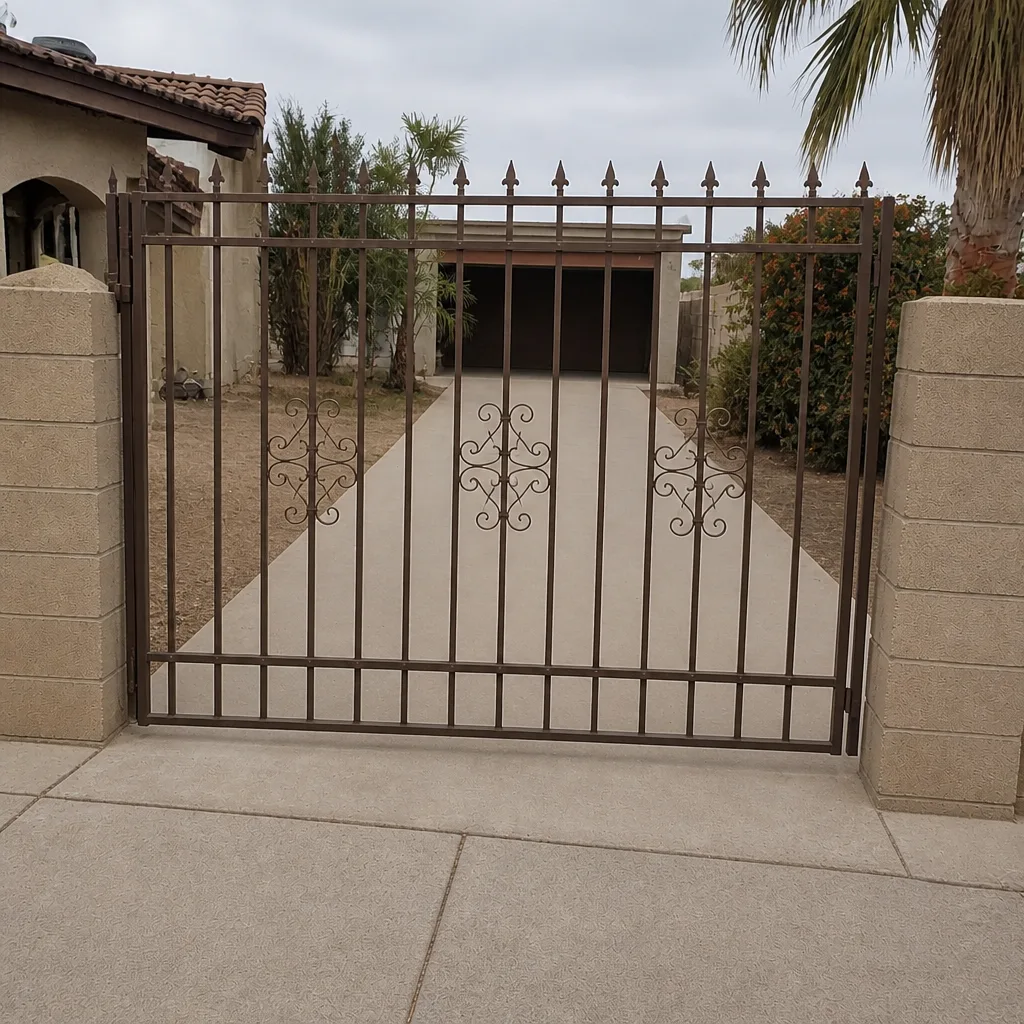 After
Frequently Asked Questions
The most common warning signs are slow operation, grinding or clicking sounds, mid-travel reversal, incomplete closing, continuous beeping, and visible post movement or rust. Each one points to a specific fault, and catching them early usually keeps a small adjustment from turning into a motor or control board replacement. If you’re seeing any of these in Glendale, call (855) 632-1674 for a free estimate.
An intermittent failure is harder to diagnose and usually points to a failing control board or a corroded connection rather than a simple adjustment. That makes it more likely to progress to a complete failure with the gate stuck in an inconvenient position. Log the behavior for two weeks using the two-week rule and call before it becomes consistent.
Call when the slowdown is new, when it’s accompanied by any sound, or when it doesn’t clear after the gate has run a few cycles. A slow gate in a Glendale summer is often a dry chain or a motor working against resistance rather than the heat itself. A free estimate will tell you which.
Often yes. A heaved or shifted post base can usually be reset and re-anchored, which restores the gate’s alignment and takes the strain off the hinges and operator. The fix is mechanical, not a replacement. A site visit will confirm whether the post or the hinge side is the cause.
We work on nine of the most widely installed gate operator brands, including LiftMaster, FAAC, BFT, Linear, Viking, Ghost Controls, DoorKing, Elite, and Mighty Mule. If you’re not sure of your brand, read the label on the operator cabinet or send us a photo and we’ll identify it. Call (855) 632-1674 for a free estimate.
Yes. A gate that opens or closes without a command is a safety concern because it can move unexpectedly while someone or something is in its path. The usual causes are a stuck button, a failing receiver, or a control board fault. Don’t leave it running on its own; call a technician and keep the gate from moving until it’s checked.
The Bottom Line
Gate failures rarely arrive without warning. The trick is reading the warnings accurately, whether that’s a slow open in July, a grinding sound you can name, a heaved post base in Glendale’s caliche soil, or an intermittent fault that only shows up some days. Log the behavior for two weeks, describe the sound and the timing when you call, and get a diagnosis based on the gate rather than a guess. If you’re in Glendale, we’re here to help. For an overview of what we do, start at Gate Repair Glendale.
Call (855) 632-1674 for a free estimate. We answer 24/7. Fast dispatch from 7am to 7pm, Sunday through Friday. Our technicians have up to 12 years of experience and work on the leading gate and operator brands, from the motor to the control board.
Written by the team at Gate Repair Glendale.