
Last updated November 16, 2026
 Wrought iron
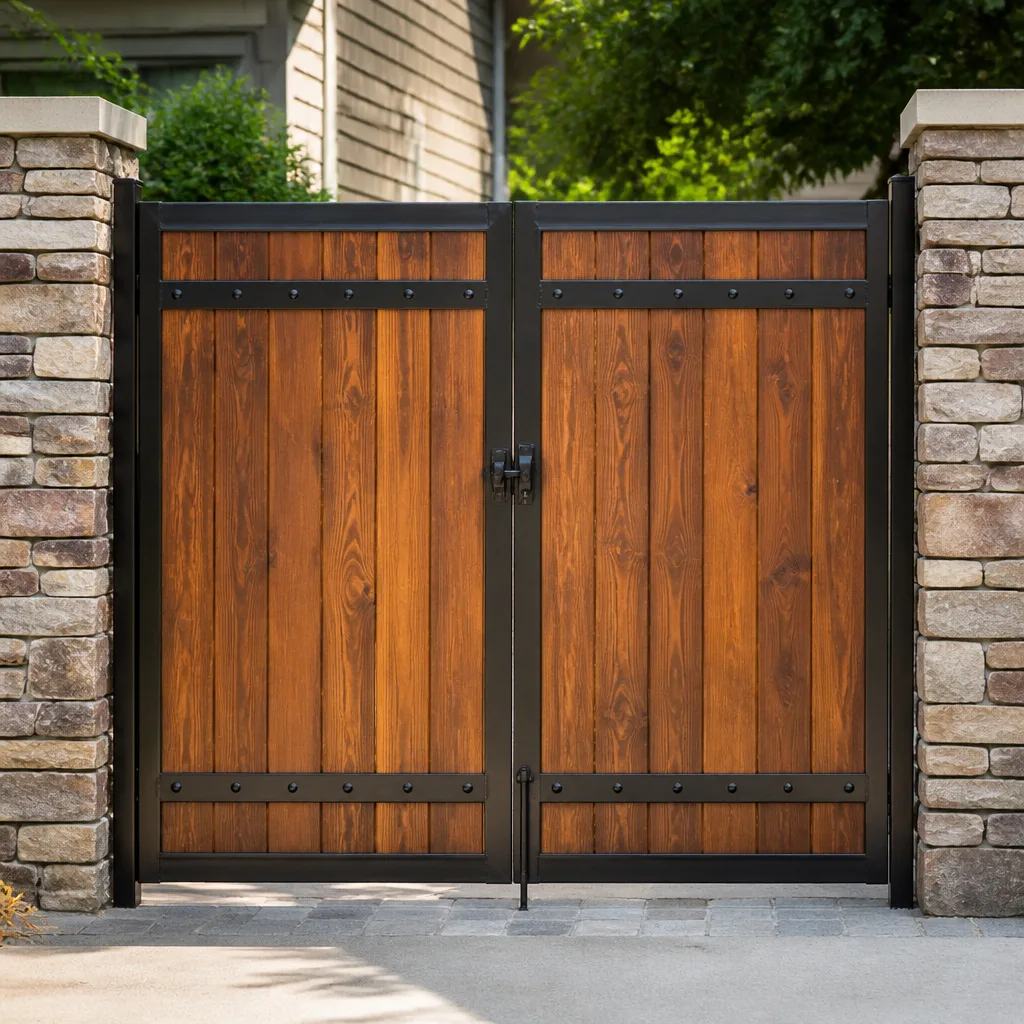 Wood & steel frame
 Farm & ranch
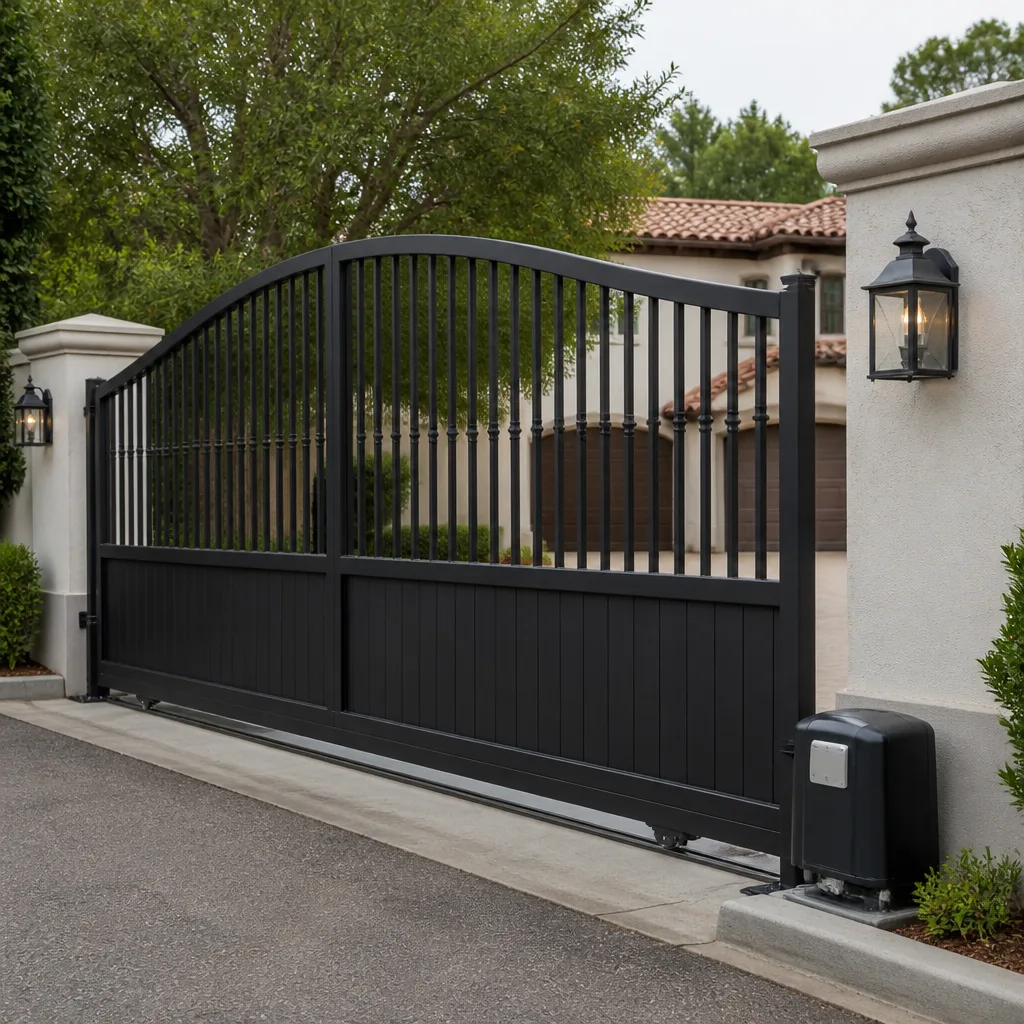 Sliding driveway gates
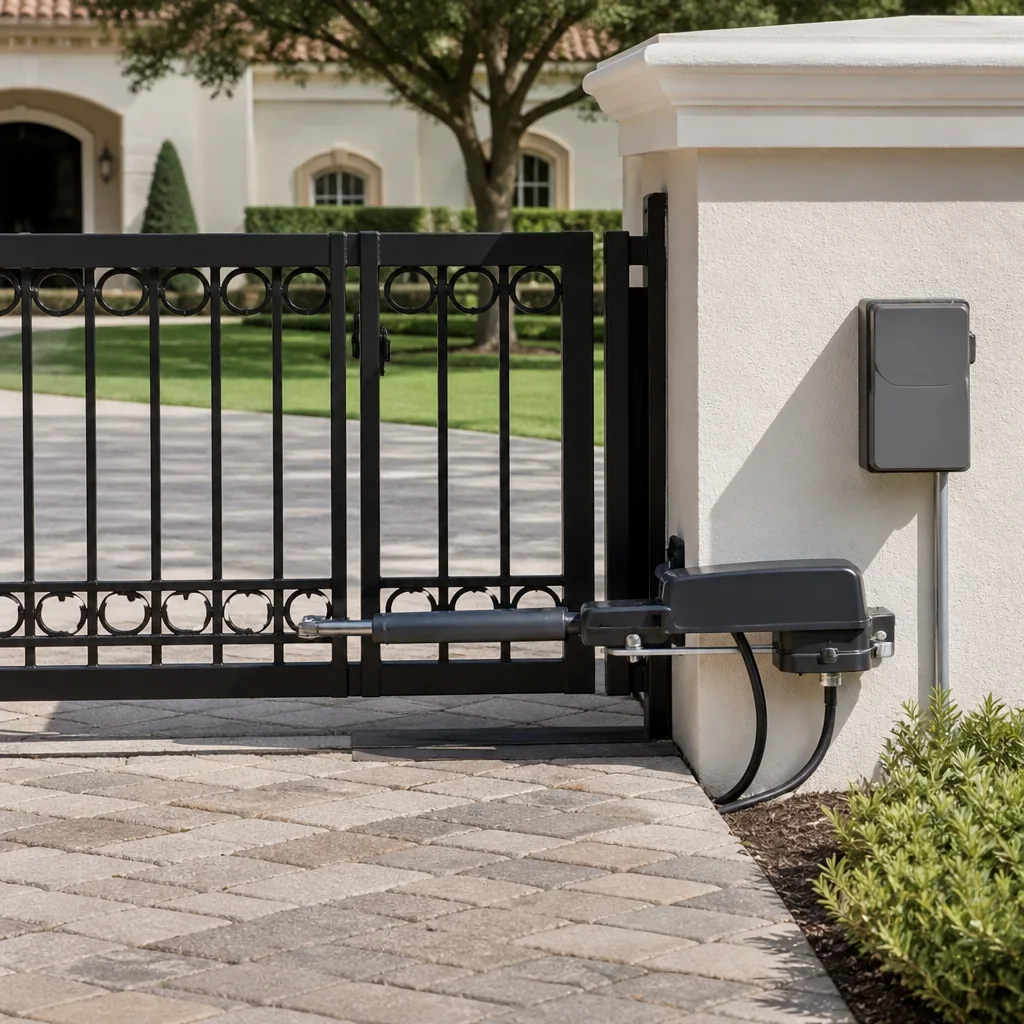 LiftMaster operators
Free on-site gate assessment - hinges, posts, and your LiftMaster or Nice gate operator checked before anything is quoted
The assessment is free and the quote is the invoice.
Get your free estimateThe Complete Guide to Gate Repair in Glendale
Most people assume a misbehaving gate has one problem: the motor. That’s rarely true. In Glendale, repair calls we handle tend to trace back to three root causes – heat stress on electronic components, caliche soil shifting the posts a gate hangs on, and mismatched parts left behind by earlier repairs. A gate that worked all spring and starts reversing in August isn’t random. It’s a system telling you which of those three is failing. This guide walks through how to read those signals, what each type of gate actually needs, and how to make sure a repair fixes the cause rather than masking the symptom. You’ll finish knowing what to ask, what to check, and when to stop troubleshooting and call a professional.
Quick Answer
Gate repair in Glendale usually means diagnosing why a gate stopped opening, reversing on its own, or grinding at one spot – and the fix is most often a component replacement, a post realignment, or correcting mismatched parts, not a new gate. Because the desert heat accelerates wear on control boards, photo-eyes, and hydraulic fluid, and caliche soil moves gate posts over time, the same symptom can have three completely different causes. A specialist diagnoses the actual fault before quoting, then repairs what’s there.
Styles & brands we work with
- Wrought iron
- Wood & steel frame
- Farm & ranch
- Sliding driveway gates
- LiftMaster operators
Table of Contents
- The Three Root Causes Behind Most Gate Failures in Glendale
- How Glendale’s Summer Heat Degrades Gate Components
- The Caliche Soil Problem: When It Looks Like the Motor
- The Parts Mismatch Audit: What to Do on a Newly Purchased Property
- Swing, Slide, and Barrier Arm Gates: Why Repair Approaches Differ
- Electric and Automated Gate Repair: The Motor and the Control Board
- Working With the Brand You Already Have
- How to Verify the Fault Was Actually Fixed
The Three Root Causes Behind Most Gate Failures in Glendale
When a gate stops working, the symptom gets all the attention. The gate reverses, so people assume the safety sensors are broken. It grinds, so they assume the motor is dying. But in our experience working on gates across Glendale, the symptom is almost always downstream of one of three underlying problems. Knowing which one you’re facing changes everything about the repair.
Those three causes are:
- Heat stress on components. Glendale summers push past 110°F, and that heat degrades control boards, photo-eye alignment, and hydraulic fluid viscosity in ways that moderate climates never expose a gate to.
- Caliche soil shifting the foundation. Much of the Glendale area sits on caliche, a rock-hard subsurface layer that expands and contracts with moisture swings and gradually moves gate posts out of alignment.
- Mismatched parts from prior repairs. A previous owner or a general handyman swaps in a control board or operator arm that doesn’t match the rest of the system, and the gate never runs quite right again.
Each of these produces symptoms that look identical from the driver’s seat. A gate that reverses could be a heat-warped photo-eye, a post that shifted two inches out of plumb, or a control board that’s receiving mismatched inputs. A gate that grinds could be a worn track, a sagging hinge from post movement, or motor torque fighting misalignment. The only way to tell them apart is to look at the system as a whole rather than guessing at the noisiest part.
This is why Gate Repair Glendale approaches every call as a diagnostic first. If we fix what appears to be the problem without confirming the cause, we’re back out next month for the same gate. Once you understand these three causes, the rest of this guide will make sense: every section that follows maps to one of them.
How Glendale’s Summer Heat Degrades Gate Components
Heat is the single most underrated factor in gate reliability around Glendale. A gate operator that performs flawlessly in a mild climate can develop strange behaviors once summer settles in. The temperature extremes here don’t just make the metal feel hot to the touch; they change how the electronics and hydraulics inside the operator behave.
Control boards
Control boards are the brain of an automated gate, and they’re sensitive to heat. Solder joints expand and contract daily, capacitors degrade faster in sustained heat, and a board that was borderline in spring can start faulting once ambient temperatures climb. Symptoms show up as intermittent failures: the gate opens fine in the morning and sticks by afternoon, or the remote works sometimes but not others. Homeowners often replace batteries or remotes chasing a control board problem.
Photo-eye alignment
Safety photo-eyes are infrared pairs mounted across the gate opening. Heat causes the brackets and housings to expand and shift slightly, and on a wide gate even a tiny misalignment breaks the beam. When the beam breaks, the gate reverses or refuses to close – a safety feature working exactly as designed, triggered by a mechanical problem rather than an actual obstruction. In Glendale, this is one of the most common “my gate won’t close” calls we get.
Hydraulic fluid viscosity
Hydraulic gate operators rely on fluid with predictable viscosity. Heat thins the fluid, changing how much pressure builds for the same motor effort. A swing gate with hydraulic arms can start moving sluggishly, fail to fully latch, or drift after stopping. In moderate climates the fluid stays in its design range all year. Here, the operator spends months outside its ideal window, and seals wear faster as a result.
None of these failures are the gate “wearing out.” They’re predictable heat effects, which means a technician who knows what they’re looking at can often repair the specific component – the photo-eye bracket, the control board, the fluid and seals – rather than replacing the operator. That’s a large part of why repair-first gate work makes sense in Glendale.
The Caliche Soil Problem: When It Looks Like the Motor
Here’s the part of Glendale gate repair that most generalists miss: a huge number of “motor problems” aren’t motor problems at all. They’re post problems. Much of the Glendale area sits on caliche, a dense, cemented subsurface layer that behaves almost like soft rock. It expands when it holds moisture and contracts when it dries, and both of those movements slowly shift the posts your gate is anchored to.
When a gate post moves even an inch or two, several things happen at once:
- The gate leaf no longer sits square in its frame, so it binds against the latch or jamb.
- The hinges and operator arms take on load they weren’t designed for, wearing faster.
- The motor works harder to move a gate that’s now fighting the geometry of its own posts.
- Photo-eyes mounted to the posts drift out of alignment as the posts move independently.
From the outside, this looks exactly like motor failure. The gate moves slowly. It stalls. It grinds. It stops partway. A homeowner reasonably concludes the opener is dying, and a technician unfamiliar with caliche might agree and quote a new operator. The new operator gets bolted to the same out-of-plumb posts, and the problem returns within a season.
The correct approach is to check post plumb and gate geometry before touching the operator. A post that has shifted can often be re-set or re-shimmed without replacing the gate. If the posts have moved significantly, resetting them to proper footing depth – not just patching the surface – is what actually solves the problem. This is the number one reason we recommend treating any gate repair in Glendale as a structural question first and an electrical question second.
The Parts Mismatch Audit: What to Do on a Newly Purchased Property
If you’ve just bought a home or building in Glendale with an existing gate, the first thing to do is not to test whether it works. It’s to find out what’s actually installed. A gate system that’s been through several owners – or through a general handyman here and there – is often a patchwork of mismatched parts, and no amount of tuning will make a mismatched system run reliably.
A proper parts mismatch audit means identifying every major component and confirming they were designed to work together:
- Operator make and model. The motor unit should match the control board that’s driving it. Operators from one brand driving boards from another create intermittent faults that are maddening to chase.
- Safety devices. Photo-eyes, safety edges, and any loop detectors should match the operator’s expected inputs. An aftermarket photo-eye can work fine electrically and still confuse a controller designed for a different signal.
- Access controls. Keypads, remotes, receivers, and any entry system should be compatible with the operator’s receiver protocol. DoorKing access control systems, for example, expect specific wiring and won’t behave predictably with the wrong receiver.
- Mechanical hardware. Arms, hinges, tracks, and rollers should match the gate weight and travel. An operator rated for a lighter gate on a heavy gate will struggle and fail early.
- Power and wiring. The gauge of wire run to the gate, the low-voltage transformer, and the disconnect should all support the load. Undersized wiring is a hidden cause of voltage drop that looks like a failing board.
A mismatch audit takes less time than chasing symptoms after the fact. Once you know what’s installed and where the mismatches are, you can make a plan: replace the incorrect component, correct the wiring, or unify the system one piece at a time. The point isn’t to rebuild everything – it’s to identify the specific mismatches that are causing faults and fix only those. This is also the moment to note the brand, because knowing whether you have a Mighty Mule, an Elite, or a Ghost Controls system tells us immediately which diagnostic path to take.
Swing, Slide, and Barrier Arm Gates: Why Repair Approaches Differ
Not all automated gates fail the same way, and the repair approach for each type is genuinely different. A technician who works mainly on one type can be caught off guard on another. Understanding which type you have tells you a lot about where to look first.
Residential swing gates
Swing gates pivot on hinges at the post. Their most common failure points are hinge wear, operator arm misalignment, and post movement. Because swing gates carry their weight through the hinge and onto the post, caliche movement hits them hard – a shifted post is felt immediately as binding at the hinge. Swing gate operators are usually hydraulic or electromechanical arms mounted to the gate and a fixed post, and both ends need to be plumb for the arm to work correctly. Heat affects hydraulic swing operators through fluid viscosity, as noted earlier.
Residential slide gates
Slide gates travel on a track or on rollers along the ground. Their failure points are different: track fouling, roller wear, chain or rack-and-pinion tension, and ground-level obstructions. These gates handle caliche movement poorly because a post shift throws off roller alignment, but the symptom often looks like a drive problem – the operator seems to slip or the gate moves unevenly. Slide gate operators vary widely, from Ghost Controls systems on lighter residential gates to heavier units on wider openings, and the drive mechanism (chain, rack, or belt) needs to match the gate weight and travel distance.
Barrier arm gates
Barrier arms are what you see at parking lots, drive-throughs, and controlled access points. They’re simple in principle but hard on components because they cycle frequently. The arm itself is a breakaway component – designed to give way under impact – and the operating mechanism, spring counterbalance, and loop detection need to be set correctly. Barrier arms are common on Glendale commercial and multi-unit properties, and their repair logic is different from residential swing or slide gates because the cycle count is so much higher.
The takeaway: the repair approach follows the gate type. Diagnosing a slide gate like a swing gate wastes time and often leads to the wrong fix.
Electric and Automated Gate Repair: The Motor and the Control Board
Electric gate repair is a specialty within a specialty. The mechanical side of a gate – hinges, tracks, posts, alignment – is one discipline. The electrical side – motors, control boards, low-voltage wiring, safe operation – is another. A gate that fails intermittently is almost always dealing with the electrical side, and that’s where experience with automated systems matters most.
When we diagnose an electric gate repair call, we look at the system from the motor to the control board in a fixed order:
- Power and voltage. Confirm the gate is receiving the voltage the operator expects at the board, not just at the panel. Voltage drop along an undersized wire run is a common hidden cause of intermittent failures.
- Safety inputs. Check that all safety devices – photo-eyes, safety edges, loop detectors – are reporting correctly. A gate that reverses on its own is usually reacting to a safety input, and the fix is often alignment or wiring, not a board.
- Control board and logic. Once power and safety inputs are confirmed, look at the board itself: fault codes, damaged components, and any signs of heat degradation.
- Motor and drive. Only after the electrical side is confirmed do we test the motor under load. Motor faults exist, but they’re less common than the electrical causes above.
Because electric gate repair involves line voltage and motor control, this is a component you should never open or test live yourself. The safety edges and wiring around an automated gate carry genuine electrical hazard, and a gate that moves under motor power can crush a person. That’s why we recommend leaving diagnostics and repair to a trained professional, particularly when the fault is intermittent.
Full-service gate repair covers mechanical and electrical work together, which is one reason a dedicated specialist is worth calling. If the gate needs a hinge replaced and the control board is also failing, we handle both, rather than sending you to a second vendor for the electrical side. That same lifecycle coverage extends to new gate installation, so as your needs change you’re not starting over with a new company.
Working With the Brand You Already Have
Gate operators are not interchangeable. A Ghost Controls system, a DoorKing access control setup, and an Elite gate operator each have their own diagnostic approach, their own common failure points, and their own parts. If your technician only works on one or two brands – or answers every unfamiliar brand with a recommendation to replace – you’re not getting an accurate diagnosis.
In our experience, this is one reason a brand-agnostic approach matters more on gates than on almost any other home equipment. A gate that’s working fine on a Ghost Controls operator should be repaired, not replaced because the technician is more comfortable with a different brand. A DoorKing access system on a small commercial property should be diagnosed on its own terms, not compared to a residential operator. Repair first means repairing what’s there.
We work across the brands most commonly installed on Glendale properties – including LiftMaster, FAAC, BFT, Linear, Viking, Ghost Controls, DoorKing, Elite, and Mighty Mule. In practice, that means a technician shows up prepared for the system in front of them instead of guessing. It also means the recommendation is driven by what the gate needs, not by which brand we prefer to sell. If your property has one of the less common brands, such as a Viking or a Ghost Controls system, that shouldn’t be a reason for a general repair company to turn you away.
The right question to ask any gate specialist is not “which brand do you recommend?” but “do you work on mine?” If you’re not sure what you have, a gate repair call in Glendale can include identifying the equipment and confirming what’s actually installed.
How to Verify the Fault Was Actually Fixed
There’s a difference between a repair and an adjustment that hides the symptom. A technician can dial down the motor force, shift the stop position, or clear a fault code and get the gate closing again for now, while the underlying fault stays in place. Within a few weeks, the gate stops working again, and you’re back on the phone. The way to avoid this is to ask two specific questions before the technician leaves.
Question 1: What was the actual fault? A real diagnosis has a specific answer. “The photo-eye was out of alignment because the post shifted” is a diagnosis. “It was acting up” is not. If the answer is vague, ask what component was faulty and how they confirmed it.
Question 2: What did you replace or repair, and did you confirm the root cause? A repair should name the part or the correction. If the technician replaced a control board, ask whether the underlying wiring or voltage drop was also addressed. If they re-aligned a post, ask whether the operator was recalibrated afterward. If the answer is “I didn’t need to replace anything,” ask what changed to make the gate work correctly now.
There’s a third question worth adding for any gate with heat-related symptoms: “Will this hold in August?” A repair done in cooler months should be tested with the operating temperature in mind, because a photo-eye or control board that’s borderline when cool can fail once Glendale’s summer heat kicks in. A technician who’s confident in the repair will answer that question directly.
Finally, ask for the diagnosis in writing if the work is significant. A written summary of the fault, the part replaced, and the root cause addressed protects you if the symptom returns and gives the next technician (or you) a starting point. It’s a small ask and it keeps the repair honest.
Common Mistakes to Avoid
- Replacing the operator before checking the posts. In caliche-heavy areas of Glendale, a shifted post is a far more common cause of “motor failure” than an actual motor fault. Replacing the operator on out-of-plumb posts just moves the problem to the new equipment.
- Chasing the remote instead of the board. When a gate fails intermittently, homeowners often replace remote batteries and receivers. In Glendale’s summer heat, the control board is more often the intermittent component. Test the board before buying remotes.
- Ignoring mismatched parts from the prior owner. Buying a property with a gate and assuming it’s been maintained is risky. Run a mismatch audit before assuming the system is unified. You may find a handyman-era part causing the fault.
- Adjusting force or stops instead of fixing the fault. A technician who turns up the motor force to make a binding gate move is masking a mechanical problem. Ask what the actual fault was, not what was adjusted.
- Treating a slide gate like a swing gate. The two gate types fail in different ways and require different repair approaches. A technician who works mainly on one type can waste time diagnosing the wrong subsystem.
- Skipping the post plumb check after a heat wave. Even if the gate is working after a summer, post movement can start to load the operator. A plumb check after the season catches caliche shift before the operator fails.
- Assuming brand-unfamiliarity means replacement. If a technician says your system needs replacing because it’s a brand they don’t work on, that’s a reason to get a second opinion, not to buy a new gate.
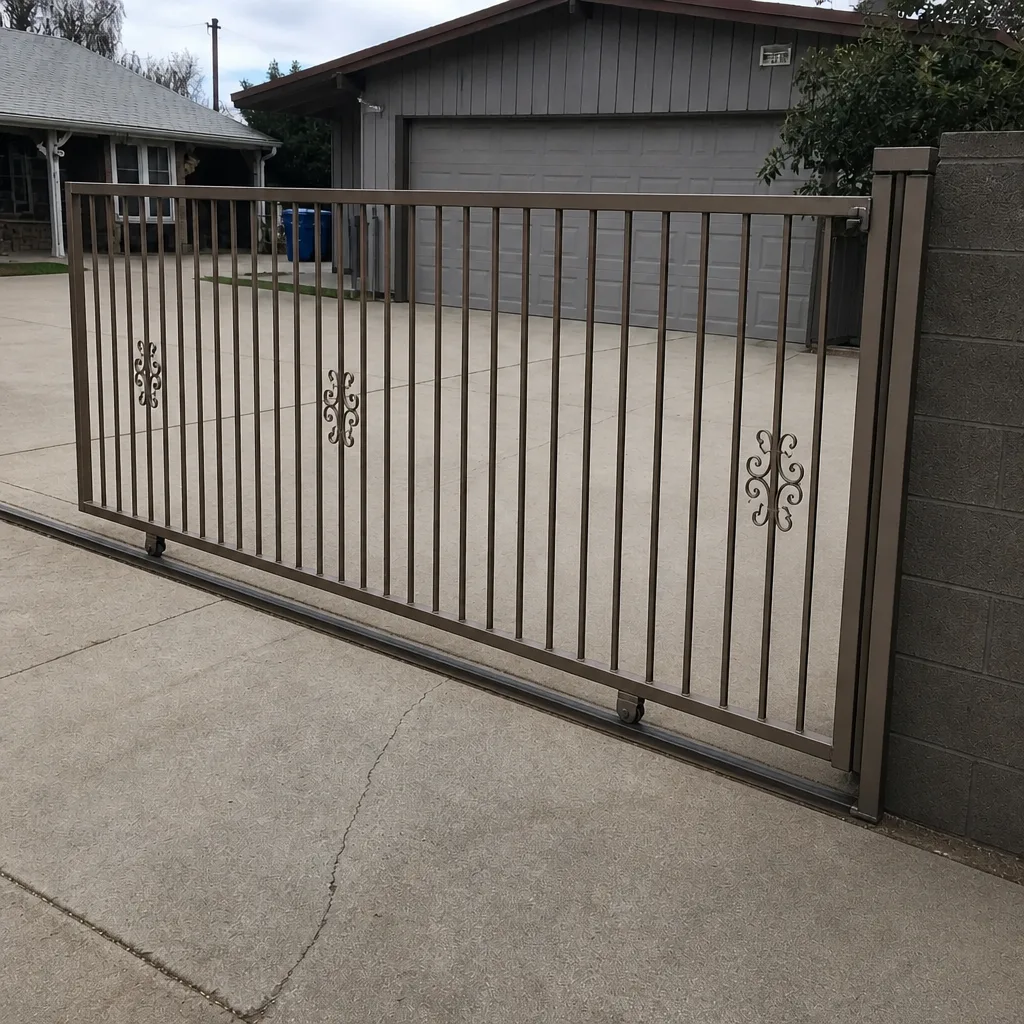
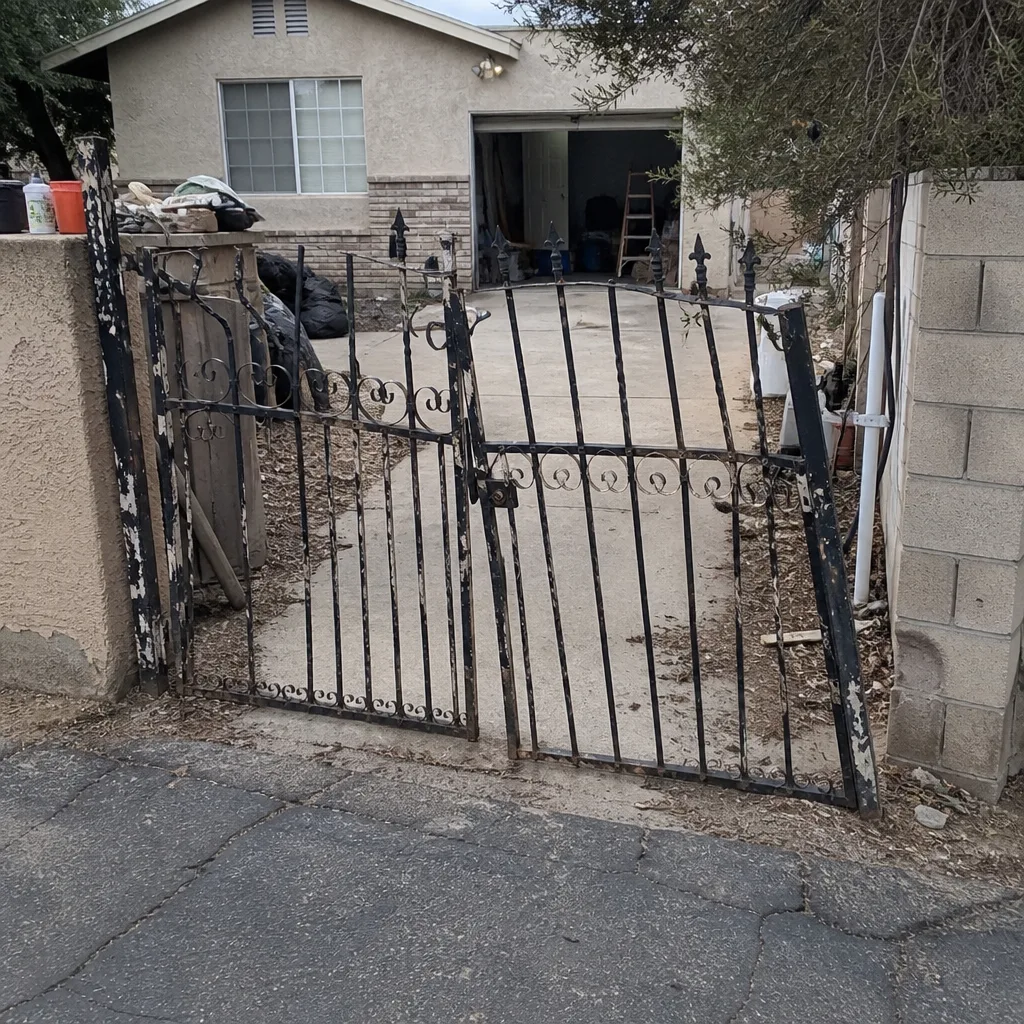
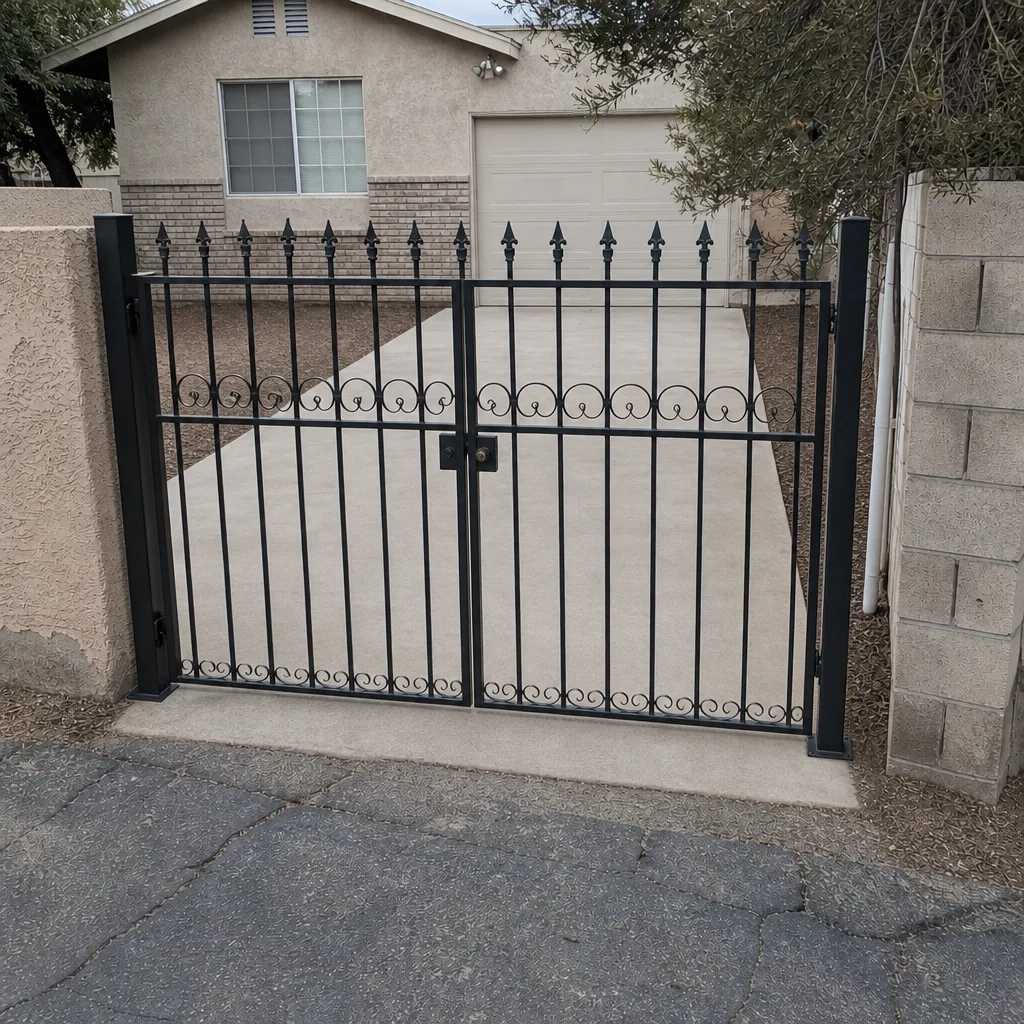
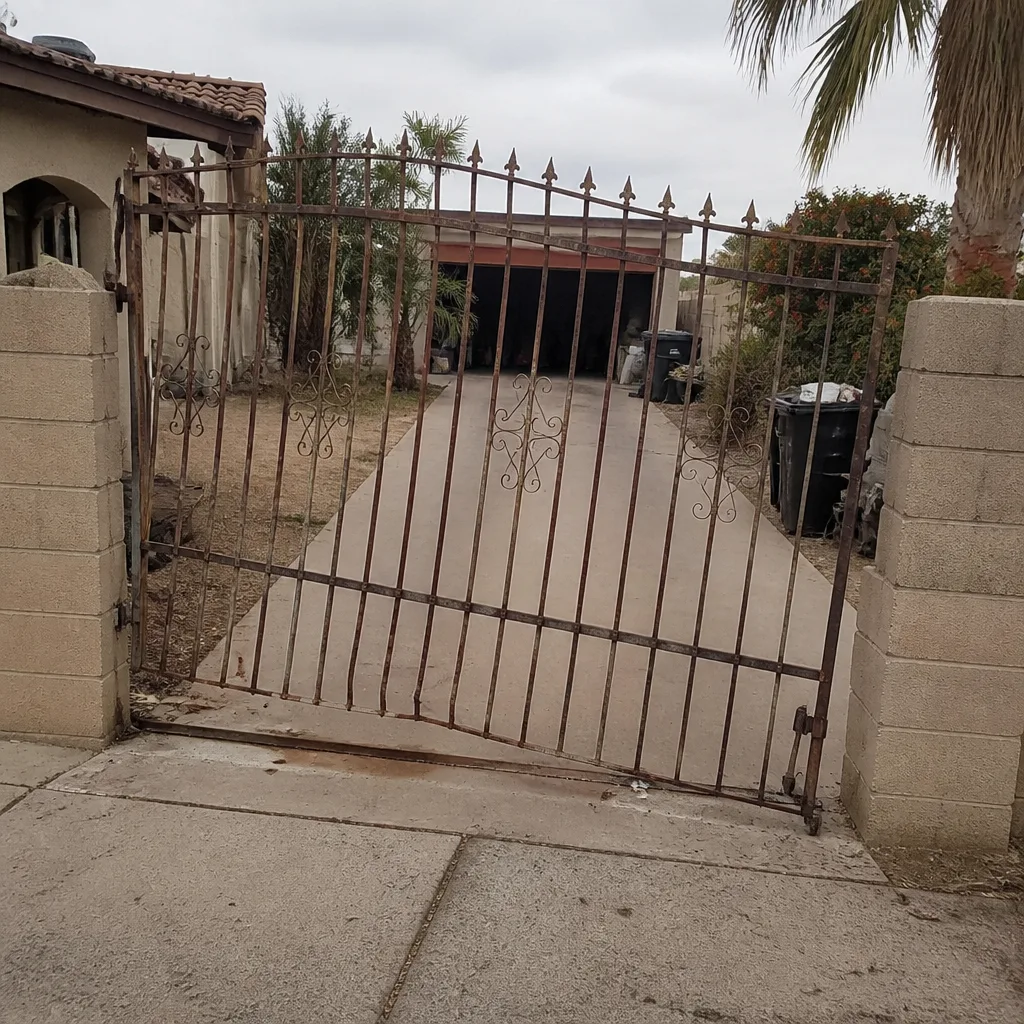
See the difference
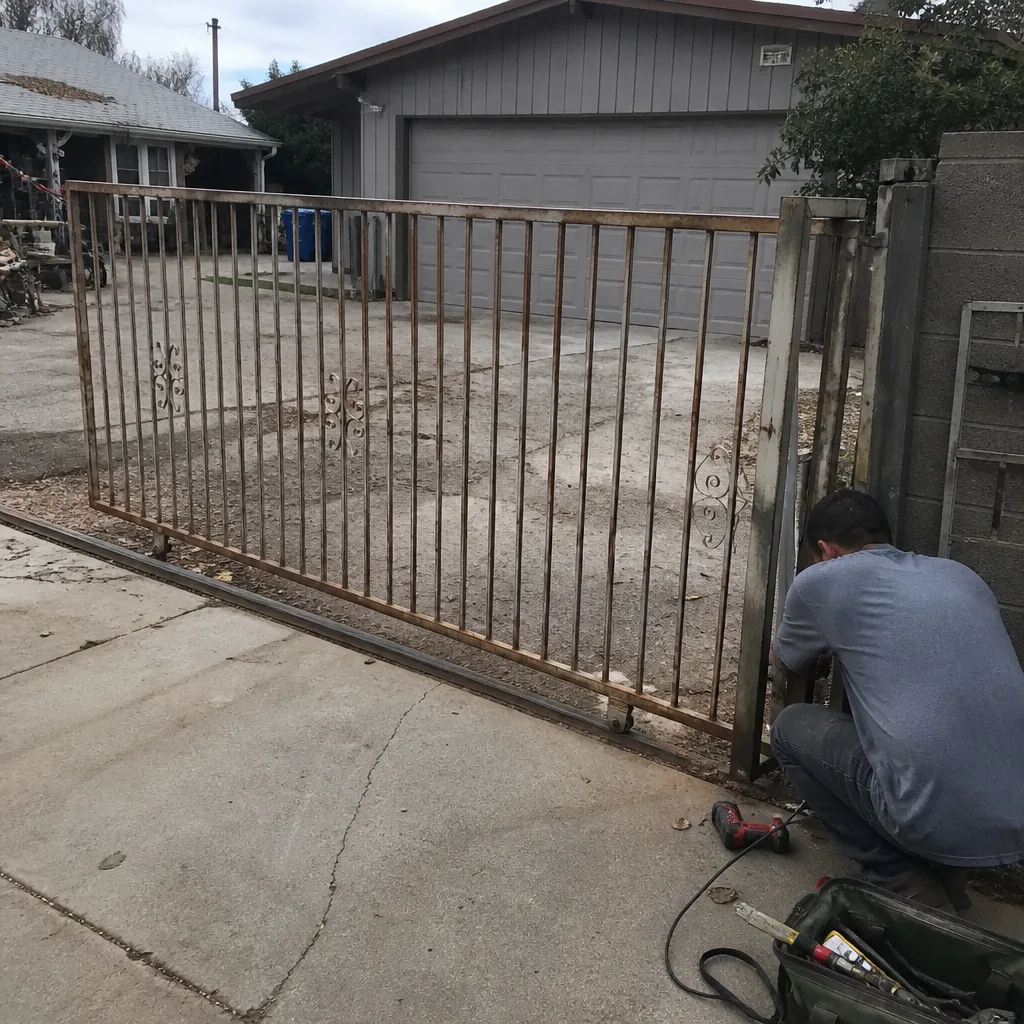 Before
 After
 Before
 After
 Before
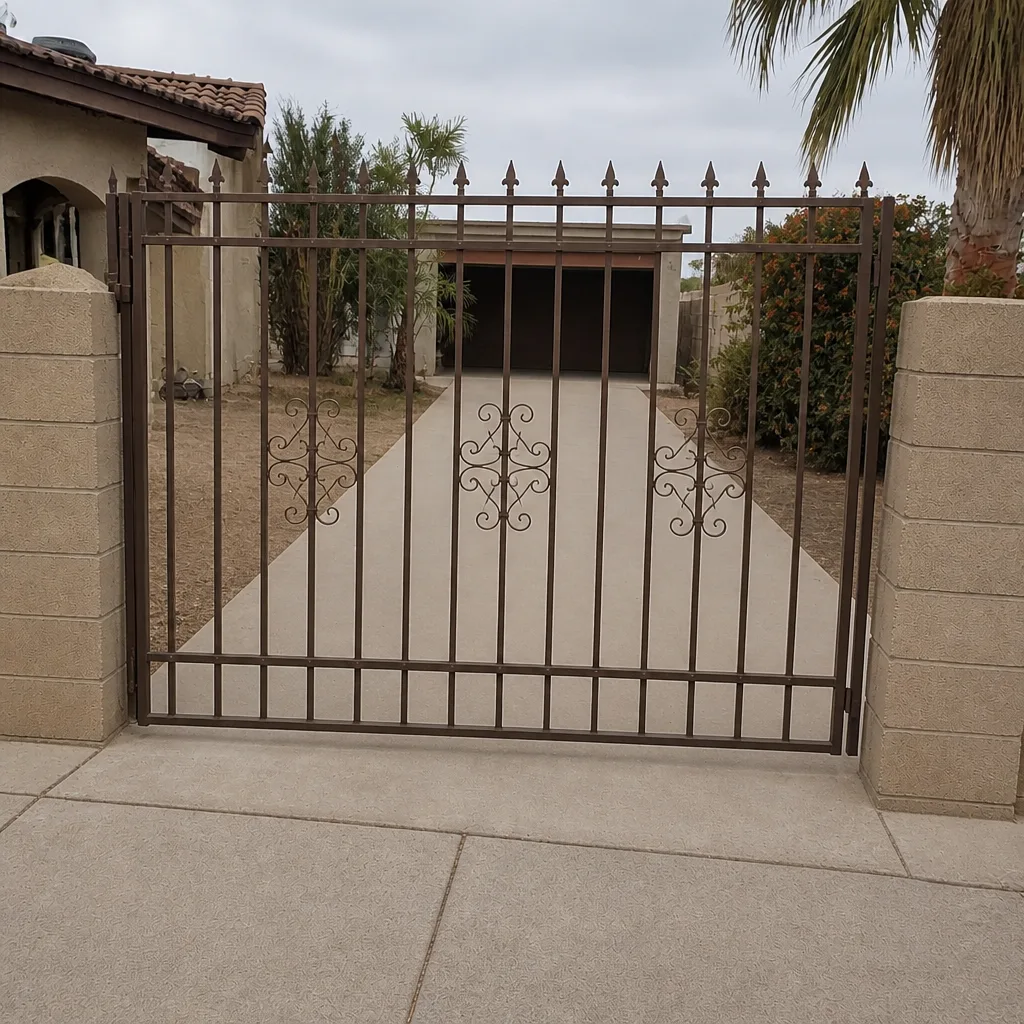 After
When to Call a Professional
Call a professional whenever the gate involves line voltage, motor control, or a symptom that could be dangerous. That includes a gate that reverses unexpectedly (it could crush a person or a vehicle), a gate that won’t latch, a control board that’s faulting repeatedly, and any repair involving the operator, safety edges, or photo-eye wiring. Also call if you’ve replaced remotes or batteries and the gate still misbehaves – that’s a signal the fault is in the operator, not the accessory. And call if you’ve just bought a property in Glendale with an existing gate and want to know what you actually have before something fails. Gate Repair Glendale offers free estimates in Glendale – call (855) 632-1674. We answer 24/7. Fast dispatch from 7am to 7pm, Sunday through Friday.
Frequently Asked Questions
In Glendale, a gate that reverses for no visible reason is most often responding to a misaligned photo-eye that’s triggered by heat expansion or post movement. The gate is doing its job – it senses an obstruction (in this case, a broken beam) and reverses for safety. A technician can realign the photo-eyes or reset the posts, and confirm power and wiring while they’re out. Call (855) 632-1674 for an exact diagnosis – estimates are free.
Yes. Sustained heat above 110°F accelerates degradation of solder joints and capacitors on control boards, which is why intermittent faults often show up in summer. The board itself may still function and just need the underlying wiring or voltage drop addressed, so the fault should be confirmed before any board is replaced. Call (855) 632-1674 to have the electrical side diagnosed.
Caliche is a dense, cemented subsurface layer common in the Glendale area that expands and contracts with moisture. When the ground around a gate post moves, the post shifts, the gate goes out of plumb, and the operator starts fighting the resulting misalignment. The symptom looks like motor failure, but the fix is post realignment. A gate specialist can check post plumb before testing the operator.
We work across the brands most commonly installed in Glendale, including LiftMaster, FAAC, BFT, Linear, Viking, Ghost Controls, DoorKing, Elite, and Mighty Mule. If your system has one of these – or one of the less-common brands a general repair company might turn away – a specialist should be able to diagnose it on its own terms. Call (855) 632-1674 and we’ll confirm your brand.
Electric gate repairs can often be addressed same day for common faults, such as photo-eye alignment, control board diagnostics, and wiring issues. Fast dispatch is available from 7am to 7pm, Sunday through Friday. Call (855) 632-1674 for an exact quote – estimates are free.
Probably not. A gate that grinds at the same point in every cycle is usually hitting a mechanical obstruction – a shifted post, worn hinge, track fouling, or misaligned operator arm – rather than a motor fault. A technician should look at post plumb and gate geometry before touching the operator. Call (855) 632-1674 to schedule a diagnostic.
The Bottom Line
Most gate problems in Glendale aren’t random, and they aren’t usually the motor. They’re heat stress on control boards and photo-eyes, caliche soil shifting posts out of plumb, or mismatched parts left behind by prior repairs – and the symptom you see is downstream of one of those three. Get the diagnosis right and the repair is usually a component or a post, not a new gate. A dedicated gate specialist working across your brand, from the motor to the control board, is what saves you the second and third call. Call Gate Repair Glendale at (855) 632-1674 for a free estimate. We answer 24/7, with fast dispatch from 7am to 7pm, Sunday through Friday. Other properties in the Glendale area get the same diagnostic-first approach, and we’re always happy to explain what we find before any work begins. Whether you’re inheriting a gate system or dealing with a fault that’s come back twice, start with the cause, not the symptom.
Written by the team at Gate Repair Glendale.