
Last updated November 16, 2026
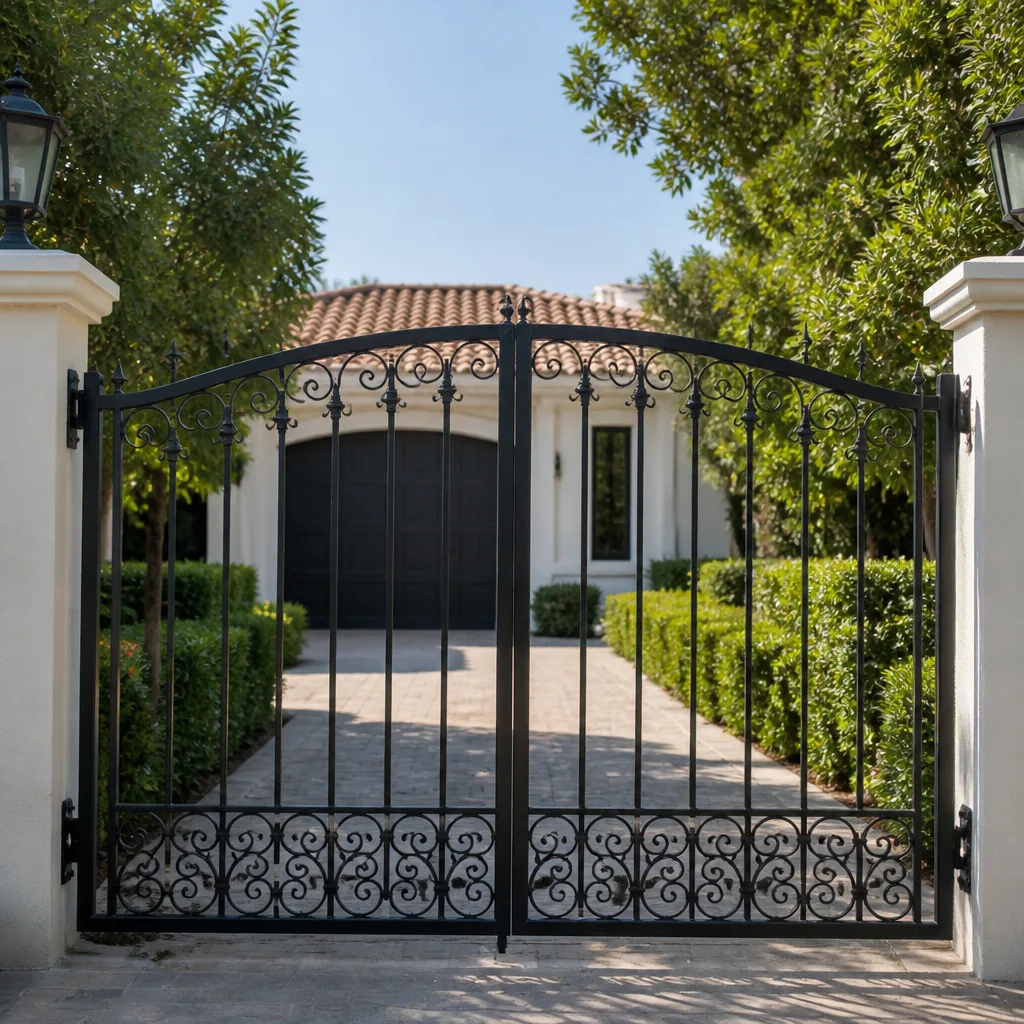 Wrought iron
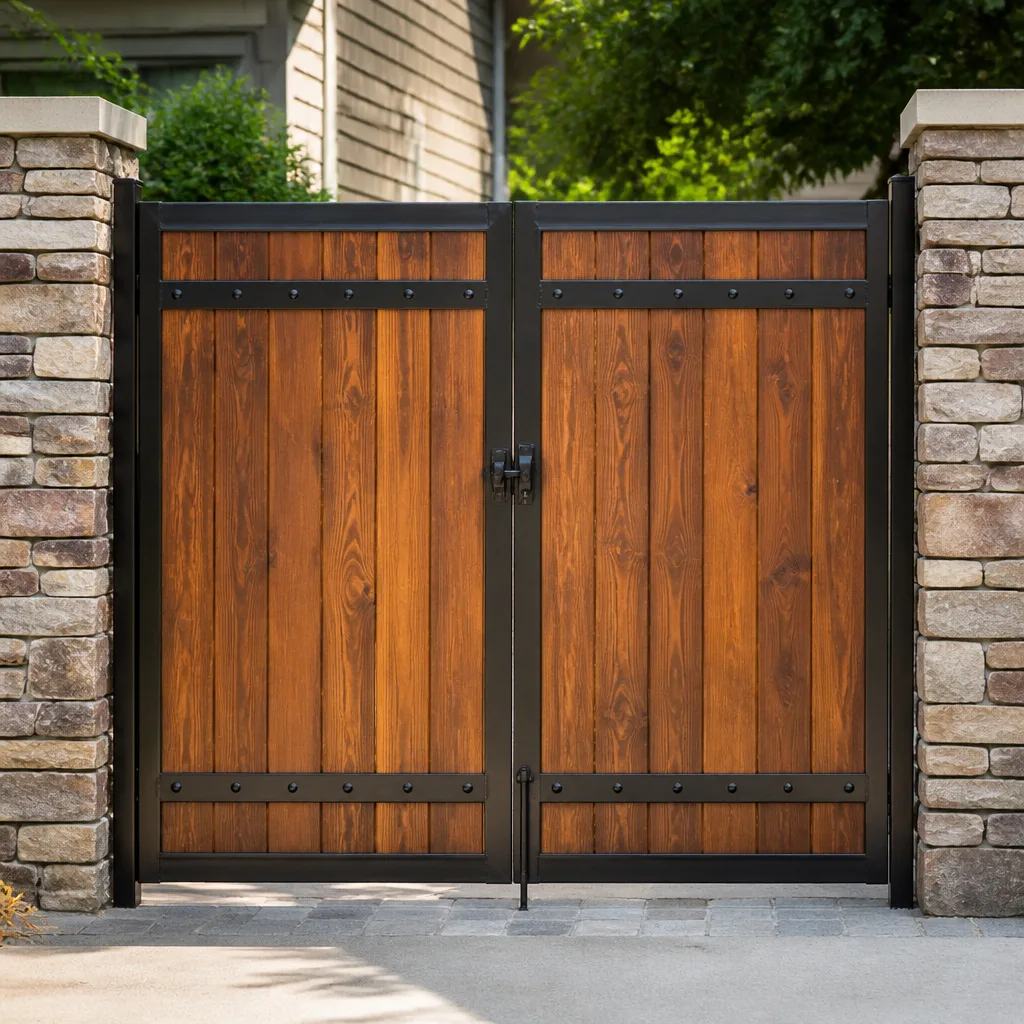 Wood & steel frame
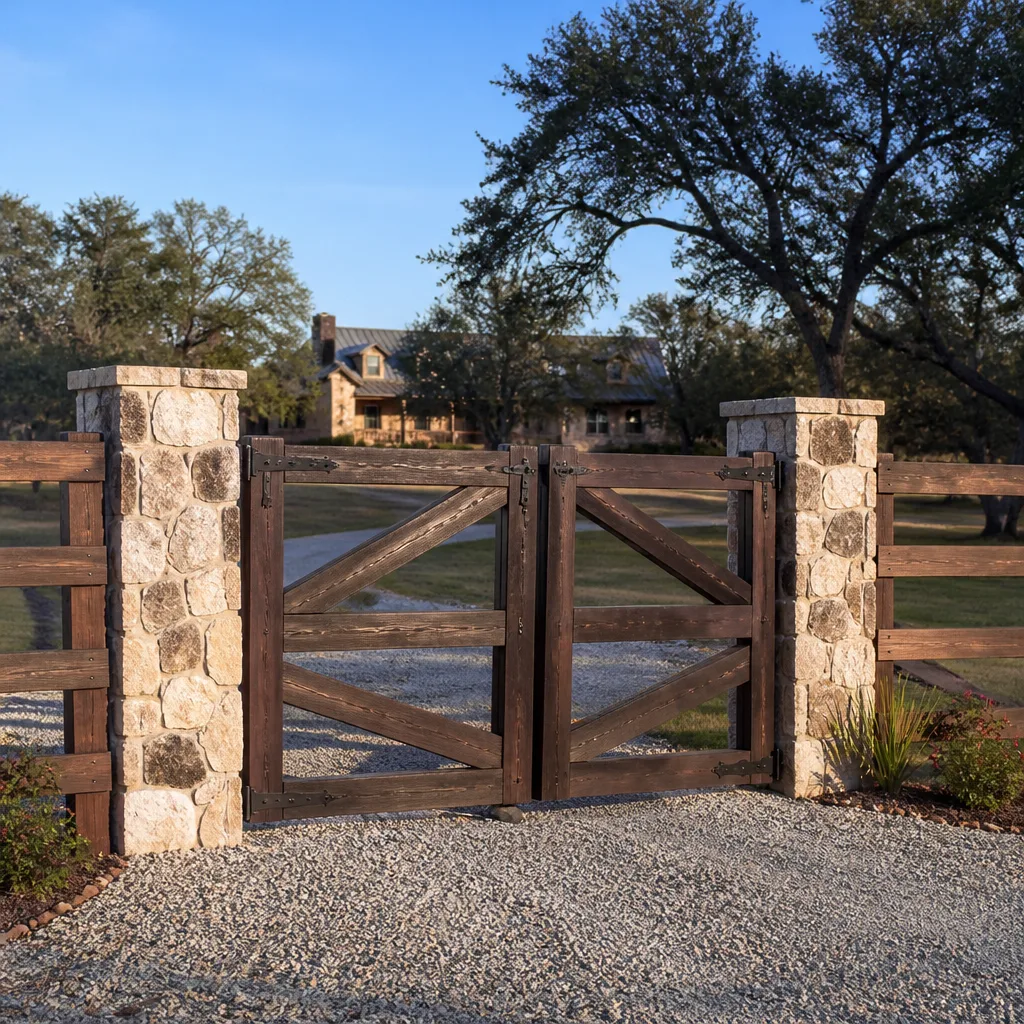 Farm & ranch
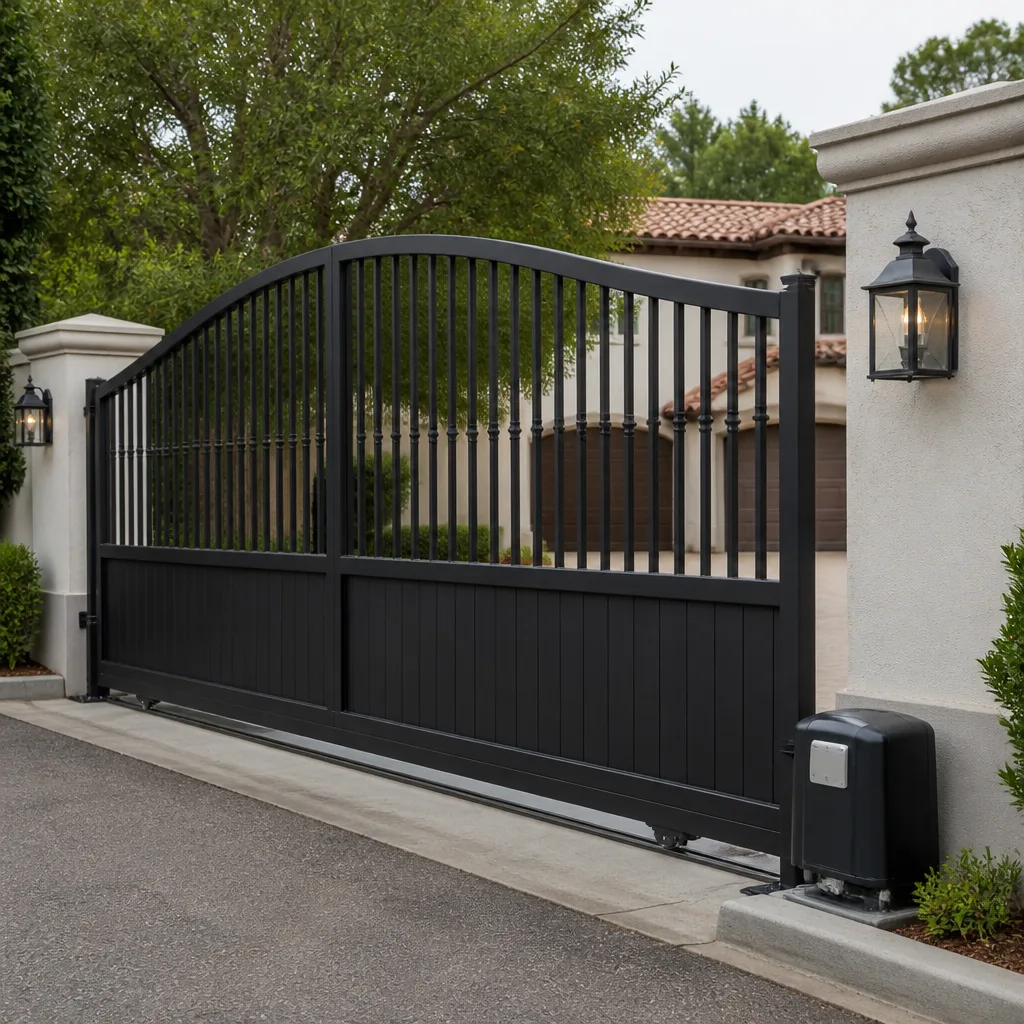 Sliding driveway gates
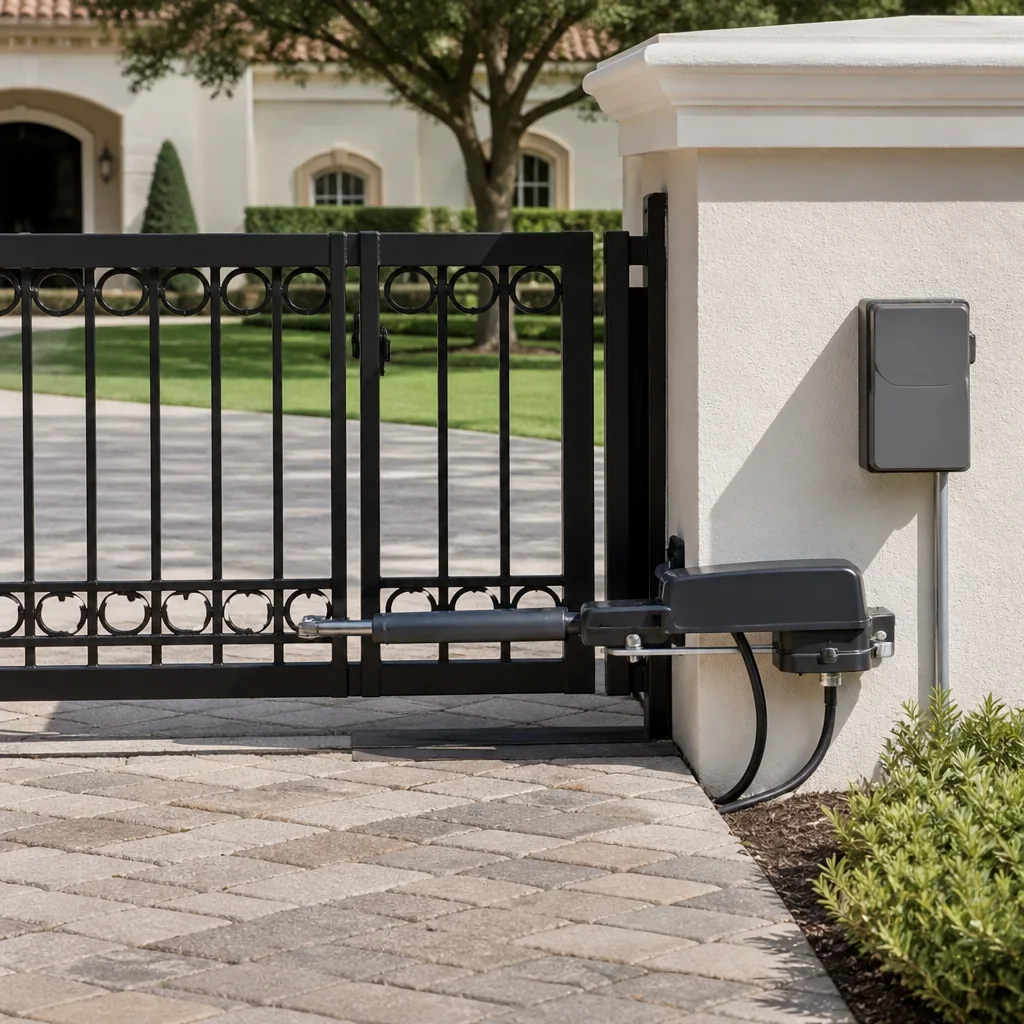 LiftMaster operators
Free on-site gate assessment - hinges, posts, and your LiftMaster or Nice gate operator checked before anything is quoted
The assessment is free and the quote is the invoice.
Get your free estimateChoosing the Right Gate Repair Brand: A Buyer’s Guide for Glendale
Most gate brand comparisons start with curb appeal, finish options and motor noise. Here’s the problem with that: in Glendale, the specification that decides whether a gate operator survives its first decade is the one nobody prints on the brochure. Several of the most heavily marketed operator brands in the U.S. list maximum operating temperatures right around 104°F, and Glendale spends well over two months of the year above that line. We’re not saying those brands are bad. We’re saying a brand decision made on looks, or on a national ad campaign, can set you up for parts delays and motor swaps you never budgeted for. This guide evaluates the leading brands the way a Glendale owner should – through heat, duty cycle, parts access and who can actually service the thing.
Quick Answer
The right gate brand for a Glendale property is the one with a realistic heat rating for valley summers, parts you can get in the Phoenix metro within a day or two, and at least a few technicians who know it well. For most residential driveways here, LiftMaster, FAAC and Linear are the safest bets for serviceability; for higher-cycle commercial gates, DoorKing and FAAC hold up best. Brand prestige matters far less than whether your operator can be repaired quickly and by more than one company.
Styles & brands we work with
- Wrought iron
- Wood & steel frame
- Farm & ranch
- Sliding driveway gates
- LiftMaster operators
Table of Contents
- Why Heat Rating Is the First Spec You Should Check in Glendale
- Thermal Operating Range: What the Brands Actually Rate
- Parts Availability in the Glendale and Phoenix Metro
- Brand-Agnostic Serviceability and the Single-Dealer Trap
- Total Cost of Ownership Over Five Years
- Residential vs. Commercial Duty Cycle: The Spec That Gets Ignored
- How to Choose a Brand in Seven Steps
- Common Mistakes to Avoid
Why Heat Rating Is the First Spec You Should Check in Glendale
An operator rated to 104°F isn’t broken when Glendale hits 110°F. It’s operating outside its design envelope. Motor windings run hotter, control boards get less margin, and the thermal protection inside the unit starts doing the job it was built to do – shutting the motor down mid-cycle. That’s what an owner experiences as a gate that “quits in the afternoon and works fine at night.”
The valley’s heat challenge isn’t a single hot day. It’s sustained load. The gate runs dozens of times a day in an environment where the air temperature near a west-facing metal fence can run considerably higher than the reported air temperature, and the operator housing sits in that heat all afternoon. Components age faster when they spend months near their ceiling.
Three practical consequences follow from this, and they shape everything else in this guide:
- Duty cycle derates in heat. An operator rated for a certain number of cycles per day is rated for that figure within its temperature envelope. Push the envelope and the realistic cycle count drops.
- Control boards and batteries fail first. They usually go before the motor does, and they’re the parts that keep your automation working. It’s why electric gate repair in Glendale so often turns into a board or battery question rather than a motor question.
- Parts need to be nearby. A two-week parts shipment in July is a two-week open driveway. A brand with local parts access has a repair timeline measured in days.
Our technicians have up to 12 years of experience working in valley conditions, and the pattern is consistent: the gates that last easiest are the ones whose owners treated the temperature spec as a real constraint, not a formality.
Thermal Operating Range: What the Brands Actually Rate
Thermal ratings are printed in every installation manual and skipped by nearly every buyer. Reading them is the single easiest way to protect yourself. The brands below are rated within a fairly tight band, but the practical differences show up in how each behaves when the envelope is exceeded – and that’s where service experience fills in the manufacturer’s spec.
- LiftMaster: Residential operators are typically rated to around 104°F (40°C). Widely installed, familiar to most technicians, and a strong choice for a Glendale driveway gate. When the afternoon heat pushes past rated temperature, thermal protection kicks in before damage – a safe failure mode.
- FAAC: Generally rated for smooth operation in the same broad band, with a reputation in the trade for handling heavy swing gates well and offering parts access across the metro. A solid choice for properties with larger or heavier panels.
- Linear: Residential garage and gate operators usually carry similar ratings. Common in the valley, straightforward to service, and rarely a fight to find parts or a technician who knows the control board.
- Viking: Rated in the same general range and often overlooked by general repair companies, which is precisely why we’re equipped to work on it. A capable operator that can be hard to get serviced by contractors who don’t carry familiarity with the brand.
- Mighty Mule: Budget residential units rated similarly; the trade-off is in materials and control board robustness, and the advantage is low upfront cost. In Glendale’s heat, an entry-level unit does its job but often reaches replacement age sooner.
None of these brands is designed to run indefinitely above rated temperature. The honest way to read a thermal spec is as a design target, not a guarantee of years of service above it. If your operator is going to sit in valley heat, choose a brand with good local parts access and schedule a check before summer rather than after a failure.
Parts Availability in the Glendale and Phoenix Metro
Parts access decides how long your gate sits open. An operator with excellent build quality and a four-day parts lead from out of state will keep your driveway unsecured for four days, plus the time to get a technician booked. An operator with a slightly humbler spec and a parts network in the Phoenix metro will usually be back in operation much sooner.
Here’s the practical difference, in general terms:
- Common brands – LiftMaster, Linear, DoorKing, FAAC: Distributors in the metro generally stock control boards, batteries, remote receivers and gear components, so a typical repair can proceed in days rather than weeks.
- Specialist and mid-volume brands – Viking, Ghost Controls, BFT and Elite: Parts can usually be sourced from regional distributors or the manufacturer’s dealer network, but you should expect some jobs to need a day or two of lead time. The critical variable is the technician’s knowledge, not the warehouse.
- Budget and entry-level units: Local part prices can be harder to find than the whole unit, and in some cases the sensible repair is a control board or battery swap, not a motor.
If you’re evaluating a brand before buying, ask the seller one question: “If the control board fails in July, where does the replacement ship from?” The answer tells you more about your future service experience than a spec sheet ever will.
Brand-Agnostic Serviceability and the Single-Dealer Trap
Some brands are only certified for service by one or two dealers in a metro area. On paper that sounds exclusive and reassuring. In practice, it creates a support bottleneck you live with for the life of the gate.
The pattern is predictable:
- You have one number to call, and no alternative if the quote feels high or the schedule is full.
- Downtime stretches because the dealer’s job queue becomes your job queue, with no one else to step in.
- Repair-first becomes replace-first because it’s easier for a dealer to move a new unit than to chase a part.
A gate specialist who is genuinely brand-agnostic doesn’t face that problem. We service LiftMaster, FAAC, BFT, Linear, Viking, Ghost Controls, DoorKing, Elite and Mighty Mule – the point isn’t the list, it’s that the diagnosis leads the recommendation rather than the brand we’re tied to. When a technician tells you a control board is failing, it should be because the board is failing, not because it’s the brand we’re trying to move.
Good gate repair in Glendale starts with a proper diagnosis: what failed, why it failed in this climate and at this cycle count, and whether the fault is mechanical, electrical or both. From the motor to the control board, one specialist should be able to trace the entire fault. That’s the outcome of brand-agnostic service, and it’s the reason we operate as a dedicated gate specialist rather than a general contractor with a gate sideline.
Total Cost of Ownership Over Five Years
Upfront price is the wrong number to compare. The right number is upfront price plus the cost of parts and repairs across the expected service life – and in Glendale’s heat, that five-year horizon separates brands more clearly than any spec sheet.
A realistic comparison looks like this, in general terms only (your actual figures depend on cycle count, gate weight and how far the operator sits from shade):
- Year 1: Installation cost is the dominant number. Budget units are cheapest here and may well work flawlessly in the first summer.
- Years 2 to 3: Batteries age, control boards see heat, remote receivers and photo-eyes take their share. Cost depends on parts availability: a $60 part available locally is a $60 repair; the same part shipped from out of state is more.
- Years 4 to 5: This is where heat-rated components and robust control boards separate from the budget tier. A unit that has spent four summers near or above its rated temperature may be facing a motor replacement, while a more heat-tolerant model may need only routine service.
Add to that the cost of downtime. On a commercial property, a gate that’s down can mean a staffed entrance or a manually opened one all day. On a rental property in Glendale, it can mean a tenant who can’t get into the complex. Downtime frequently exceeds the cost of the part.
For a free estimate and a written, upfront price on your specific system, call (855) 632-1674. The price is quoted and agreed before any work starts.
Residential vs. Commercial Duty Cycle: The Spec That Gets Ignored
Duty cycle is the number of times a gate opens and closes per hour or per day, and at what load. A residential operator rated for a typical homeowner’s pattern – perhaps 10 to 20 cycles per day – is not the same machine as one rated for a rental property, HOA gate or small commercial site that might run 100 or more cycles in a day.
The mismatch plays out in a specific way. The operator is mounted, works fine for months, then starts failing more often than the owner expects. Each failure looks like a part failure. The real cause is that the operator is running far more cycles than its design intent, in heat, and it’s wearing out faster than a homeowner unit should.
For commercial sites and higher-cycle properties, the trade-offs shift:
- DoorKing: Built for access control and high-cycle environments; a strong fit where the gate plus entry system is part of a managed property. Frequently found on commercial sites across the valley.
- FAAC: Handles heavy swing gates well and is a good match for larger properties with high traffic.
- LiftMaster commercial lines: A common and supported option where the site needs a familiar platform at higher duty.
The brand matters, but the duty rating matters more. Pick a residential operator for a commercial gate and no brand badge will save it. This is the kind of decision we’re here to help you get right – full-service lifecycle coverage from Gate Repair Glendale means a brand recommendation made against your actual cycle count, not a sales sheet.
How to Choose a Brand in Seven Steps
If you’re selecting an operator for a gate you’re installing, or evaluating whether to replace the one you have, this is the order of questions that keeps you out of trouble in Glendale.
- Measure your real cycle count first. Residential driveway: low. Rental property, HOA or small commercial site: higher, and this drives the duty rating.
- Read the thermal rating. Look for a maximum operating temperature that gives you headroom in valley heat. 104°F is a common ceiling; treat it as a constraint, not a suggestion.
- Match the operator to gate weight and sliding vs. swing. A heavy swing gate needs a different machine than a light slide gate, and choosing the wrong one leads to the same failure every summer.
- Check parts lead time in the Phoenix metro. Ask where the control board, battery and receiver will ship from.
- Confirm more than one company can service it. If only one local dealer can work on your brand, you’ve accepted a bottleneck.
- Calculate a rough five-year number. Upfront price plus expected parts and repairs, not just the install quote.
- Get a written estimate that sets the price before work begins. Not a verbal range. And make sure the estimate spells out what the operator is drawing on for power and how the safety edges are handled.
For new installation, treat this as a measured and scheduled job rather than a same-day fix. The right brand choice follows from the measurements, not the other way around.
Common Mistakes to Avoid
- Buying on national advertising alone. A brand with heavy TV exposure and thin local parts access is a slow repair waiting to happen. Marketing is not parts availability.
- Ignoring the thermal rating. A number most buyers never read is the one that decides how often you’ll be dealing with a mid-summer shutdown. It matters more in Glendale than almost anywhere in the country.
- Matching duty rating to a homeowner’s habit when you run a rental or HOA gate. Cycle count, not the brand logo, is the spec that will fail first. Get it right before the install.
- Choosing a brand with only one local dealer. You’re trading short-term convenience for a future where you have no alternative quote, no alternative schedule, and no second opinion.
- Treating a mid-afternoon shutdown as a broken motor. In Glendale heat, it’s frequently thermal protection doing its job. That’s a control and duty-cycle conversation, not automatically a motor replacement.
- Skipping the power run and safety edges in the estimate. A gate that’s automated needs proper low-voltage supply and working safety edges. An estimate that ignores them is not really an estimate.
- Accepting a verbal price. On any gate job, get the quote in writing and agreed before work starts. It’s the only protection against a surprise invoice.
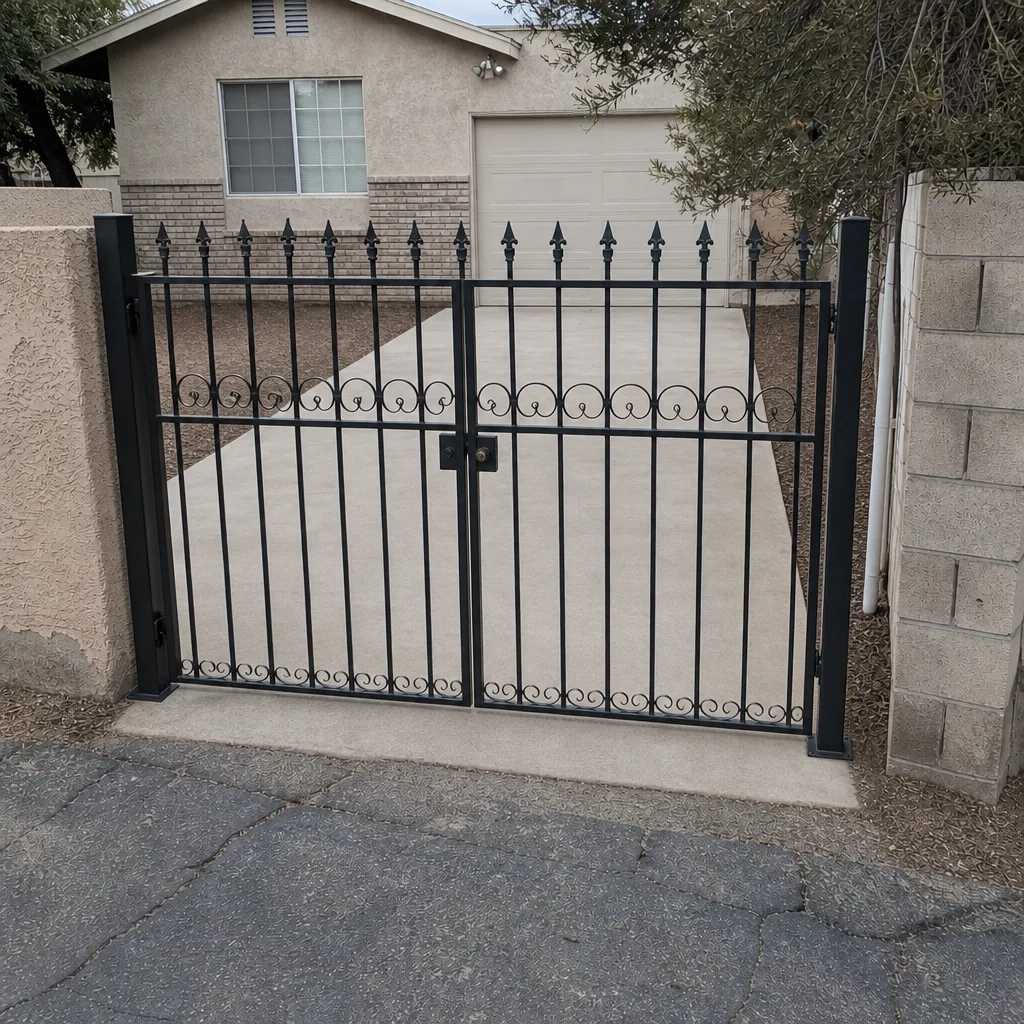
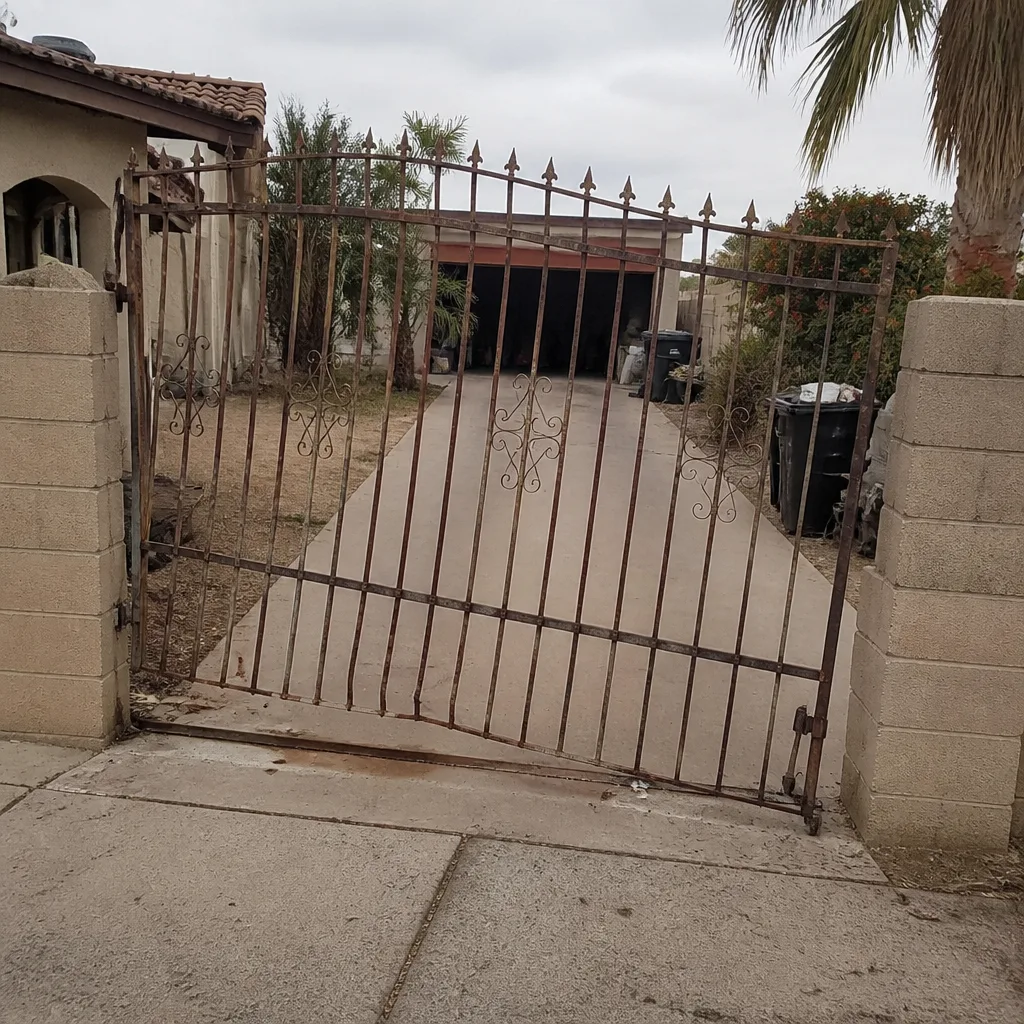
See the difference
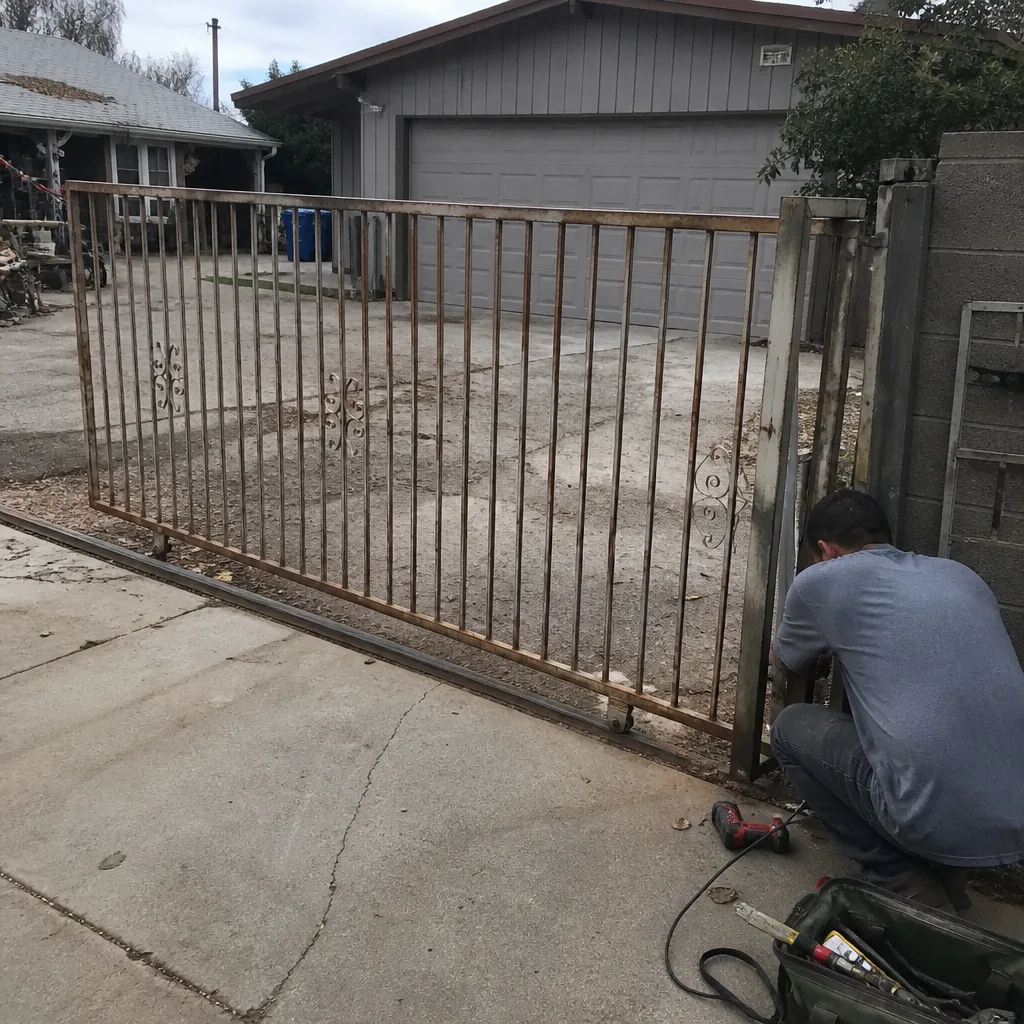 Before
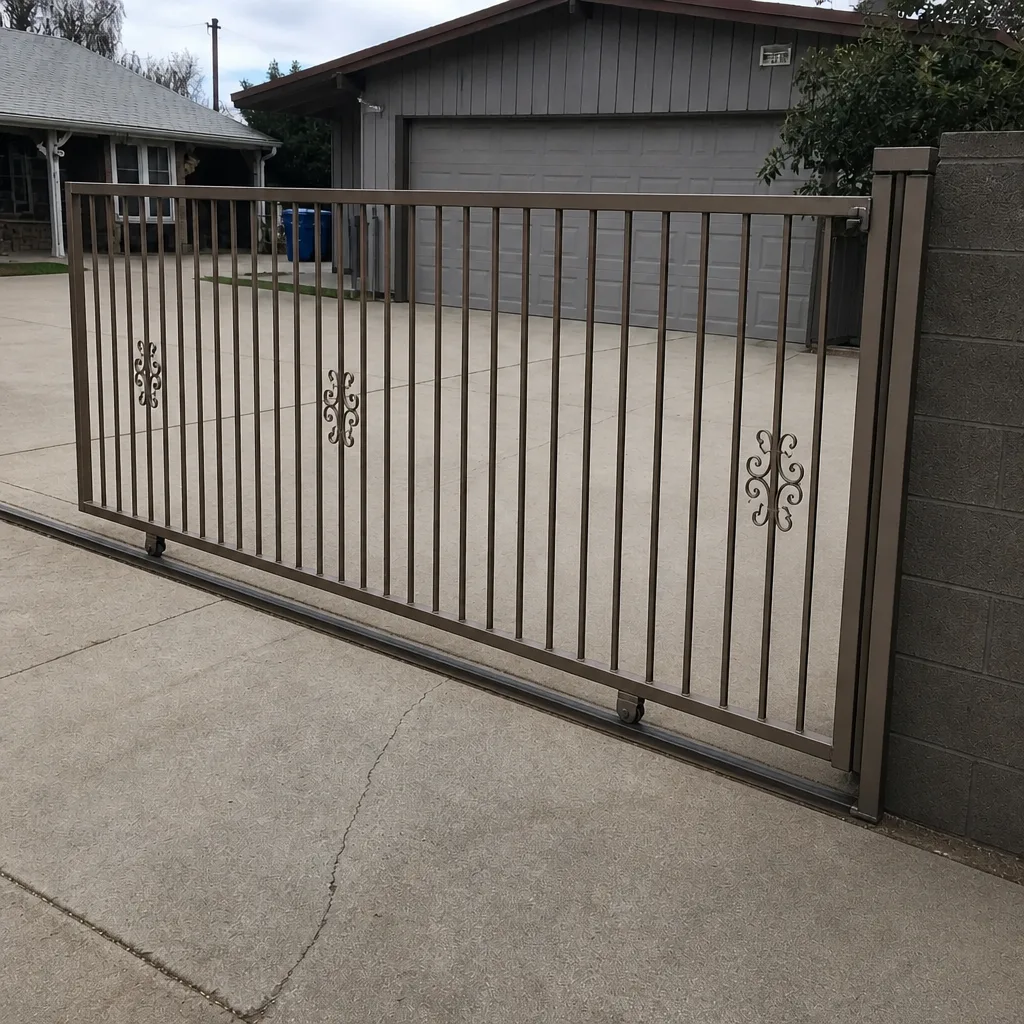 After
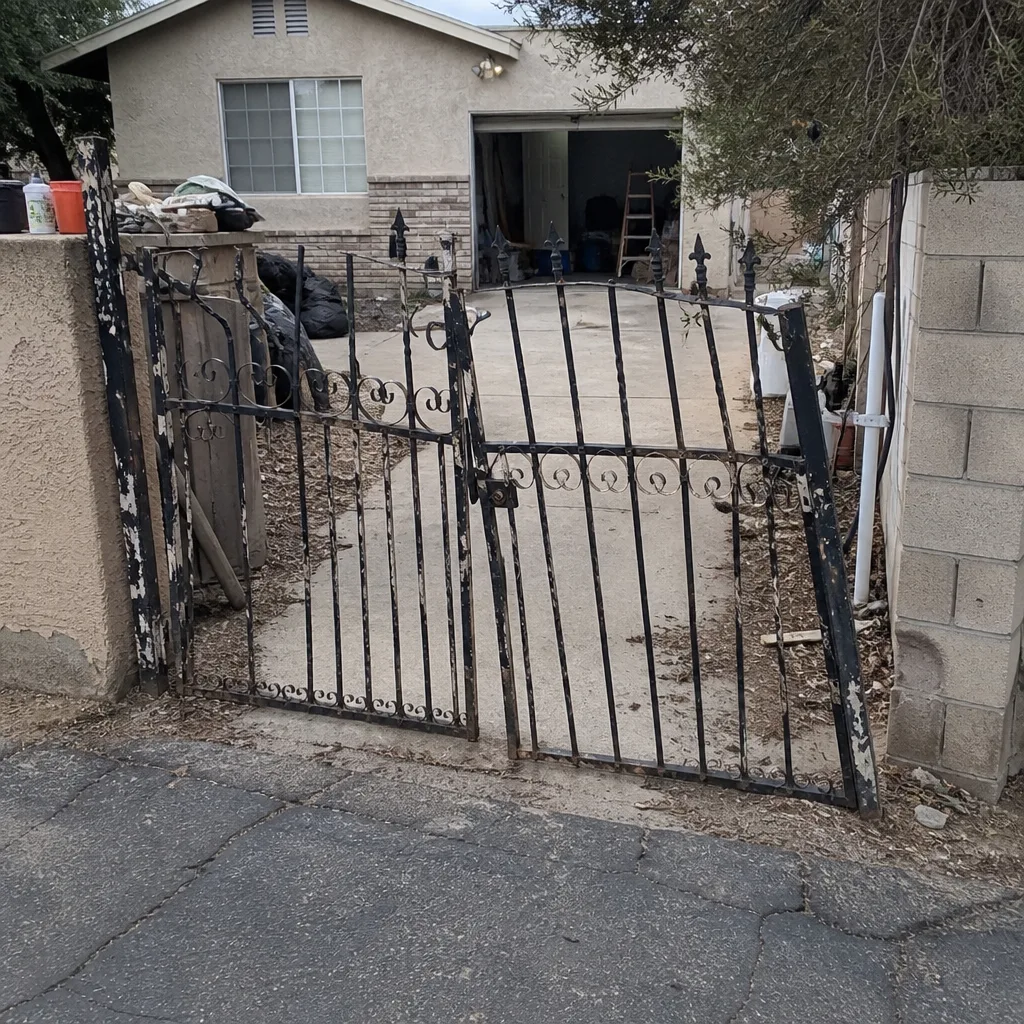 Before
 After
 Before
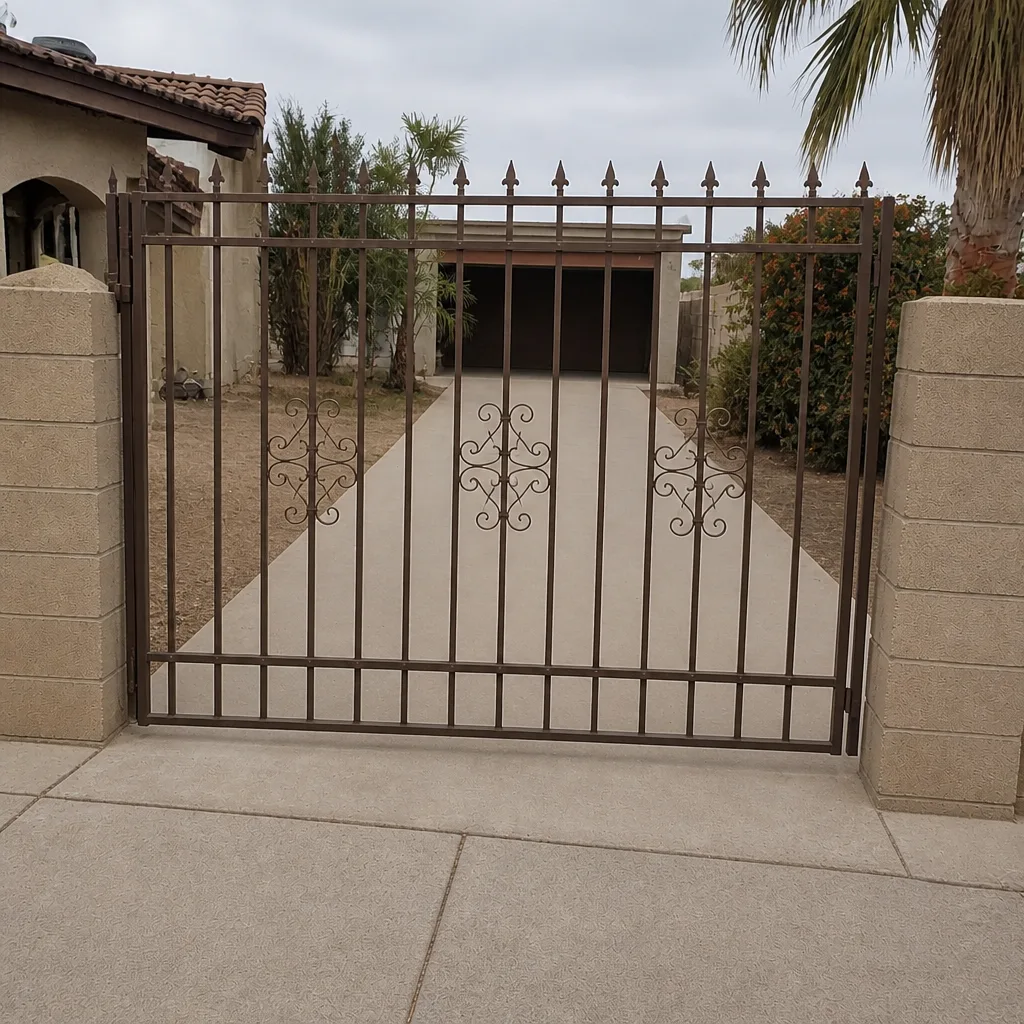 After
When to Call a Professional
Call when the operator shuts down in the afternoon and works at night, because that pattern usually points to thermal protection, a failing control board or a motor working against a bind – and diagnosing which one needs a technician with meters, not guesswork. Call when the gate has become unreliable enough that you’re opening it by hand. Call when a photo-eye or safety edge is behaving intermittently, because safety devices fail in ways that are not always obvious. Call when a control board has visible damage, and never when the failure involves the operator’s wiring or main power – that’s live electrical work and belongs with a trained professional. Call when a heavy swing gate panel is sagging or a slide gate has come off its track, since both create a crushing hazard if the gate moves.
Gate Repair Glendale offers free estimates in Glendale – call (855) 632-1674. We answer 24/7. Fast dispatch from 7am to 7pm, Sunday through Friday. We’re closed Saturday. Our technicians have up to 12 years of experience, and all work is quoted and agreed before it starts.
Frequently Asked Questions
There’s no single best brand, but for most Glendale driveways the practical shortlist is LiftMaster, FAAC and Linear – all are rated for the same general temperature band, all have parts access in the Phoenix metro, and all are familiar to a useful number of technicians. For higher-cycle commercial or HOA gates, DoorKing and FAAC are the stronger choices. Call (855) 632-1674 for an exact recommendation for your gate – estimates are free.
They can, and it’s a common cause of afternoon failures. Most residential operators are rated to around 104°F, and Glendale spends well over two months a year above that line. Thermal protection shuts the motor down before damage, and owners experience that as a gate that quits in the heat. The fix is a heat-aware diagnosis – board, battery, duty cycle and gate bind – not automatically a new motor. Call (855) 632-1674 and we’ll take a look.
Ask the seller directly where the control board, battery and receiver ship from if they fail in July. Common brands like LiftMaster, Linear and DoorKing are usually stocked or readily available in the metro, while specialist brands like Viking, Ghost Controls or BFT may need a day or two. If the answer is “from out of state”, plan for longer downtime. Call (855) 632-1674 and we’ll tell you what we see in practice.
Often not. A residential unit rated for 10 or 20 cycles per day is running well over its design intent on a rental property or HOA gate that opens dozens or hundreds of times a day, and the failures compound in heat. Match the operator’s duty rating to your real cycle count before you install. Call (855) 632-1674 for a free estimate with the right duty rated for your site.
We can work on most brands, including Ghost Controls and Viking, which are often overlooked by general repair companies. But if your brand really is locked to one dealer in the metro, you’ve accepted a support bottleneck – that’s a reason to weigh the brand choice carefully before you buy. For a diagnosis across the brands we service, call (855) 632-1674. Estimates are free.
Yes. Electric and automated gate work is a core service for us, not an add-on, and that includes the low-voltage supply and the safety devices. For new installation we work to a written, scheduled estimate – the power run and safety edges are part of the quote, not an extra added later. Call (855) 632-1674 for a free on-site estimate. We’re closed Saturday.
The Bottom Line
Choosing a gate brand in Glendale is a serviceability decision before it’s a design decision. Pick an operator with a realistic thermal rating for valley heat, a duty cycle matched to your actual cycle count, parts nearby in the Phoenix metro, and more than one technician who can work on it. Read the spec sheet the way it deserves to be read and get a written price before any work starts. If you’d rather have the diagnosis done by a dedicated gate specialist who works across the leading brands – LiftMaster, FAAC, BFT, Linear, Viking, Ghost Controls, DoorKing, Elite and Mighty Mule – we’re the team to call.
Gate Repair Glendale covers gate repair, electric gate repair and new gate installation across Glendale. We’re a full-service gate specialist, not a general contractor with a gate sideline, and we repair first rather than push a replacement. Bring us the brand, the motor and the control board, and we’ll get you back in operation.
Gate Repair Glendale
Call (855) 632-1674 for a free estimate. We answer 24/7. Fast dispatch from 7am to 7pm, Sunday through Friday. We’re closed Saturday. More at Glendale.
Written by the team at Gate Repair Glendale.