
Last updated November 16, 2026
 Wrought iron
 Wood & steel frame
 Farm & ranch
 Sliding driveway gates
 LiftMaster operators
Free on-site gate assessment - hinges, posts, and your LiftMaster or Nice gate operator checked before anything is quoted
The assessment is free and the quote is the invoice.
Get your free estimateGate Repair Emergency Preparedness Guide for Glendale Homes
Most gate failures we hear about aren’t mechanical mysteries. They’re moments of panic. The gate stops halfway, the phone comes out, and the homeowner makes a rushed decision before anyone has checked the simplest thing: whether the operator lost power, tripped a limit, or took a surge through the control board. A gate that won’t move is rarely a sign that everything needs replacing. It’s usually a sign that one component needs a look. This guide is a preparedness plan, not a repair manual. It walks you through how to secure a stuck gate, what to check before you call, and what to have documented so a Glendale technician can diagnose fast instead of guessing.
Quick Answer
If your automatic gate fails in Glendale, the first move is to stop cycling it and secure the opening. Then check the obvious: power at the breaker, the operator’s display or fault light, and whether anything is blocking the safety sensors. Use the operator’s manual release to move a swing or slide gate by hand, and never force a gate that won’t budge. Document your operator brand and model, then call a gate specialist. Most emergency calls come down to a handful of fixable causes.
Styles & brands we work with
- Wrought iron
- Wood & steel frame
- Farm & ranch
- Sliding driveway gates
- LiftMaster operators
Table of Contents
- How Do You Manually Open a Gate in an Emergency?
- What Fails First During a Glendale Monsoon?
- What Should You Do in the First 10 Minutes After a Power Surge?
- How Do You Secure a Gate That’s Stuck Open?
- What Should You Have Documented Before an Emergency?
- What’s Different About a Barrier Arm or Commercial Gate?
- What One Check Rules Out Most Failures?
- Common Mistakes to Avoid
How Do You Manually Open a Gate in an Emergency?
Every automatic gate has a manual release, and knowing where yours is before you need it is the single most useful thing you can do. The release lets you disconnect the operator from the gate leaf or carriage so you can move it by hand. The exact method depends on your gate type, and forcing the wrong part can strip gears or bend hardware.
Swing Gates
Most swing gate operators use a keyed release lever or a manual release handle near the motor housing. Turn the key or pull the handle to disengage the drive arm, then push the gate open or closed by hand. Some operators use a release that requires you to lift a lever and swing the arm free. Once disengaged, the gate should move with modest pressure. If it doesn’t, stop: something mechanical is binding and needs a technician.
Slide Gates
Slide gate operators typically have a manual release chain or a keyed clutch on the motor. Pulling the release chain or turning the clutch disengages the pinion so the carriage rolls freely along the track. Roll the gate slowly and watch the track for debris or a bent rail. A slide gate that jumps or grinds when moved by hand has a track or roller problem in addition to whatever stopped the operator.
Barrier Arms
Barrier arm operators usually have a keyed release on the cabinet that lets the arm drop or lift manually. Never let a barrier arm drop uncontrolled; guide it down by hand. Once the arm is in position, you can secure the lane until a technician arrives.
Our technicians have up to 12 years of experience with manual releases across the brands we service, including LiftMaster, FAAC, BFT, and Linear, so we can talk you through your specific operator before we arrive. If you’re not sure how your release works, call electric gate repair before you force anything.
What Fails First During a Glendale Monsoon?
Glendale’s monsoon season brings sudden wind, dust, and heavy rain, and gate failures cluster around those events. In our experience, three failure modes show up again and again during and right after a storm, and they’re not the ones most homeowners expect.
- Water intrusion at the control box. Even a well-sealed enclosure can take on moisture when rain drives sideways. Water reaches the control board and either shorts it or causes intermittent faults that clear and return. If your gate acts fine one hour and dead the next after a storm, suspect moisture at the board.
- Debris in the track or at the hinges. Wind-driven dust, palm fronds, and gravel collect in slide gate tracks and behind swing gate hinges. The operator senses extra resistance and either reverses or faults out. A slide gate that stops partway after a storm often just needs the track cleared.
- Limit switch drift. Vibration and temperature swings can knock a limit switch out of adjustment, so the gate no longer knows where fully open or fully closed is. The symptom is a gate that stops short, reverses immediately, or runs past its normal endpoint.
Before calling, look at the track and hinges for debris and clear what you can safely reach. That single step resolves a large share of post-storm problems on its own. If the gate still faults after the track is clear, the issue is in the operator or the board.
What Should You Do in the First 10 Minutes After a Power Surge?
A power fluctuation is the most common trigger for control board failure in automated gates. After an outage or a surge, a gate that won’t respond is often sitting on a board that’s locked up rather than one that’s destroyed. What you do in the first few minutes matters, and so does what you don’t do.
Safe Steps
- Kill power at the dedicated breaker for the gate operator before touching anything. This protects you and the board.
- Wait a full minute, then restore power. Many operators reboot cleanly from a hard power cycle and come back to normal.
- Watch the operator display or fault LED. A steady fault code tells a technician exactly where to start.
- Check the battery backup if your operator has one. A weak backup battery can cause erratic behavior after an outage.
What Not to Do
Don’t cycle the gate repeatedly to “see if it works now.” Each cycle sends current through a board that may already have a short, and repeated attempts can turn a recoverable fault into a dead board. Don’t open the control enclosure and start reseating wires unless you’re trained to do it; low-voltage control wiring is easy to misplace and hard to trace. And don’t reset a breaker that tripped more than once. A breaker that trips again is telling you there’s a fault, and pushing it is how small problems get expensive.
How Do You Secure a Gate That’s Stuck Open?
A gate left open in Glendale is a security gap, and the right temporary fix depends on your property layout. The goal is to close the opening without damaging the gate or the operator, and to make it obvious that the gate is intentionally secured rather than broken.
- Manual close and lock. If the manual release lets you close the gate by hand, close it and use a padlock or a gate latch to hold it. This is the cleanest option for swing gates with a center latch or a drop rod.
- Drop rods and ground anchors. Many swing gates have a drop rod that pins the leaf to the ground. Set it so the gate can’t be pushed open even if the operator is dead.
- Chain and lock across the opening. For a slide gate stuck open, a chain rated for the application across the frame and a lock is a fast temporary measure. Keep it visible so it reads as deliberate.
- Vehicle or barrier placement. On a driveway with room, parking a vehicle across the opening is a practical stopgap for a short wait. For commercial lots, a temporary barricade or cones at the lane keep traffic out of an unsecured area.
- Notify the right people. If you’re in an HOA, let the board know the gate is down and secured so they don’t send someone to force it. If you’re a property manager, log the time and the temporary measure for your records.
Never prop a gate open with something that could shift and let it swing into a vehicle or a person. And never disable a safety edge or photo eye to keep a gate moving; those devices are there to stop the gate on contact, and bypassing them is how people get hurt.
What Should You Have Documented Before an Emergency?
The information a technician needs to diagnose fast is information most homeowners don’t have ready. Gathering it now, while the gate is working, turns a slow back-and-forth into a single call.
- Operator brand and model. The nameplate is usually inside the operator housing or on the control box. Photograph it. LiftMaster, FAAC, BFT, Linear, Viking, Ghost Controls, DoorKing, Elite, and Mighty Mule all have different diagnostic paths, and the model number narrows it immediately.
- Control board brand and revision. If the board is visible, photograph the label. Board revisions matter for replacement parts.
- Serial number. It’s on the same plate as the model and tells a technician the production run and any known issues with that batch.
- Access code backup. Keep a written record of keypad codes and any remote programming in a safe place. If a board is replaced, codes often need to be reprogrammed, and without the record that becomes a second visit.
- Photos of the installation. Wide shots of the gate, the operator, the hinges or track, and the wiring run save time on-site.
- A note on recent changes. New landscaping, a fence repair, a power outage, a storm: all of it helps a technician connect symptoms to causes.
Keep this file on your phone or in a folder with your home records. When something fails, you’ll have the answers ready. If you’d rather have a specialist look the system over before anything goes wrong, our gate repair service can go through the whole setup with you.
What’s Different About a Barrier Arm or Commercial Gate?
Commercial and barrier arm gates add a layer of complexity because they manage vehicle traffic and often sit on a schedule or an access control system. A failure on a commercial gate isn’t just an inconvenience for one homeowner; it can back up a lane, strand tenants, or leave a lot unsecured.
Barrier arms usually fail in one of three ways: the arm won’t raise, it raises but won’t lower, or it moves erratically. The first check is always power and the control board fault light, since a commercial operator will usually report the fault. The second is the loop detector or access control signal. A gate that won’t raise for a car may be getting no signal from the loop, not failing mechanically.
For commercial properties in Glendale, the temporary security plan matters as much as the repair. If a barrier arm is down and the lane is blocked, you need a way to move traffic safely, whether that’s a manual raise, a temporary barricade, or directing vehicles to another entrance. Property managers should have a written plan for who secures the gate, who calls for service, and how tenants are notified. We work on DoorKing and other access control operators and can talk through your setup before a failure happens.
What One Check Rules Out Most Failures?
Before you call anyone, look at the operator’s fault indicator and the physical gate together. That single paired check, the fault light plus a slow look at the gate’s travel path, rules out the majority of failure modes before a technician arrives, because it separates an electrical fault from a mechanical one.
- No fault light, gate won’t move. Power or the board is the likely culprit. Check the breaker and do a hard power cycle first.
- Fault light flashing a code. The operator is telling you what’s wrong. Write the code down before you reset anything.
- No fault, gate moves partway and stops. Mechanical resistance or a limit switch. Clear the track and hinges, then retest.
- Gate reverses immediately on contact. Safety edge or photo eye issue, or a limit that’s out of adjustment. Don’t bypass the safety device; that’s a technician call.
- Gate works from one remote but not another. Remote or receiver programming, not the operator. A code backup makes this a quick fix.
That paired check takes about two minutes and gives a technician a real starting point. Instead of arriving cold, they arrive knowing whether they’re chasing a board, a limit, or a track. In our experience, that’s the difference between a same-day fix and a return visit.
If you need a specialist who works across brands rather than one locked into a single manufacturer, Gate Repair Glendale is where to start. We’ll take a look at your system and tell you what it actually needs.
Common Mistakes to Avoid
- Forcing a gate that won’t move. If the manual release is engaged and the gate still won’t budge, something is binding. Pushing harder bends hinges, strips gears, or breaks the release itself, and turns a small repair into a real one.
- Bypassing safety edges or photo eyes. Disabling a safety device to keep a gate cycling is the most dangerous mistake on this list. Those devices stop the gate on contact, and without them a gate can seriously injure a person or damage a vehicle.
- Resetting a tripped breaker repeatedly. A breaker that trips again is reporting a fault. Cycling it sends current through a compromised board and can turn a recoverable fault into a replacement.
- Cycling the gate to “test” it after a surge. Each cycle strains the control board. Power cycle once, note the fault, and stop.
- Calling a general handyman for an electric gate. Automated gates involve low-voltage control wiring, motor diagnostics, and brand-specific fault codes. A gate specialist reads the system; a generalist guesses at it.
- Not having the model number ready. Without the operator model and board revision, a technician can’t bring the right part or plan the right diagnostic. That missing photo is the most common reason a repair takes two visits in Glendale.
- Leaving a gate open overnight without a plan. In an HOA or a commercial lot, an unsecured gate draws attention. Close and lock it manually, or set a temporary barrier, and log what you did.
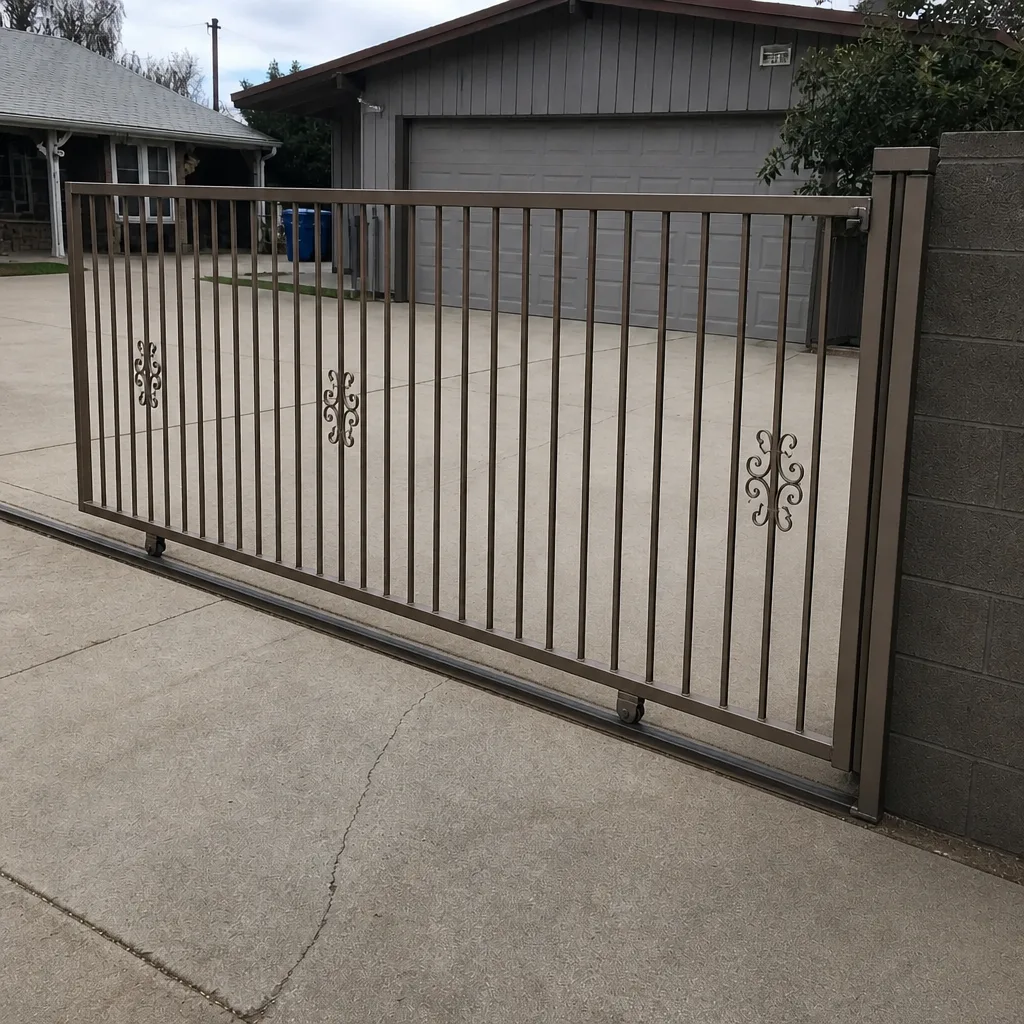
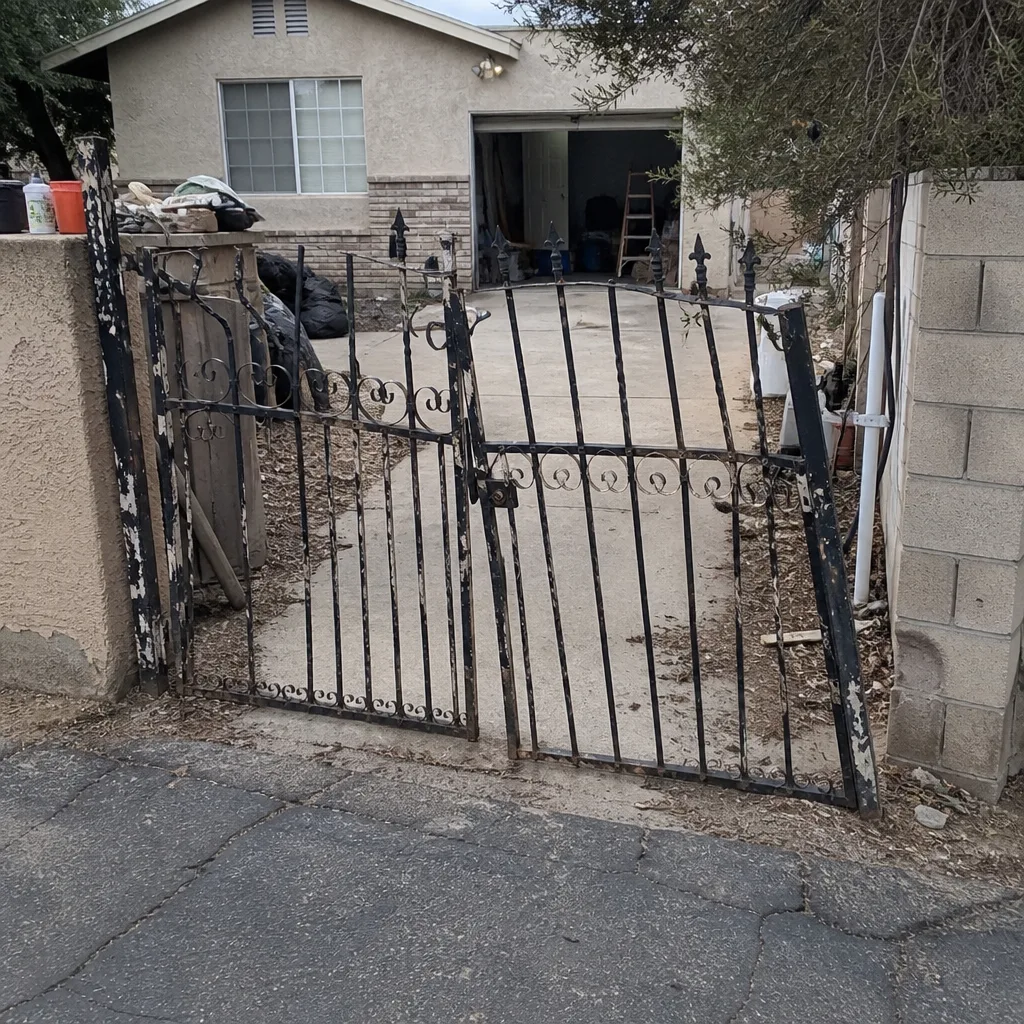
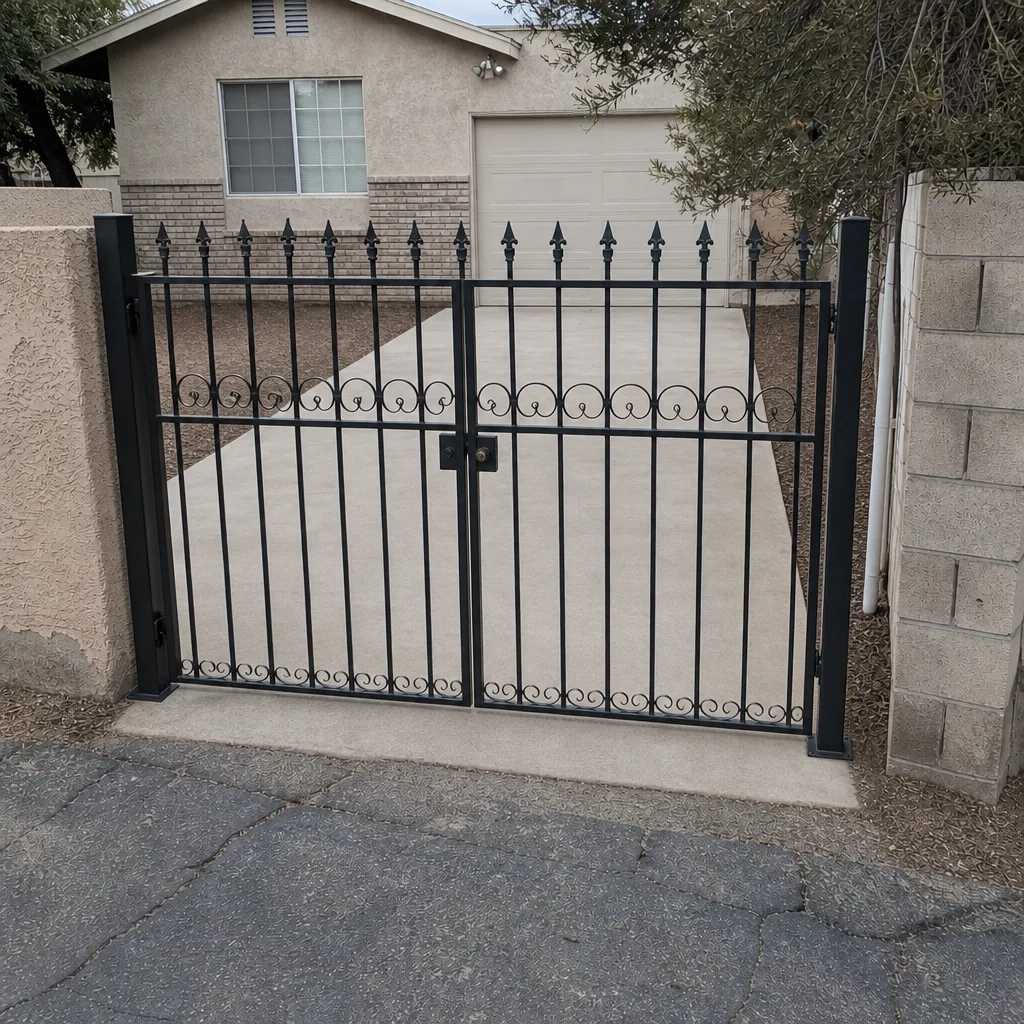
See the difference
 Before
 After
 Before
 After
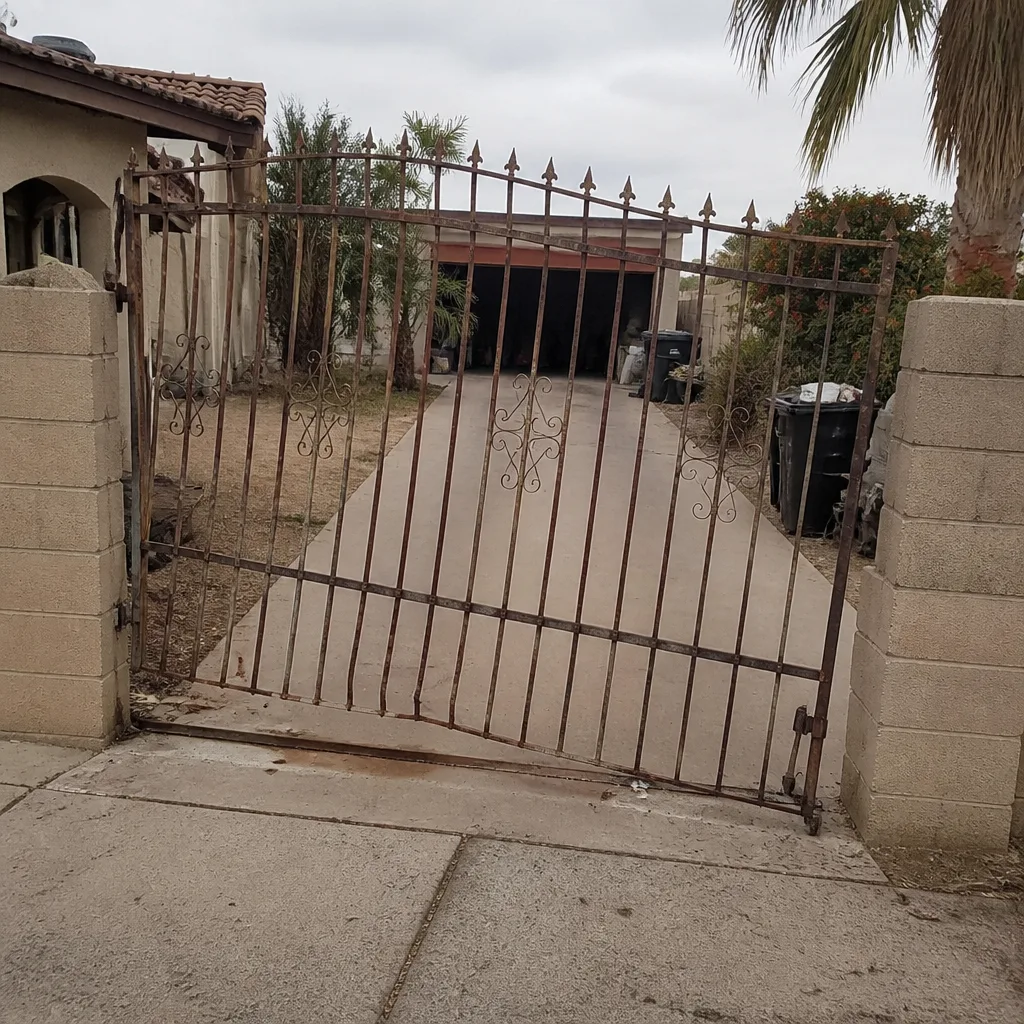 Before
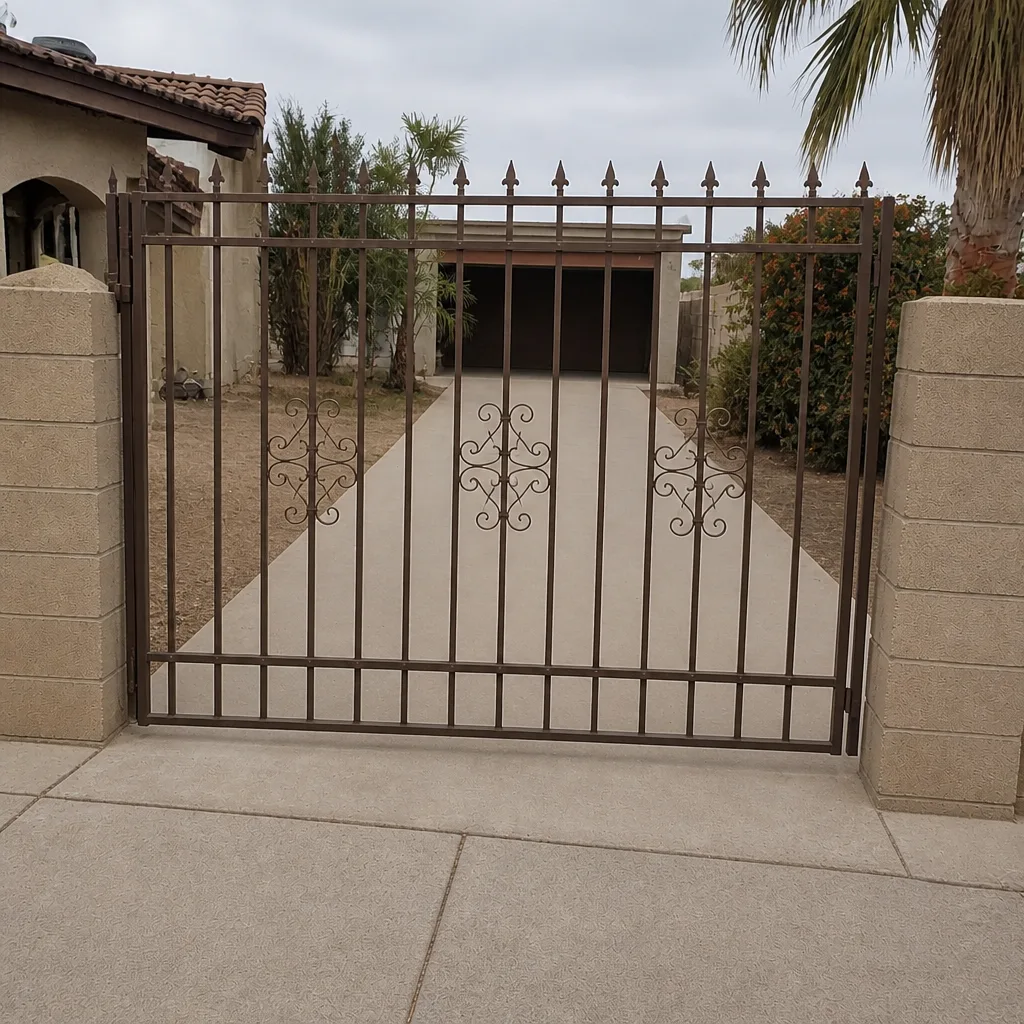 After
When to Call a Professional
Call a gate specialist when the gate won’t move after a manual release, when a breaker trips more than once, when the operator shows a fault code you can’t clear, or when a gate reverses on its own or moves erratically. Call immediately if a safety edge or photo eye isn’t stopping the gate, since that’s a hazard to anyone in its path. For commercial properties, call when a barrier arm is down and traffic is blocked or a lane is unsecured. Most of these are diagnosable and fixable without replacing the gate. Gate Repair Glendale offers free estimates in Glendale. Call (855) 632-1674. We answer 24/7, with fast dispatch from 7am to 7pm, Sunday through Friday.
Frequently Asked Questions
Yes, every automatic gate has a manual release that disconnects the operator so you can move the gate by hand. For a swing gate, use the keyed release lever or handle near the motor; for a slide gate, pull the release chain or turn the clutch. Move the gate slowly and stop if it binds. Call (855) 632-1674 if you’re not sure how your release works, and we’ll walk you through it.
Check the slide gate track or swing gate hinges for wind-blown debris and clear what you can safely reach, then look at the operator’s fault light. Debris and limit switch drift are the most common post-storm causes. If the gate still faults after the track is clear, the issue is in the operator or control board. Call (855) 632-1674 for a diagnosis.
Reset it once if it tripped, then watch the operator’s fault indicator. Do not reset a breaker that trips again; that’s a sign of a real fault, and repeated resets can damage the control board. If the breaker won’t hold, stop and call a technician. Call (855) 632-1674 for a free estimate.
Close and lock the gate manually if the release allows, use a drop rod or ground anchor on a swing gate, or chain and lock a slide gate across the opening. On a driveway, a vehicle across the opening is a practical short-term measure. Never prop a gate in a way that lets it swing into traffic. Call (855) 632-1674 to schedule the repair.
The operator brand and model, the control board brand and revision, the serial number, and a backup of your access codes. Photos of the installation and a note on any recent storm, outage, or landscaping changes help too. Keep these on your phone or with your home records. Call (855) 632-1674 and we can tell you exactly where to find each one.
We service nine of the most widely installed gate operator brands, including LiftMaster, FAAC, BFT, Linear, Viking, Ghost Controls, DoorKing, Elite, and Mighty Mule. That includes systems many general repair companies won’t touch, like Ghost Controls and Viking. Call (855) 632-1674 with your model number and we’ll confirm what we can do. For more on our local coverage, see Glendale.
The Bottom Line
A gate emergency is manageable when you know three things: how to release your operator by hand, what to check before you call, and what to have documented. The manual release secures the opening, the fault light plus a look at the track separates electrical from mechanical, and the model number and code backup make the repair fast. Avoid forcing a stuck gate, bypassing safety devices, or resetting a breaker that keeps tripping. Those three refusals prevent most of the damage we see. When the gate needs a specialist, a brand-agnostic technician who works across LiftMaster, FAAC, BFT, and Linear arrives ready to diagnose what’s actually wrong.
Call (855) 632-1674 for a free estimate. We answer 24/7, with fast dispatch from 7am to 7pm, Sunday through Friday. If you’re planning ahead rather than reacting to a failure, our electric gate repair service and full gate installation work can keep your system ready for the next monsoon.
Written by the team at Gate Repair Glendale.