
Last updated November 16, 2026
 Wrought iron
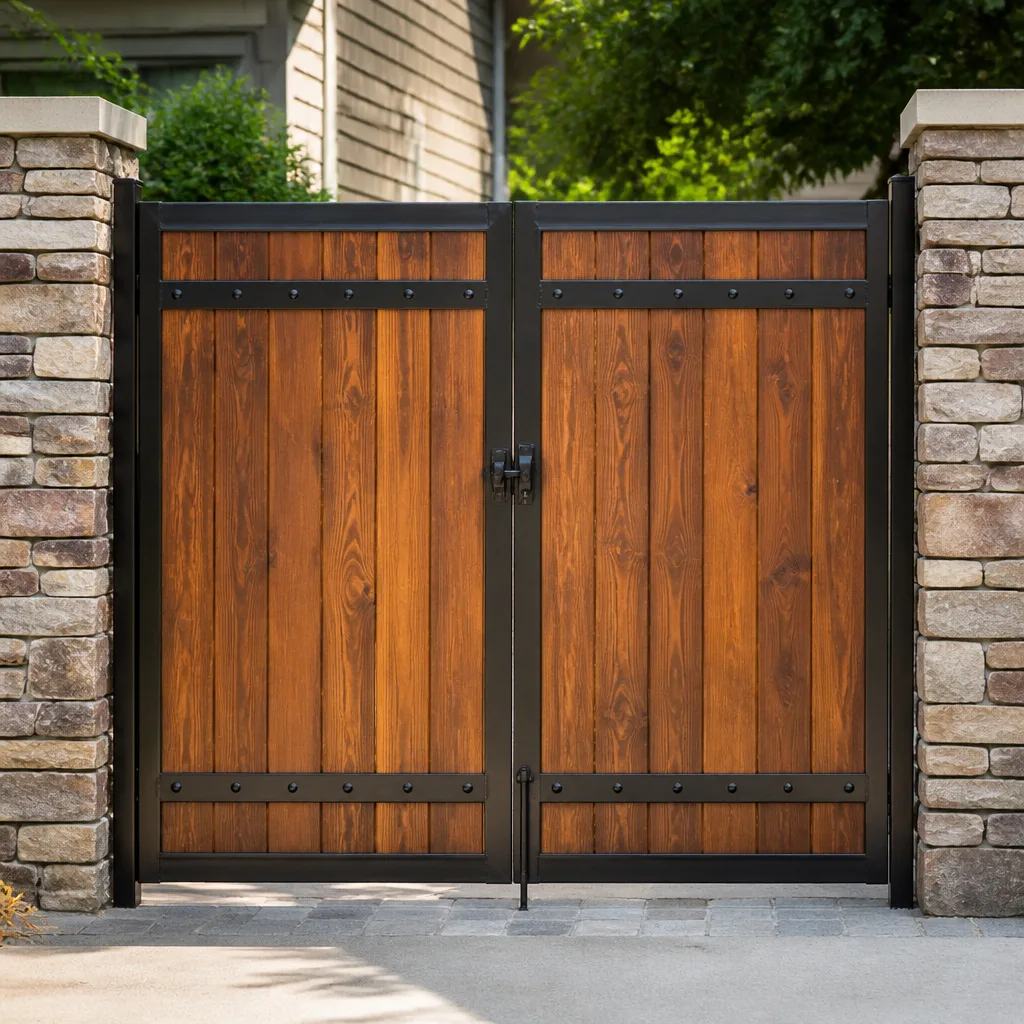 Wood & steel frame
 Farm & ranch
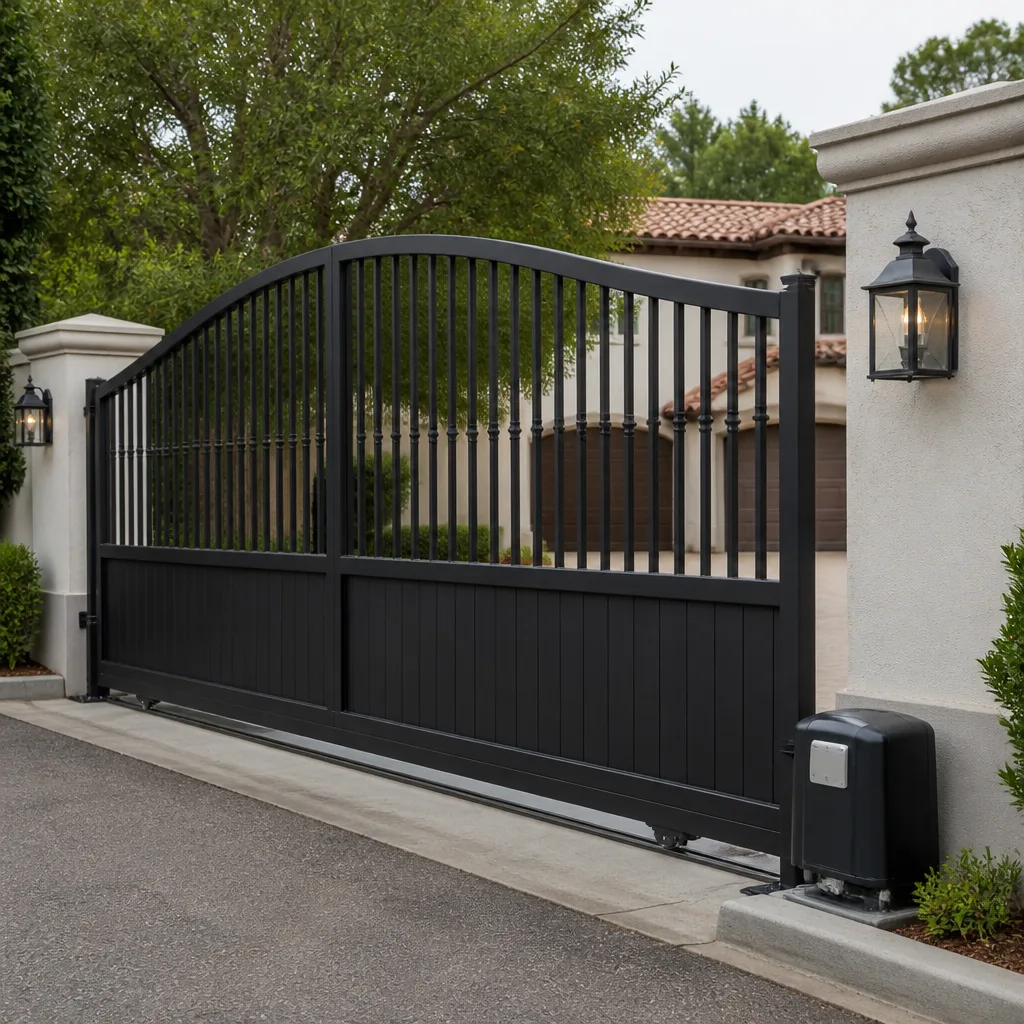 Sliding driveway gates
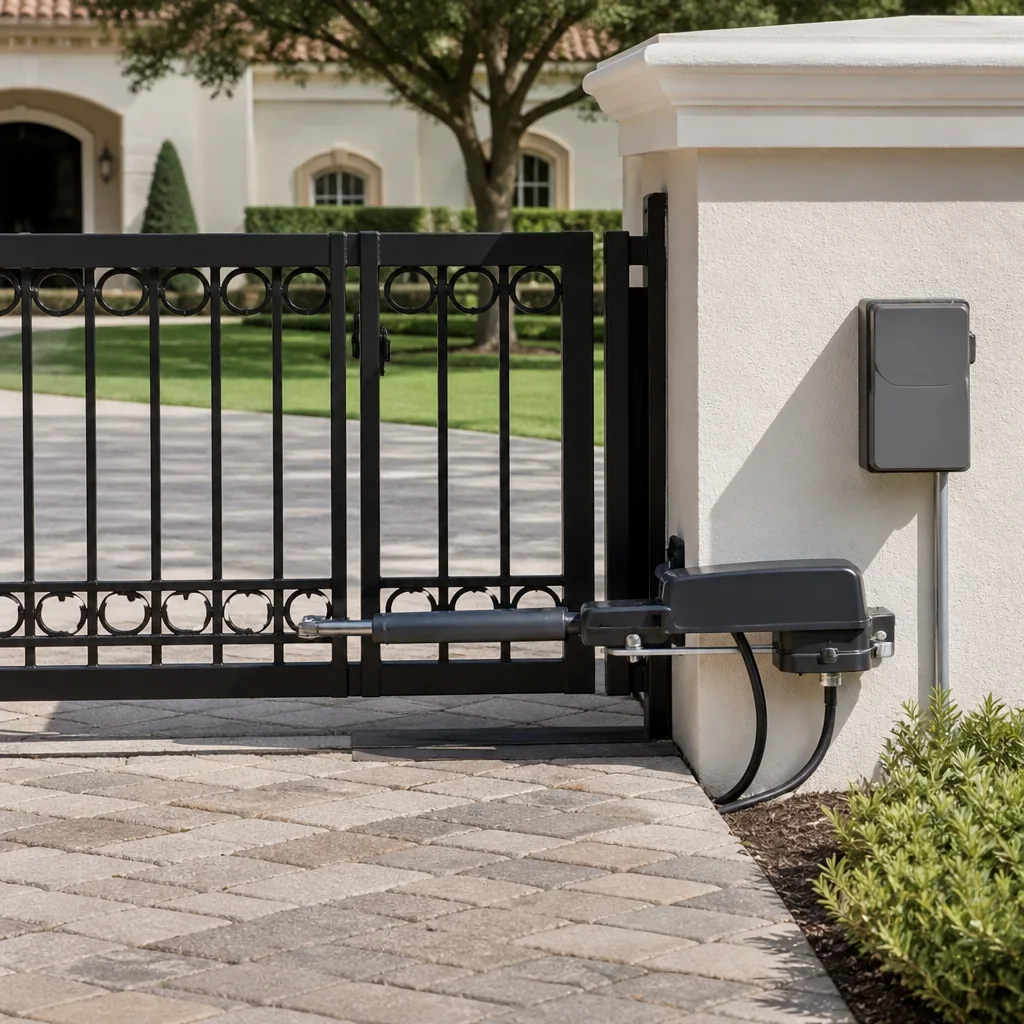 LiftMaster operators
Free on-site gate assessment - hinges, posts, and your LiftMaster or Nice gate operator checked before anything is quoted
The assessment is free and the quote is the invoice.
Get your free estimateGate Repair Maintenance Schedule: What to Do and When
Most gate maintenance advice is written for a place with four gentle seasons. Glendale doesn’t have those. What it has is a long dry stretch, a violent dust-and-rain season, and a short cold window that catches people off guard. The single most preventable automatic gate failure in the Southwest usually isn’t a motor burning out. It’s a roller or hinge seizing because grit from dust storm season packed into grease that should’ve been swapped for a dry formula months earlier. This guide replaces the vague “lubricate twice a year” advice with a time-stamped schedule built around what Glendale weather actually does to gate hardware, from the panel to the motor to the control board.
Quick Answer
A working gate maintenance schedule in Glendale follows the climate, not the calendar quarter: deep-clean and switch to dry lubricants before dust storm season, inspect and re-torque after the monsoon rains pass, test the operator’s battery backup before summer heat peaks, and check for cold-weather binding during the December and January chill. Do the small tasks monthly and the full inspection twice a year, and most gate failures get caught while they’re still cheap to fix. The schedule below breaks each of those into specific tasks with a specific time of year to do them.
Styles & brands we work with
- Wrought iron
- Wood & steel frame
- Farm & ranch
- Sliding driveway gates
- LiftMaster operators
Table of Contents
- Why a Glendale Gate Needs a Climate-Based Schedule
- The Month-by-Month Gate Maintenance Calendar
- Choosing the Right Lubricant for Each Component
- Testing Your Operator’s Battery Backup
- Inspecting the Gate Panel Itself
- Operator and Control Board Checks
- Safety Device Testing
- Keeping a Maintenance Log That Actually Helps
Why a Glendale Gate Needs a Climate-Based Schedule
Gate hardware in Glendale lives through conditions that a maintenance chart built for a mild climate never accounts for. Summer heat bakes lubricant thin, so it runs off the surfaces it was supposed to protect and leaves metal exposed. Then dust storm season arrives and fine grit sticks to whatever residue is left, turning a smooth hinge into a grinding one. The monsoon rains that follow wash some of that grit away but also drive water into places it doesn’t belong, especially around the operator housing and the gate posts. And the short December-to-January cold window contracts metal just enough that a gate which ran clean all summer can start to bind.
That cycle is why a schedule tied to seasons beats one tied to quarters. The tasks don’t change much from gate to gate. What changes is the timing. If you grease everything in June and call it done, that grease is gone by August and the dust has moved in. If you test your battery backup in October, you’re testing it after the worst heat has already passed, which is backwards from what you actually want to know.
This matters whether you have a sliding gate on a residential driveway or a swing gate at a small commercial entrance. In our experience working across Glendale, the gates that avoid mid-summer breakdowns are the ones where the owner moved the heavy maintenance tasks to just before the hard seasons, not after. We service equipment from Linear, Viking, Ghost Controls and DoorKing among others, and none of those brands are immune to a climate-driven schedule. The operator brand changes the parts. It doesn’t change the seasons.
The Month-by-Month Gate Maintenance Calendar
Here’s the schedule organized by Glendale’s actual weather events rather than the four seasons. Treat the months as windows, not fixed dates. If a dust storm hits early, move the pre-monsoon work up. If the rains are late, hold the post-monsoon inspection until they’ve passed.
The Gate Maintenance Calendar at a Glance
- January: Watch for cold-weather binding on rollers and hinges; check panel fasteners after temperature swings.
- February: Full inspection after the cold window; clean and re-lubricate hinges and rollers with white lithium grease.
- March: Test the battery backup before heat builds; clean photoeye lenses with silicone spray.
- April: Pre-dust-storm prep: strip old grease, switch exposed moving parts to a dry lubricant, check weather seals.
- May: Inspect gate posts and anchor bolts; re-torque fasteners; confirm the operator housing seals are tight.
- June: Watch the operator for heat-related strain; verify the control board has no fault codes; clean vents.
- July: Dust storm season peak: clean grit from tracks and hinges weekly; check photoeyes for dust film.
- August: Continue weekly cleaning; check panel alignment after wind events; test the safety edges.
- September: Post-monsoon inspection: check for water intrusion around the operator, rust on fasteners, loose posts.
- October: Deep clean and re-lubricate; re-test the battery backup now that heat has eased; log everything.
- November: Inspect wood panel bottom rails and metal weld points for cracks; tighten backing-out fasteners.
- December: Prepare for the cold window: check for binding, confirm the gate runs freely, inspect seals.
Numbered Breakdown of the Four Key Phases
- Pre-dust-storm (April-May): Strip old grease from hinges and rollers, switch exposed parts to a dry lubricant, inspect weather seals and operator housing, and re-torque gate post anchor bolts.
- Dust storm season (July-August): Clean grit from tracks and hinges weekly, wipe photoeye lenses, check panel alignment after wind events, and test safety edges.
- Post-monsoon (September): Look for water intrusion around the operator, rust on fasteners, and loose posts after saturated ground settles.
- Cold window (December-January): Watch for cold-weather binding, check panel fasteners after temperature swings, and confirm the gate runs freely before the next heat cycle begins.
One thing that makes this easier to live with: the four-phase schedule is a lot less work than it sounds. The dust storm season tasks are five-minute jobs done more often. The pre-dust-storm and post-monsoon inspections are the real work, twice a year. If you can only do one thing on this calendar, do the April prep. For a fuller look at what falls under general gate repair, that’s the category most of these tasks belong to if something’s already gone wrong.
Choosing the Right Lubricant for Each Component
Using the wrong lubricant is worse than using none. Grease on the wrong part attracts dust and turns into an abrasive paste. The wrong spray on a weather seal breaks the material down. The right product list is short and specific, and it saves you from the most common failure mode we see in Glendale: a hinge that seized because the grease was never swapped for something that survives the dust.
What Goes Where
- Silicone spray: Photoeye lenses and weather seals. It’s dry, doesn’t attract dust, and doesn’t degrade the rubber or plastic it touches. This is the one you want on anything optical or sealing.
- White lithium grease: Hinges, rollers, and other high-friction metal pivot points. These are the parts that need a durable film and can tolerate a grease that holds up under load. Re-apply before dust season, not during it.
- Nothing else. A general-purpose penetrating oil like WD-40 is a solvent and water displacer, not a long-term lubricant. It’ll loosen a stuck part short-term, then evaporate and leave the part drier than before. WD-40 belongs on nothing on your gate as a maintenance product.
Why the Swap Timing Matters in Glendale
White lithium grease does its job through summer, but by the time dust storm season rolls in, that grease has collected grit and thinned in the heat. Leaving it there is how a roller hinge seizes. The fix isn’t to add more grease on top. It’s to clean the old stuff off in the spring and move the exposed parts to a dry silicone formula that won’t hold dust. Then, after the monsoon, clean again and re-apply white lithium to the load-bearing metal.
For automated gates, the seal around the operator housing matters as much as the moving parts. A weather seal that’s hardened or cracked lets dust and water into the housing, which is where the motor, the control board and the battery live. Silicone spray keeps those seals pliable. If the operator is already showing fault codes or the gate is hesitating, that’s the point to bring in a specialist for electric gate repair rather than keep spraying it. Our technicians have up to 12 years of experience reading control boards across brands like Viking and DoorKing, which helps when a symptom looks like a mechanical issue but starts at the operator.
Testing Your Operator’s Battery Backup
Battery backup in a gate operator is the quietest failure point on the whole system. A backup battery loses significant capacity after about 18 months in Glendale’s summer heat, and it does it silently. There’s no warning light, no beep, no hesitation. The gate runs normally on mains power right up until the day the power goes out, and then it doesn’t move. If your gate is the only way in or out of a property, that’s the failure you want to catch before it happens.
The Testing Protocol
- Time it: Test before the heat peaks, in March, and again in October after summer, so you’re catching capacity loss before and after the hot months.
- Isolate the battery: With the operator on and the gate at rest, switch off mains power to the operator only, following the manufacturer’s procedure for your model.
- Cycle the gate: Open and close the gate once on battery alone and watch the travel. A weak battery shows up as a slow, labored cycle or a gate that stalls partway.
- Listen: A healthy battery-driven cycle sounds close to normal. Grinding, strain, or a motor that ramps up and cuts out means the battery is failing.
- Restore and record: Restore power, confirm the gate operates normally, and log the date and result so you can see how the battery behaves over time.
- Replace on schedule, not on failure: After roughly 18 months in this climate, plan to replace even if the test still passes. It’s cheaper than an outage.
If your operator is one of the brands we work with, the battery procedure is close to universal across Linear, Viking, DoorKing and Ghost Controls systems, but the isolation step differs by model. When in doubt, don’t guess. A call for a quick inspection costs nothing compared to a gate that won’t open the one time it matters. This is one of the checks our Glendale technicians run on automated gate systems across the metro.
Inspecting the Gate Panel Itself
The panel is half the story. Most maintenance routines focus entirely on the operator and forget that a warped or cracking panel puts stress on everything downstream: the hinges, the posts, the operator, the safety devices. In Glendale, the heat and the drying air work on panels constantly, and the panel is what your schedule should be inspecting just as carefully as the motor.
What to Check on a Wood Gate
- Bottom rail rot: Check where the bottom rail meets the ground and where water sits after rain. Rot starts there and spreads upward. Probe it with a screwdriver; if it sinks in easily, the wood is compromised.
- Warping: Stand back and sight down the length of the panel. A panel that’s bowing affects alignment and puts uneven load on the hinges.
- Loose fasteners: Wood dries and shrinks in Glendale’s low humidity, so screws back out over time. Check every fastener once a year and re-tighten or replace.
- Finish wear: A failing finish lets wood absorb and release moisture unevenly, which drives warping and rot.
What to Check on a Metal or Aluminum Gate
- Stress cracks at weld points: Look closely at the joints where rails meet stiles. Cracks there start small and grow, and a cracked weld can mean a panel separating under load.
- Fastener corrosion: Rusty bolts pull out of their grip over time. Check the anchor points where the panel attaches to hinges and posts.
- Panel alignment: A gate that’s dropped or shifted won’t sit square in the frame, and it drags on the track or binds on the latch.
- Bent or dented rails: Impact damage from a dust storm dropping debris or a vehicle bump shows up as a bend that throws off alignment.
A wood panel with a rotting bottom rail can often be repaired rather than replaced, which is why repair-first is our default. Same with a weld crack that’s caught early. The point of the inspection is to catch it before the panel decides the question for you.
Operator and Control Board Checks
The operator is where mechanical wear and electronic logic meet, and it’s the part most homeowners are least equipped to inspect. That’s fine. You don’t need to open the control board to do the basic checks, and the basic checks catch a lot. These are the tasks for any automated gate system, and they’re things we do on every service visit regardless of brand.
- Fault codes: If your operator has a display or LED indicator, check it against the manual. A flashing pattern is the board telling you what’s wrong before the gate stops working entirely.
- Ventilation and dust: The housing has vents to let heat escape. In Glendale they also let dust in. Wipe the vents and around the housing seals during dust season so the motor isn’t working in an oven filled with grit.
- Obstruction sensing: Test the gate’s reverse-on-obstruction feature by placing a solid object in its path (never a person or pet). If it doesn’t reverse, that’s a safety issue that needs a professional.
- Limit settings: A gate that opens slightly too far or not quite enough is drifting at its limits. Recalibrating is a controller adjustment best done by a technician who knows the model.
- Wiring inspection: Look for chewed or frayed low-voltage wiring near the operator and photoeyes. Rodents and sun exposure both attack wiring in this climate.
On systems from FAAC, BFT, Elite or the other brands we service, the operator itself rarely fails without some prior symptom: a delay, a strain, a fault code, a hesitant start. Reading those symptoms is the skill. That’s why we’re a dedicated gate specialist and not a general repair company that adds gates to a long list. From the motor to the control board is our whole job. If your operator is already showing one of these symptoms, it’s worth having it looked at before it turns into a failure at the worst possible time.
Safety Device Testing
The safety devices on an automated gate are what stand between the gate and a person, a pet or a vehicle. They deserve their own slot on the schedule, separate from the mechanical checks, because they fail differently. A photoeye lens coated in dust stops seeing, and it does it gradually enough that nobody notices until the gate closes on something.
What to Test and How Often
- Photoeyes (monthly): Wipe both lenses with silicone spray on a dry cloth, then confirm the gate won’t close when the beam is broken. Do this during dust storm season more often.
- Safety edges (monthly): Press the edge and confirm the gate reverses. Check the edge itself for cracks or damage from panel impact.
- Reverse-on-obstruction (monthly): Test with a solid object in the path and confirm the gate reverses on contact.
- Manual release (once a year): Locate and test the manual release so you know it works during a power outage or an operator failure.
Why This Is Not a DIY Section
Before you go adjusting sensitivity settings or troubleshooting a photoeye that won’t trip, know where to stop. Automated gate systems mix low-voltage control wiring with a motor, a heavy moving panel and a power source. An automated gate that fails to reverse is a crush risk and a serious safety issue. This is the work for a trained technician with the right equipment and the manufacturer’s procedures. Our job on a safety inspection is to confirm each device is functioning, not to hand you a wrench and a hope. If a test fails, stop using the gate automatically and call.
Keeping a Maintenance Log That Actually Helps
A maintenance log is only useful if it answers the questions a technician will ask later. When a gate fails, the first thing anyone wants to know is what’s changed and what was done recently. A log that says “gate started acting funny” doesn’t help. A log that says the battery was replaced in March, the hinges were re-greased in October, and the gate started hesitating two weeks after a dust storm on the 12th gives a technician a real head start.
What to Record
- Date and phase: Note the date and which phase of the climate schedule it was (pre-dust-storm, post-monsoon, etc.).
- Task done: What you or a technician did: cleaned, re-greased, tightened, tested, replaced.
- Battery test result: Date tested, whether the cycle passed, and the date of the last battery replacement.
- Symptoms: Any slowdown, hesitation, fault code, noise or binding you noticed, recorded as soon as it happened.
- Brand and model: Keep the operator brand and model in the log. It saves the technician a step on every future call.
- Weather context: A quick note like “after dust storm” or “after the cold snap” is diagnostic gold in Glendale.
A notebook in the gate cabinet or a note on your phone is enough. The point isn’t to build a formal document. It’s to give the next person who touches the gate a timeline. That timeline is often the difference between a fast diagnosis and an expensive process of elimination. One more thing: freeze the log reference for all of your gate’s brands and models in one place, so when a specialist shows up, they know straightaway whether they’re working with a DoorKing slide operator or a Ghost Controls swing arm.
Common Mistakes to Avoid
- Greasing a dusty hinge instead of cleaning it first. Adding grease on top of grit turns the hinge into an abrasive paste and wears it faster. Clean, then re-lubricate.
- Using WD-40 as a lubricant. It’s a solvent and water displacer, not a long-term lubricant. It evaporates and leaves the part drier than it started.
- Skipping the battery test because the gate “works fine.” A failing backup battery works fine right up until the power goes out. In Glendale heat, plan on a replacement every 18 months or so.
- Ignoring the panel because the motor is the “important” part. A warping wood panel or a cracked weld puts stress on the operator, hinges and posts. Panel inspection is part of the schedule.
- Testing safety devices during the rush of a hot day. Photoeyes and safety edges should be tested deliberately, with the gate in open and closed positions. A quick glance isn’t a test.
- Washing the operator out after a dust storm. Water and the motor housing don’t mix. Wipe and clean vents with a dry cloth, and don’t wash out the control board area.
- Adjusting the control board yourself to “fix” a sticking gate. Sensitivity and limit adjustments are how small mechanical problems become control board failures. If the gate isn’t running right, that’s a technician visit.
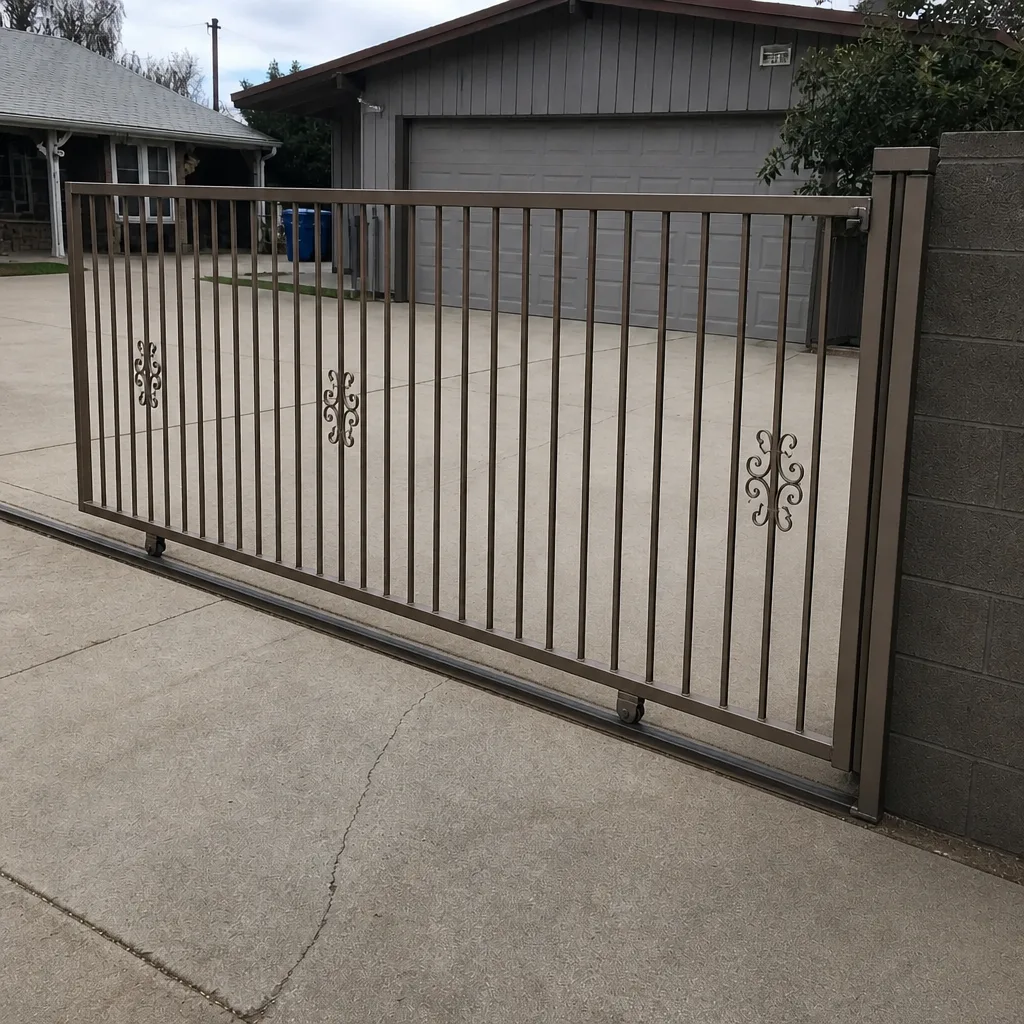
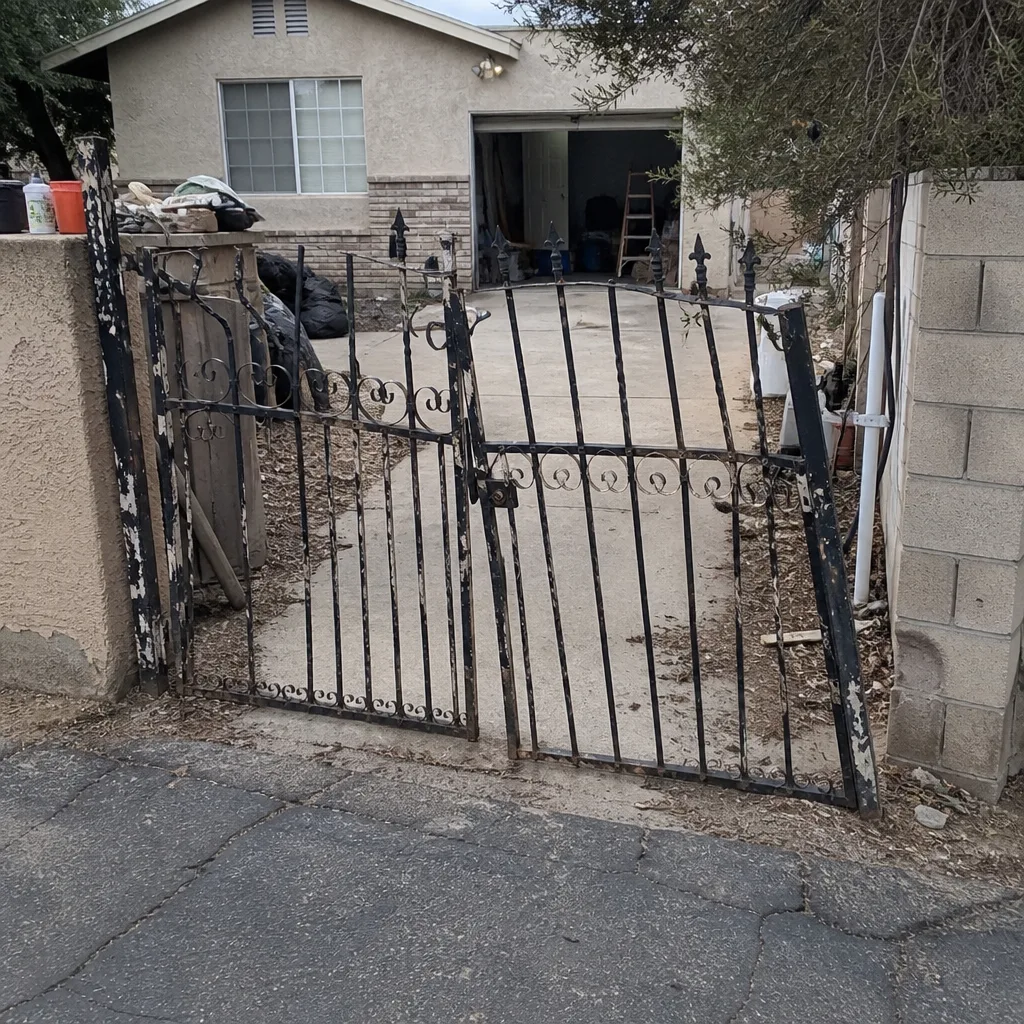
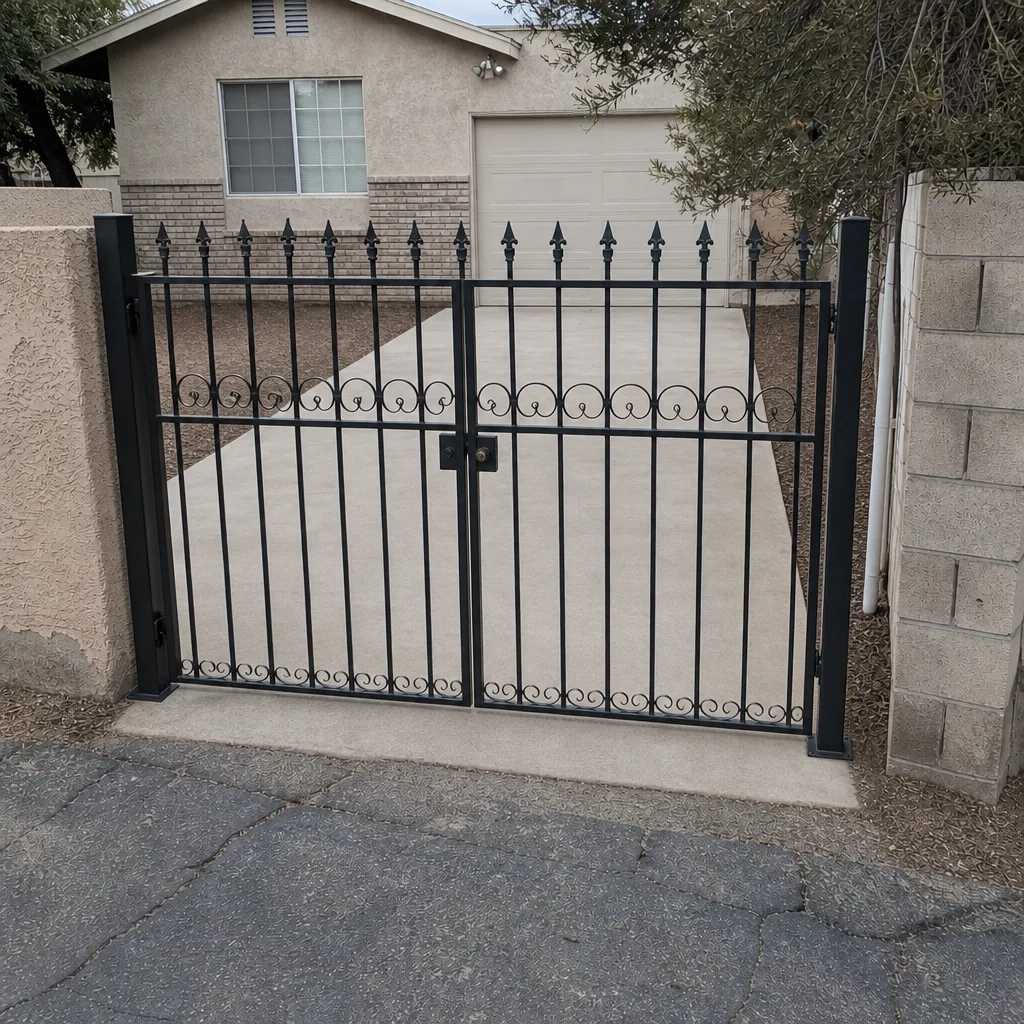
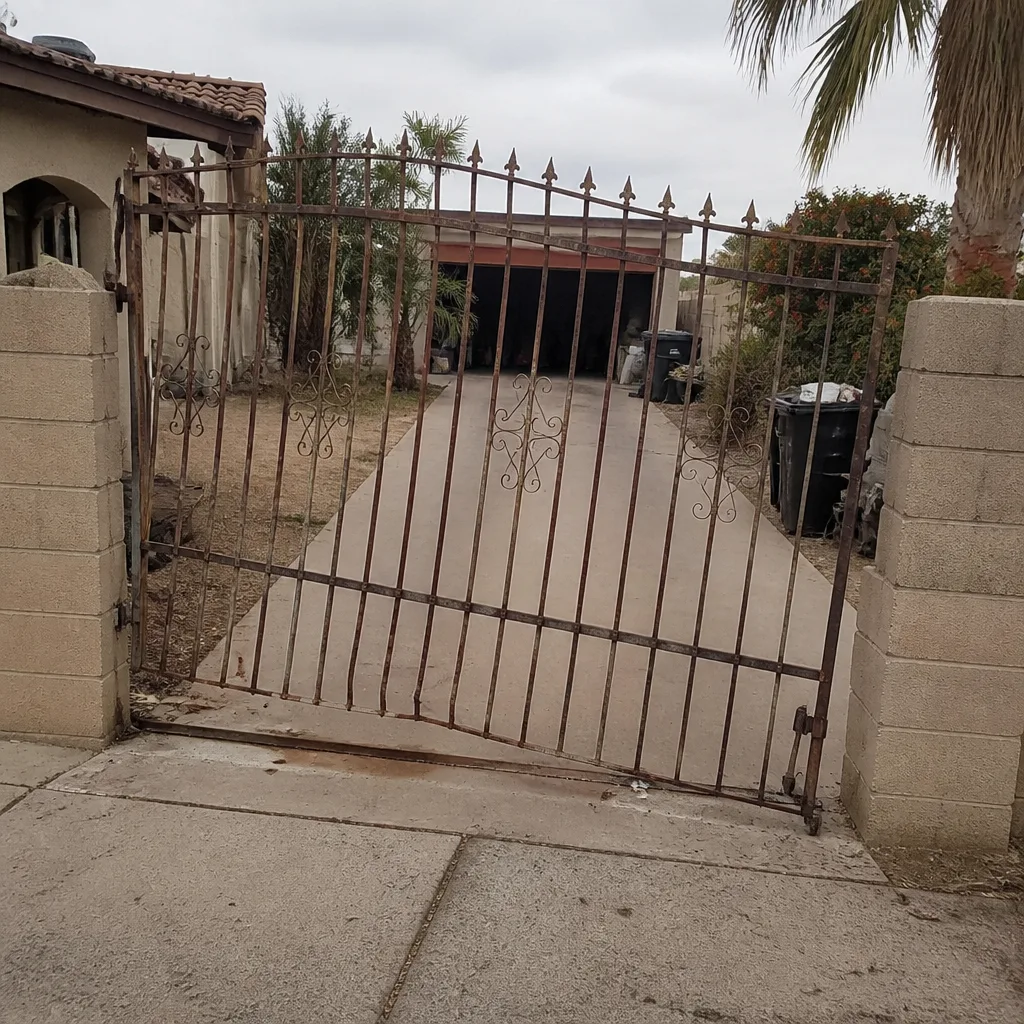
See the difference
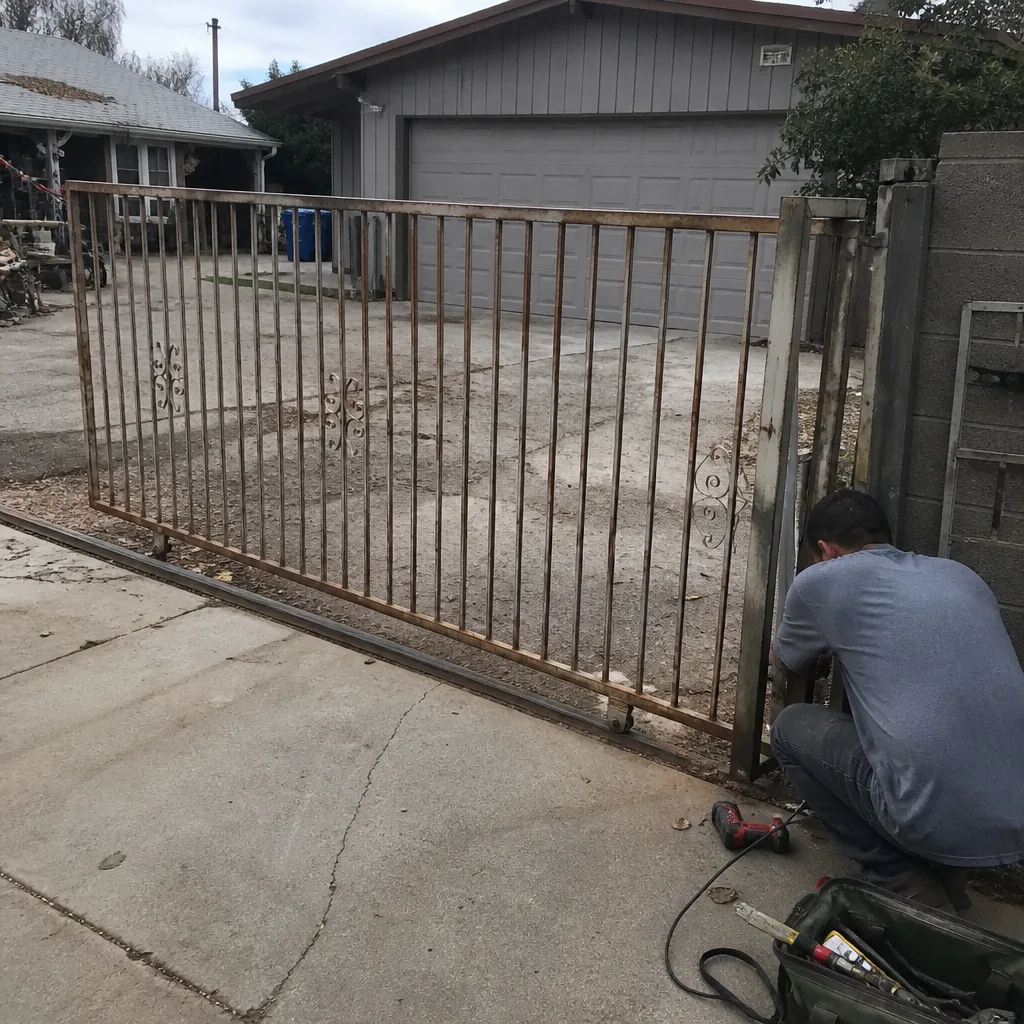 Before
 After
 Before
 After
 Before
 After
When to Call a Professional
Some of this schedule is genuinely do-it-yourself. Cleaning photoeye lenses, wiping dust out of vents, and recording the battery test date are all jobs that don’t need a technician. Where the line gets crossed is when the symptom isn’t cosmetic. A gate that fails to reverse, a control board throwing fault codes, a panel separating at a weld seam, a slide gate that’s come off its track, or an operator that’s straining to open a gate it used to move easily. Those are the calls where the repair is already in progress and diagnosing it wrong just makes it worse. Gate Repair Glendale offers free estimates in Glendale. Call (855) 632-1674. We answer 24/7. Fast dispatch from 7am to 7pm, Sunday through Friday.
Frequently Asked Questions
Do the small monthly checks (photoeyes, safety edges, dust removal) and the full inspection twice a year: once before dust storm season in spring and once after the monsoon in fall. That two-inspection cadence is built around the two periods that do the most damage to gate hardware in the Phoenix metro.
Use white lithium grease on the high-friction metal parts like hinges and rollers, and use silicone spray on photoeye lenses and weather seals. Skip general-purpose penetrating oils like WD-40 as a maintenance product. They’re solvents, not lubricants, and they dry the parts out over time. Call (855) 632-1674 for an exact quote on servicing the moving parts – estimates are free.
A backup battery typically loses significant capacity after about 18 months in Glendale’s extreme heat, and it fails silently. Test it in March and again in October, and plan on replacing it every 18 months whether the test passes or not. The battery works fine right up until the power goes out, which is the one time you need it.
We work on the major residential and commercial brands, including Linear, Viking, Ghost Controls, DoorKing, LiftMaster, FAAC, BFT, Elite and Mighty Mule. If you’re not sure what brand your operator is, check the model plate inside the housing. Then call (855) 632-1674 and we’ll confirm before we schedule a visit.
Don’t. A gate that fails to reverse is a crush risk and a safety issue, not a tuning quirk. Bring in a technician who can test the photoeyes, safety edges and obstruction sensing with the right equipment. Call (855) 632-1674 and we’ll diagnose the safety system before anyone uses the gate automatically again.
No. Every service is priced per job after we look at the gate, and there’s no plan or contract required. The schedule in this guide is yours to run yourself or to hand to us when it’s time for the twice-a-year inspection. For a same-day diagnosis or an on-site estimate, call (855) 632-1674.
The Bottom Line
A gate maintenance schedule for Glendale works because it follows the climate, not the calendar. Switch old grease for dry lubricants before dust storm season. Clean and inspect after the monsoon passes. Test the battery backup before summer heat peaks and again after it breaks. Check the panel, the operator and the safety devices on a set rhythm. Record what you do and when, because the timeline is the most useful diagnostic tool you have. The small, frequent tasks (wiping photoeyes, clearing vents, watching for binding) do most of the work, and the two big inspections catch the rest. When something crosses from cosmetic to safety-critical, that’s the point to stop and call.
We’re a dedicated gate specialist, not a multi-trade contractor, and our technicians have up to 12 years of experience working on both mechanical and automated systems from the motor to the control board. Whether it’s routine Gate Repair Glendale or a full diagnostic on an automated system, our goal is to get your gate back in operation with the correct diagnosis. Call (855) 632-1674 for a free estimate. We answer 24/7. Fast dispatch from 7am to 7pm, Sunday through Friday.
Written by the team at Gate Repair Glendale.